
A reliable livestock-gate workflow starts with an approved drawing and material definition, then controls tube cutting, forming, welding, first-article assembly, finishing and final packing against the same revision. North American buyers should request traceable records at each hold point. Factory photographs are useful context, but they do not prove steel grade, weld capacity, coating compliance or finished dimensions.
What should be approved before steel is cut?
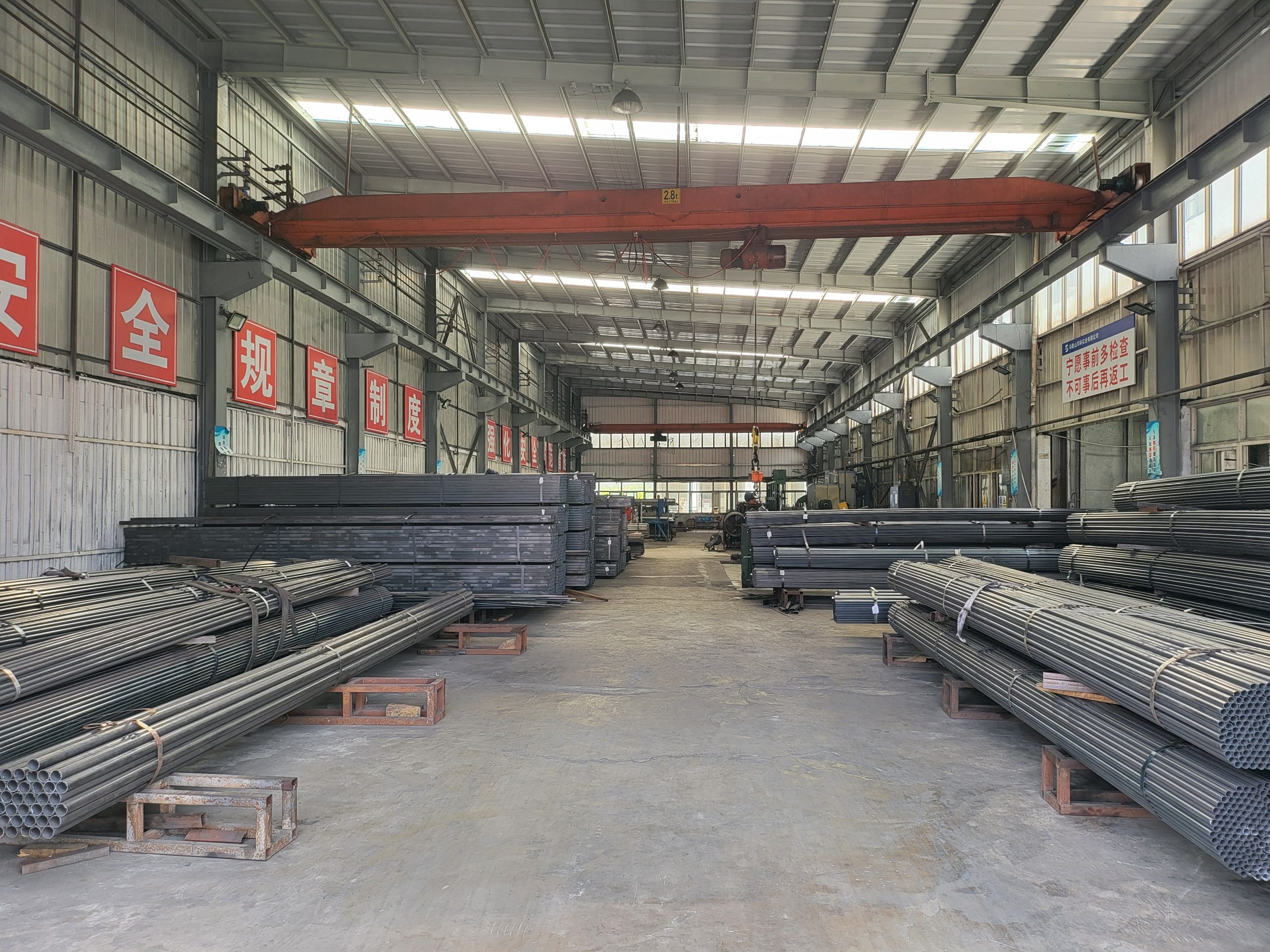
The most useful factory review begins before production, not after a finished gate is photographed. Ask for a controlled drawing that identifies the gate leaf size, installed clear opening if applicable, frame and rail sections, wall thickness, rail spacing, hinge and latch sides, hardware, finish, quantity and revision. Mark every item that remains to be confirmed. A photograph can show general form, but it cannot establish section thickness, steel grade or dimensional tolerance.
Connect the drawing to a bill of materials or purchase specification. If the order calls for a particular tubing standard, require the supplier to identify the standard, grade and edition in writing. ASTM A500/A500M, for example, covers cold-formed welded and seamless carbon-steel structural tubing in round and shaped sections for structural and general structural purposes. Mentioning A500 in an article does not mean every livestock gate needs it or that the pictured material complies. The buyer, designer and supplier must agree on the applicable material specification.
Create a production release sheet with the drawing number, revision, quantity, finish and approved hardware. The factory should be able to trace the material and work order to that release. When a buyer changes a latch position or rail layout by email, the drawing should be revised rather than leaving the shop to reconcile conflicting messages.
How should tube cutting and forming be controlled?
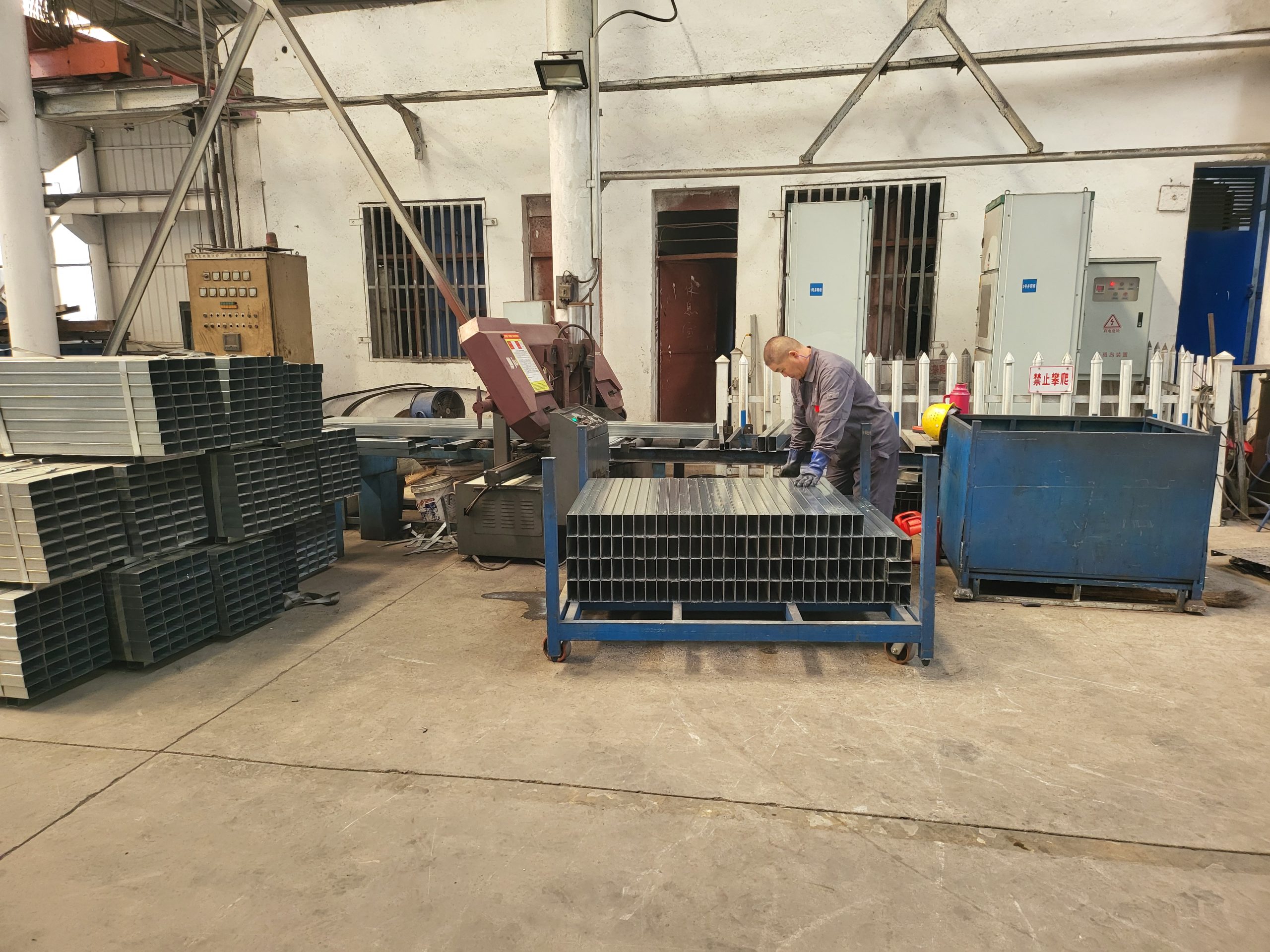
Cutting establishes the dimensions that later welding cannot conveniently correct. The work instruction should state cut length, end condition, hole or slot locations, bend details and the measuring method. For repeat orders, request a first-piece check before the full batch proceeds. The check can include overall length, critical hole spacing, squareness and any dimensions that affect hinges, latches or matching posts.
Forming operations such as bending or press-brake work need their own reference points. A nominal dimension on a finished gate may depend on bend radius, material springback and the sequence used at the machine. Buyers do not need to prescribe the operator’s technique, but they should identify the dimensions that must remain functional after forming. If two leaves must align or a replacement gate must fit an existing opening, provide a measured interface drawing rather than a catalog screenshot.
Ask the factory to retain one clearly identified first piece until the batch is accepted. A short photo set should include the measuring tool in contact with the named feature, the work-order identifier and the whole part for context. Avoid accepting a close-up of a tape measure with no way to connect it to the order. Where dimensional inspection is important, the purchase specification should state the sample quantity and acceptance criteria before production.
What does a useful forming record look like?
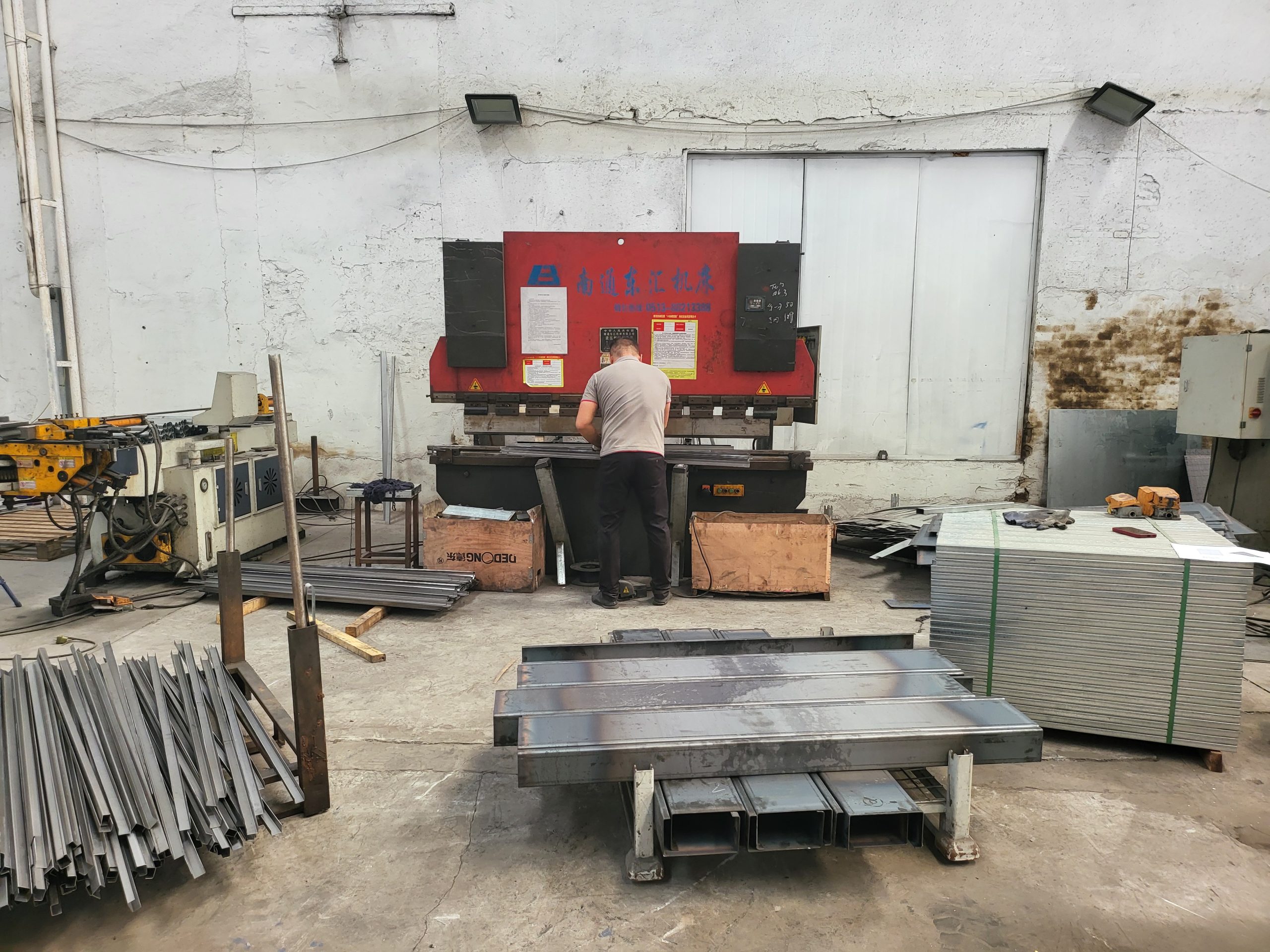
A useful forming record is tied to a part number and revision. It can be simple: the operator records the first-piece result, the measuring equipment used and the disposition if the dimension is outside the agreed tolerance. The buyer should focus on interfaces that affect assembly and field use—hinge axis, latch engagement, post spacing, frame squareness and clearance—not collect paperwork that has no decision attached to it.
For a North American ranch buyer, inch and metric conversions deserve explicit review. Put one controlling unit system on the drawing and label converted values as references if both are shown. Rounding a converted wall thickness or opening width can create an apparent match that is not an actual match. The quotation, drawing, inspection sheet and packing list should use the same part numbers and units.
| Stage | Buyer approval item | Evidence to request |
|---|---|---|
| Material release | Section, wall, grade or agreed material description | Purchase record or supplier certificate linked to the lot |
| Cutting | Length and hole or slot position | First-piece measurements with part ID |
| Forming | Bend location and functional interfaces | Approved sample or dimension report |
| Assembly | Squareness, hinge axis and latch position | Fixture check and assembly drawing |
How should welding requirements be written?
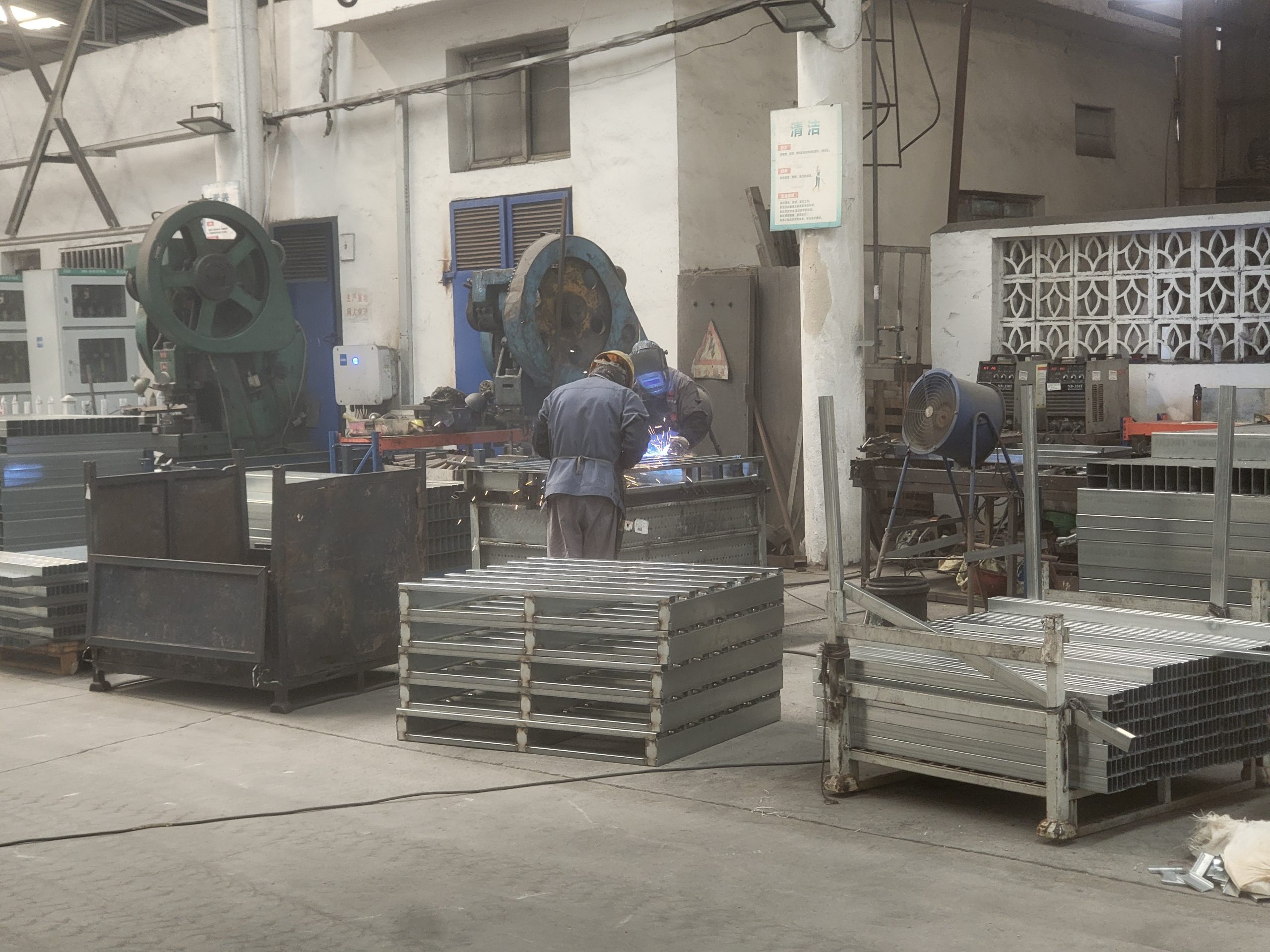
Weld requirements should be appropriate to the design and stated in the contract documents. Do not paste a welding code into an order merely to sound rigorous. AWS describes D1.1/D1.1M:2025 as a structural steel welding code covering design, fabrication, qualification and inspection. Whether that code, another AWS document or a supplier procedure applies to a livestock gate depends on the material thickness, design responsibility and contract. Ask a qualified person to select the applicable requirements.
At minimum, the approved drawing should show where joints occur and identify any weld features essential to fit or service. The production plan should address joint preparation, fixture control, welding sequence, distortion management and repair. A buyer can request photographs of typical rail-to-frame and hardware joints, but appearance alone cannot confirm penetration, procedure qualification or structural capacity.
For factory safety, the presence of welding stations in a photograph should never be used as a quality claim. The U.S. OSHA welding, cutting and brazing overview points to hazards and standards for these operations, including ventilation and protective controls. Those workplace requirements are separate from product acceptance. A useful supplier review distinguishes process safety, welding procedure control and finished-product inspection instead of treating one photo as proof of all three.
When should a first assembled gate be reviewed?
Review the first assembled gate before the batch moves into final finishing. At that point, check overall dimensions, diagonal measurements, rail spacing, hardware orientation, free movement and the relationship between hinge and latch components. If the order includes posts, assemble a representative set or use a controlled fixture that reproduces the specified interfaces.
The review should use the actual approved drawing revision. Mark results on a first-article report, record any concession and photograph the entire gate plus the critical details. If the buyer approves a deviation, state whether it applies to one unit or the whole batch. Verbal approval in a chat thread is difficult to audit later.
Use a change-control rule: after first-article approval, changes to tube section, rail position, hardware, finish or packaging require written buyer review. This is especially important when a factory proposes a substitute because a component is unavailable. A substitute can be acceptable, but it should not enter production merely because it looks similar.
What belongs in the finish and final inspection record?
The finish record should identify the agreed process, color or appearance reference, inspection method and any required measurement or test. A buyer should avoid unsupported phrases such as “weatherproof” or “lifetime coating.” Exposure, preparation, coating system, handling, installation and maintenance all affect service. If a standard is referenced, name its edition and the specific result to be reported.
Final inspection should reconnect every gate to the order. Verify quantity, part ID, overall configuration, hinge and latch sets, visible damage, required accessories and packaging labels. Take one overview photograph of each product type, close-ups of critical hardware, and sampling photographs tied to numbered units or bundles. If one photograph represents many identical gates, the sampling rule must be agreed rather than implied.
Before shipping, compare the final packing list with the drawing and accessory list. North American installers often receive gates, posts and hardware at different locations or times; consistent part labels reduce sorting errors. Link the factory’s assembly information to the relevant HRC livestock gate range and accessory page, but use the signed quotation and drawing—not the website image—as the controlling specification.
Which documents should a North American buyer keep?
Keep a compact manufacturing record rather than an unstructured folder of photographs. The record should contain the approved drawing and revision, purchase specification, agreed material evidence, first-piece or first-article results, approved deviations, finish records, final inspection summary, packing list and shipment identifiers. Retain emails only when they explain an approval or change.
- Assign a unique order and part number before production.
- Approve the drawing and any controlling standards in writing.
- Release material, cutting and forming against that revision.
- Review the first assembled gate before final finishing.
- Record finish checks and final sampling against written criteria.
- Match bundles, hardware and documents to the packing list.
This workflow does not guarantee performance by itself. It makes claims testable and helps the buyer identify where engineering, supplier qualification or third-party inspection is still needed. For a current configuration, send the application, opening sketch and documentation requirements through the HRC contact page and request a dimensioned response.