
Most North American ranches benefit from separating frequent human access from full-width livestock and vehicle routes. Use a walk-through gate for routine chores only when its clear passage, latch and threshold suit the task. Use a larger gate for grouped animals and equipment, then verify the installed clear opening, turning path, swing arc, posts, hardware and emergency access on a site drawing.
Why should a ranch separate people, livestock and vehicle routes?
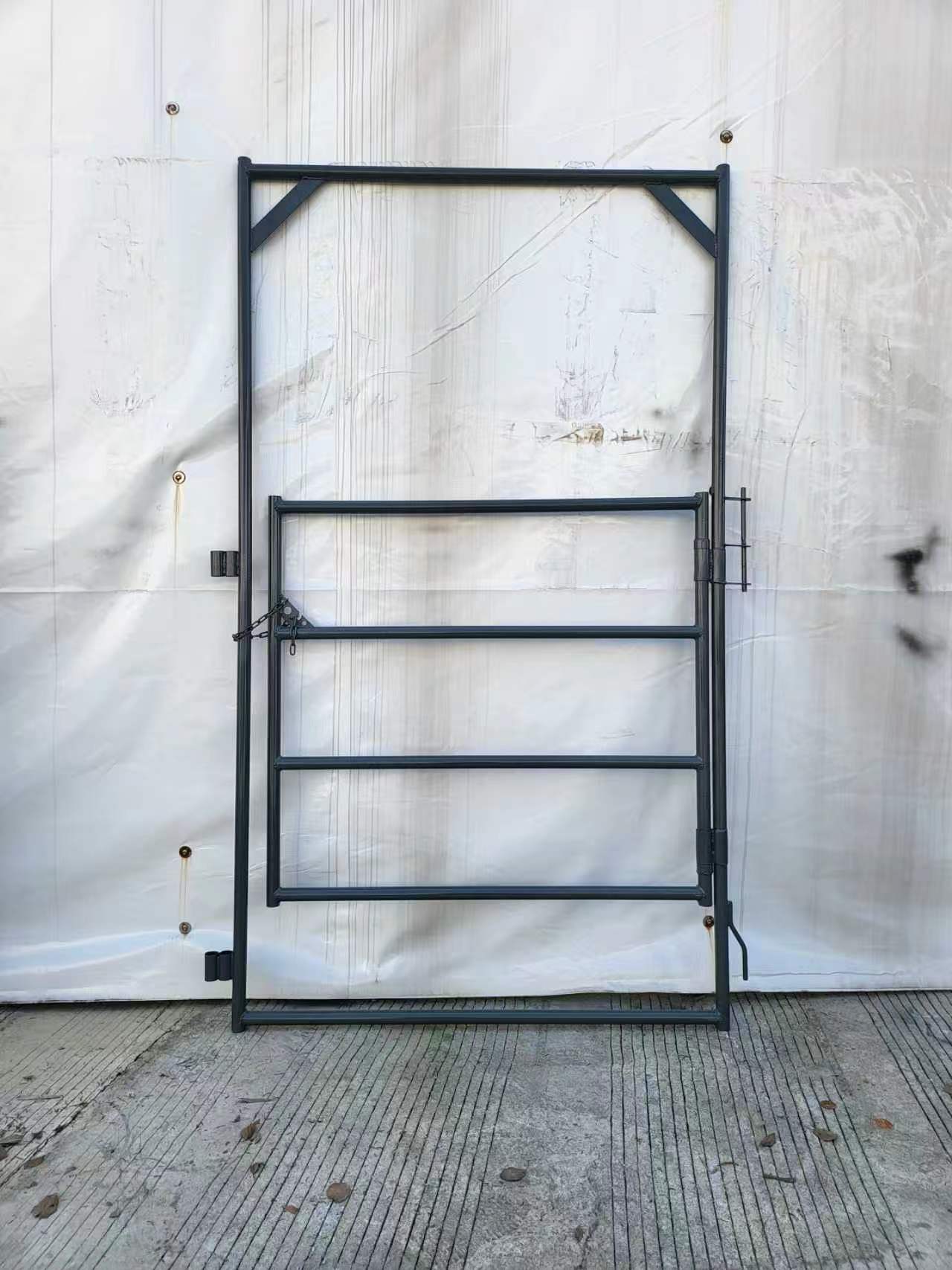
A single oversized gate can serve several jobs, but making it the only entrance often adds unnecessary opening cycles and awkward handling. Start with a scaled site sketch. Mark routes used by one person carrying feed, a handler leading an animal, groups moving between pens, tractors, trailers, emergency vehicles and maintenance equipment. Record how often each route is used and whether it operates in mud, snow or darkness.
Penn State Extension’s horse-fence planning guidance recommends mapping gates, horse and handler traffic, supply and water routes, vehicle traffic and mowing access in relation to buildings. The same planning discipline is useful beyond horse facilities: define the traffic first, then size and position each opening. The source gives planning examples, not an HRC product specification.
A walk-through gate is most useful when routine human traffic does not need the full livestock or equipment opening. A full-width gate remains necessary where animals move in groups or equipment requires clear width and turning space. Some locations need both; others work better with separate openings several feet apart so people are not standing in the pressure zone of livestock gathered at the main gate.
When is a walk-through gate the better choice?
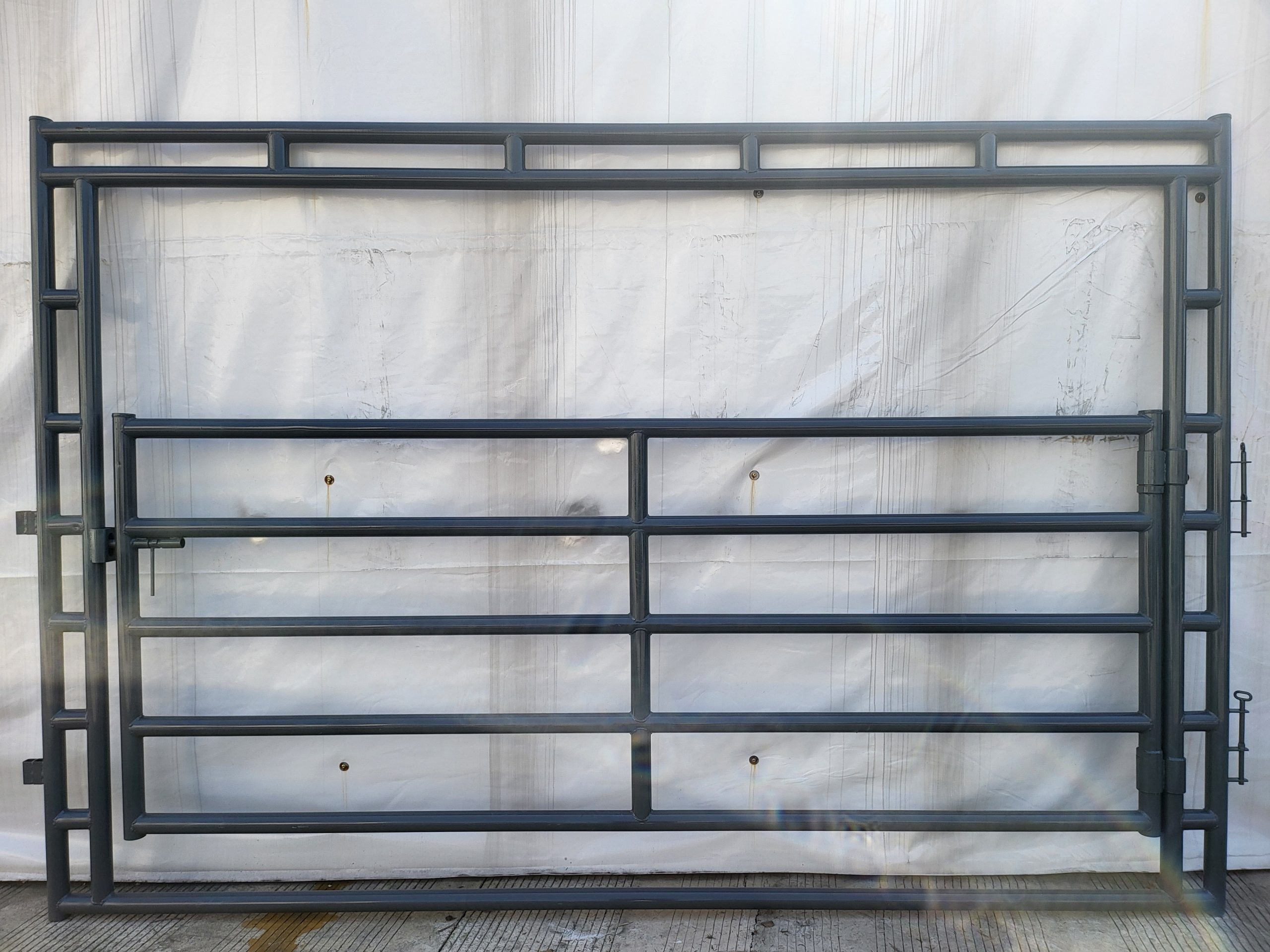
Use a walk-through opening for frequent chores that involve one person, hand tools or small supplies, provided the passage is appropriate for the people and tasks at that site. It can reduce the need to release a long gate leaf, enter a livestock lane or cross vehicle mud tracks. A dedicated personnel entrance can also make access control clearer when visitors or employees should not operate the main gate.
Do not select it by the catalog name alone. Specify the installed clear width and height, threshold or bottom clearance, latch side, swing direction, frame position and relationship to adjacent rails. Check whether a bucket, wheelbarrow, medication cart or emergency equipment must pass. Accessibility and workplace requirements may apply to employee or public routes, so the owner should obtain local professional advice rather than assume a farm gate automatically satisfies them.
Position the latch where it can be operated from the intended approach without reaching through an animal zone. Check for pinch points between the inner gate and outer frame. If the opening is inside a larger framed assembly, confirm that livestock cannot place a head or leg into unintended gaps. The photograph shows one possible form, not an approved installation for every species.
When does the ranch need a full-width livestock gate?
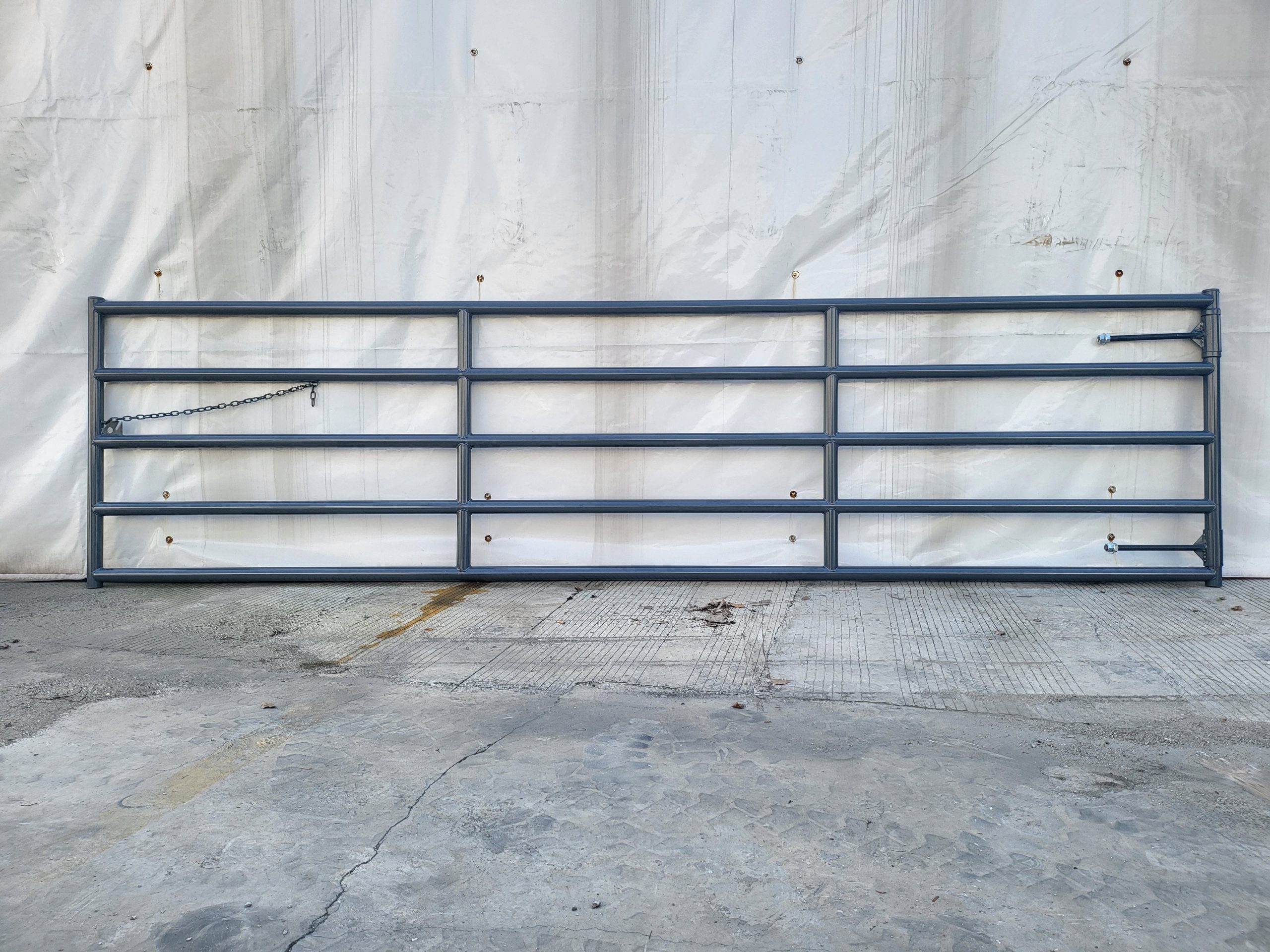
A full-width gate is appropriate where cattle or horses move in groups, where a handler needs a broad visual opening, or where equipment and vehicles enter. Determine the required installed clear opening from the widest machine plus mirrors, tires, attachments and realistic steering error. Then test the turning path, not only the straight-line width. A trailer or manure spreader needs more maneuvering room than the tow vehicle alone.
Penn State notes that farm equipment may need wide lanes and that straight-through approaches are easier than tight turns. Its horse-facility examples distinguish human or horse-and-handler gates from wider vehicle routes. Those figures are useful planning references, but the ranch should measure its own equipment and have the final post spacing, hinge axis and swing arc shown on a drawing.
For livestock movement, review where animals gather before the opening and where they go after it. A wide leaf that opens into the flow can reduce usable space or create a trap. A gate located in a corner may help drive grouped animals along a fence, while an individually led animal may be easier to handle at a different position. The correct location depends on the operating method, not merely the gate length.
How should swing direction and holding-open positions be planned?
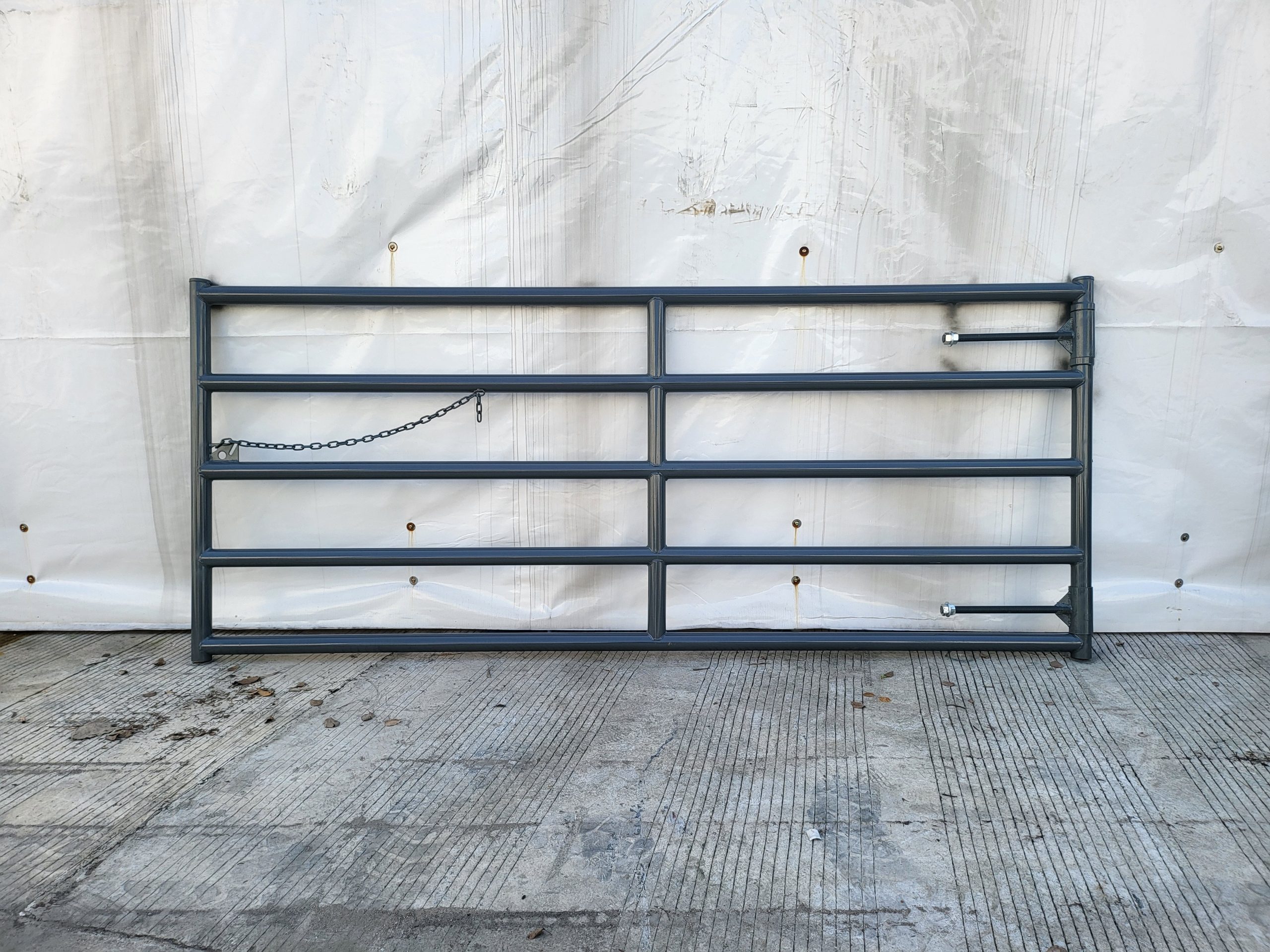
Draw the complete swing arc on the site plan. Check slopes, ruts, snow accumulation, bedding, curbs, drainage channels and nearby panels. A gate that clears the ground on installation day can drag after frost movement or material buildup. Decide whether the leaf must swing one way or both ways and where it will be secured open.
Penn State advises securing open gates fully against the fence rather than leaving them projecting into the enclosure. The holding-open device should be operable from a safe position and should not create a chain, pin or projection that can catch livestock. For a long leaf, consider wind exposure and the effort required to control it. Do not assume a worker can safely hold a large gate while simultaneously managing animals.
At a shared access point, make the normal operating sequence obvious. A person should not have to open the full-width leaf merely to reach the walk-through latch. Nor should the personnel gate swing across a vehicle lane. If locks are required, define emergency access and identify who carries keys or combinations.
What should buyers specify for hinges, latches and posts?
Request a hardware schedule for every opening. It should identify hinge type, adjustment method, latch, secondary restraint if required, stop, holding-open device, fasteners and compatible posts. Ask whether hardware is welded, bolted or replaceable in the field. A drawing should show hinge offset and latch receiver position because those details affect the installed clear opening.
The post and foundation must suit the gate, soil and local installation method. Long gates impose different demands from personnel gates, and a photograph cannot establish the required post section, embedment or footing. The supplier should state its interface requirements; a qualified local installer or engineer should confirm site support where needed.
| Opening type | Confirm before ordering | Common planning failure |
|---|---|---|
| Personnel access | Clear passage, latch reach, threshold and swing | Opening too narrow for routine tools or carts |
| Animal movement | Group size, pressure zone and safe handler position | Leaf blocks the intended flow |
| Vehicle access | Widest equipment and turning envelope | Nominal gate length mistaken for usable width |
| Emergency access | Lock control, all-weather approach and opening method | Gate cannot be opened quickly without tools |
How should safety and emergency access affect the layout?
Keep primary emergency routes usable in poor weather and during power loss. Oklahoma State University Extension’s ranch wildfire guidance recommends maintaining gates so they open easily without tools. That advice does not determine a gate model, but it highlights why corroded pins, improvised wire ties and inaccessible locks are poor emergency plans.
Separate public access from livestock operating areas where possible. Add signs and locks based on the ranch’s risk assessment, while ensuring authorized people can open the correct gate. Review overhead clearance, roadside sight distance and space to pull a trailer fully off the road before stopping to unlock an entrance.
Near horses, Penn State emphasizes visible, sturdy fencing without trapping openings or sharp projections. For cattle, sheep or goats, evaluate their own head, horn, leg and climbing behavior. Do not assign one framed opening to every species simply because it appears robust.
What should go into the gate schedule and RFQ?
Number every opening on the plan and create a gate schedule. Include purpose, installed clear width and height, adjacent fence height, species, swing direction, latch side, holding-open position, post interface, hardware, finish, quantity and any locking requirement. Attach photographs of the site, but make the dimensioned drawing and written schedule controlling.
- Map pedestrian, animal, equipment and emergency routes separately.
- Measure equipment and turning space at the actual site.
- Select personnel and full-width openings by task frequency.
- Approve swing arcs, safe standing zones and holding-open points.
- Match hinges, latches, posts and spare hardware to each gate ID.
- Review the schedule with the installer before production.
Compare the HRC walk-through gate option with the broader livestock gate range, then send the numbered schedule through the contact page. The website identifies product families; the approved quotation and drawing should define the delivered configuration.
How should the completed access points be commissioned?
After installation, conduct a commissioning walk-through with the people who perform chores and move livestock. Operate each gate from both approaches, confirm the latch engages without lifting the leaf, check that the open gate can be secured, and drive the largest planned equipment through at low speed. Record bottom clearance and any contact with the grade throughout the swing.
Repeat the check under representative wet or winter conditions where practical. Verify that personnel do not have to stand in an animal pressure zone, that locks do not block emergency access, and that signs or gate IDs are visible from the normal approach. Correct conflicts before animals depend on the route. Add hinge, latch, post alignment, ground clearance and holding-open hardware to the ranch maintenance schedule, with more frequent checks at high-use and emergency openings.