
Choose a horse gate by the job of each opening, not by nominal gate length alone. For horse-and-handler routes, Penn State Extension favors a five-foot opening; vehicle routes require substantially more room. Check the installed clear width, height relative to the fence, smooth edges, visible rails, secure latch, hinge support, drainage and swing path before approving a ranch gate order.
Which opening are you buying the horse gate for?
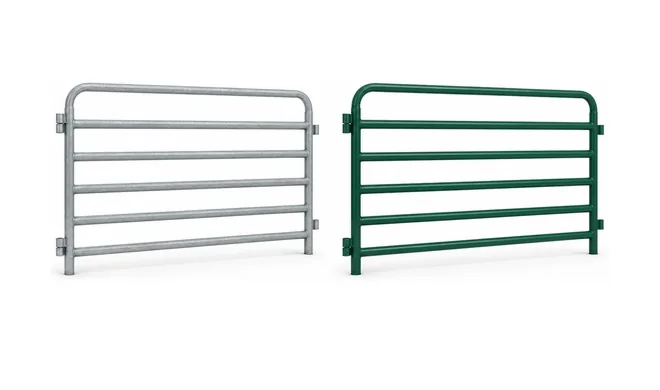
Start with a simple map of movements. Mark where a horse and handler enter a paddock, where feed or bedding arrives, where a tractor or mower passes, and where an emergency vehicle might need access. A gate that serves a lead-rope route has a different job from a pasture vehicle entrance. A single opening should not be assumed to serve both simply because the catalog lists one nominal size.
Penn State Extension’s fence planning guide recommends drawing gate positions, traffic routes, supply access and mowing routes to scale. It says horse-and-handler gates should be at least four feet wide, with five feet preferred, while vehicle and tractor gates should be at least 12 feet wide and may be as wide as 16 feet. These are planning examples for horse facilities, not dimensions of any HRC model. Measure the largest machine and its turning path at your own site.
On the sketch, note which direction each gate must swing. A leaf that opens into a narrow lane, slopes into the ground or blocks a second gate can defeat a sensible width. Leave a safe place for a person to stand while opening it, and separate frequent human access from machinery access where the layout permits.
How should you specify the clear opening and gate height?
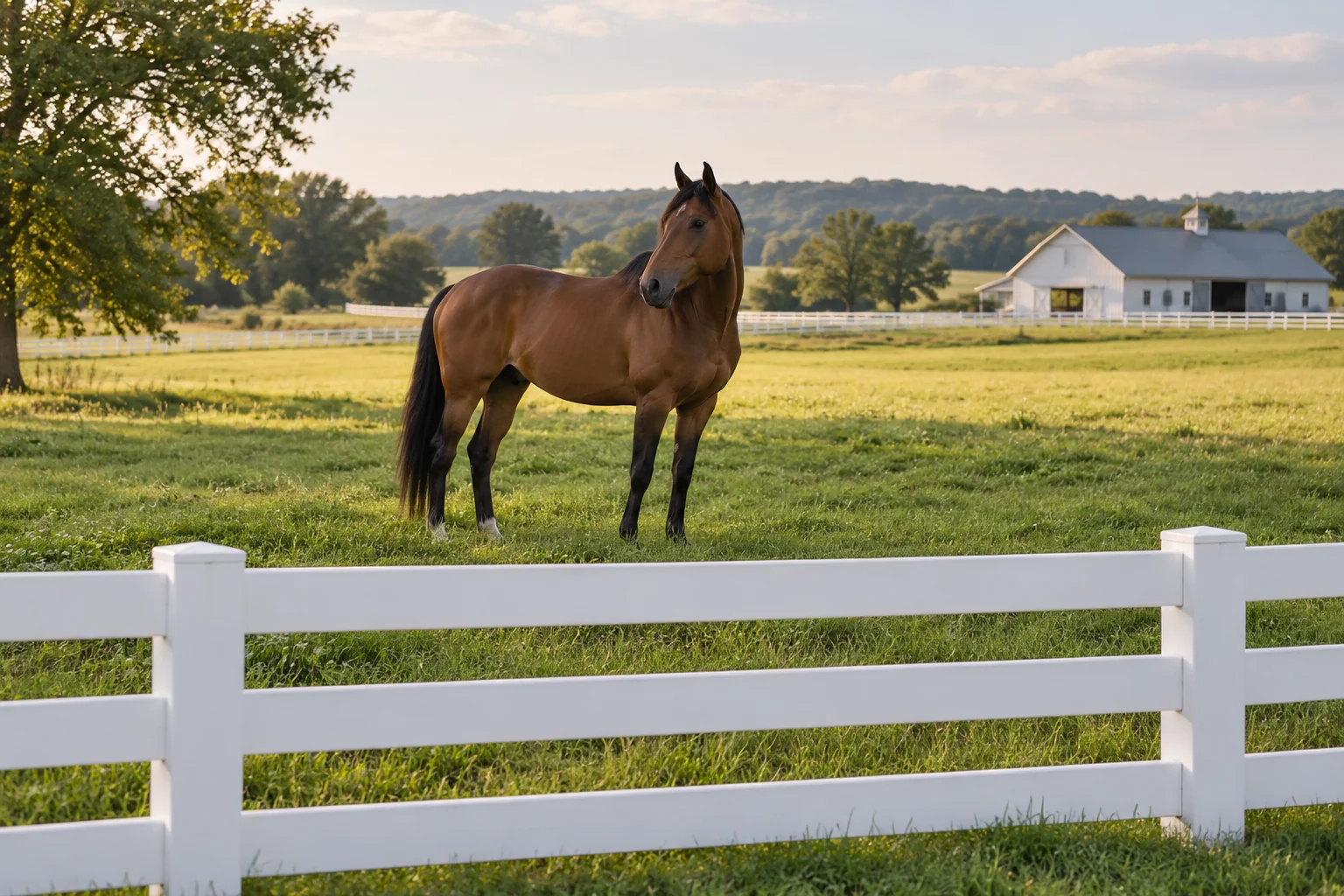
Ask the supplier to distinguish the gate leaf length from the clear opening after installation. Posts, hinge offset, latch receiver and the angle at which the leaf can park all affect usable passage. A nominal five-foot leaf should not be described as a five-foot clear passage without a dimensioned drawing. Request an elevation and plan view showing center-to-center post spacing, hinge axis, installed clearance and swing arc.
The gate also needs to relate to the adjacent fence. Penn State advises that horse gates be as tall as the fence to discourage reaching or jumping over the opening. University of Minnesota Extension emphasizes sturdy, visible fencing and gates without sharp projections. Those sources support the selection principles; they do not certify a particular rail count, tube wall, coating or load rating.
Check the bottom edge in the actual terrain profile. A fixed dimension on a drawing can change with a rut, drainage dip or accumulated bedding. Penn State’s boarding guidance discusses gate and fence bottom arrangements to reduce hoof-trapping risk. Use the local ground profile and the animals’ size to agree on a safe installed clearance; do not treat an illustrative photograph as an installation standard.
What makes the gate hardware safe and workable?
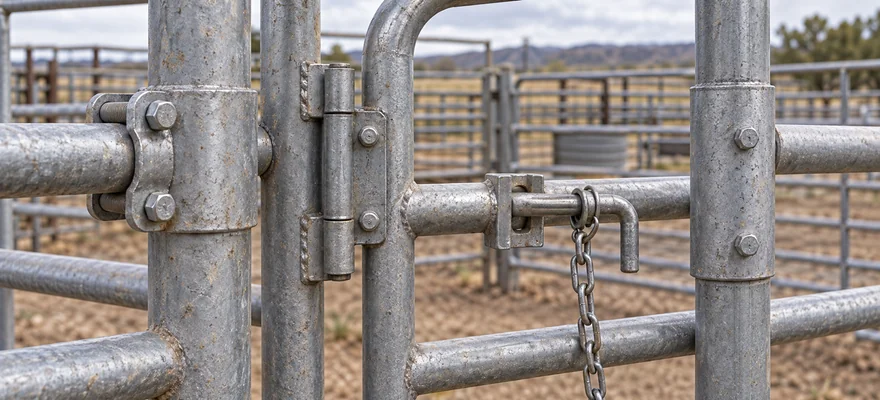
The latch and hinges deserve the same attention as the frame. Walk the path a handler would take: approach with a horse, operate the latch, move through, close the gate and secure it without placing a hand in a pinch point. Check whether the latch can be reached from the intended side, whether a secondary restraint is needed, and whether a chain could hang where a leg may catch it. A gate that looks tidy from the road can still be awkward to operate while holding a lead rope.
Ask for close photographs or drawings of the hinge, latch receiver, pins, fasteners and any stop. Penn State’s horse fence guide warns against designs that trap feet or heads, and describes gates that a handler can operate readily. Its advice is about planning and safety; the buyer must still verify the actual supplied hardware. Do not infer hinge capacity from a photograph. Request the manufacturer’s hinge and post requirements for the quoted gate size and finish.
- Confirm exposed ends are capped or otherwise finished and that welds, bolt ends and brackets have no sharp edges.
- Check latch engagement when the gate is fully closed and after reasonable post settlement.
- Specify whether the gate swings inward, outward or both ways, then ensure the latch suits that movement.
- Ask how the gate is held open during deliveries or mowing so the leaf cannot swing into a person or vehicle.
Which material and finish questions belong in the purchase order?
A horse gate quotation should describe actual materials rather than rely on adjectives such as “heavy duty.” Request the outer-frame and rail section sizes, wall thickness, steel grade if available, weld detail, finish process, hardware material, and stated manufacturing tolerances. If a coating standard or test is claimed, ask for the specific standard edition, process stage and documentation covering the quoted product. A photograph cannot establish zinc coating thickness or corrosion performance.
For a ranch buyer importing gates, ask how parts are packaged and identified. The packing list should let the installer match leaves to hinge sets, posts, latches and drawings. If hinges or posts are sourced locally, share their dimensions with the supplier before fabrication. Confirm whether a finish is applied before or after fabrication and how cut edges and weld zones are treated. These questions prevent an attractive catalog image from standing in for an orderable specification.
| Purchase decision | Information to request | Why it matters |
|---|---|---|
| Passage | Installed clear width, height and swing arc | Checks the real animal and equipment route |
| Frame | Section size, wall thickness, rail spacing and edge finish | Allows comparison of actual configurations |
| Hardware | Hinge, latch, stop and fastener drawings | Checks operation and replacement parts |
| Finish | Process description and applicable evidence | Avoids unsupported durability claims |
| Delivery | Part IDs, packing list and installation drawing | Supports receiving and fitting on site |
How should you review the ranch entrance before installation?
Measure the site after final grading, not only from an old fence plan. Record the ground level at both posts, high and low points across the swing, fence height, nearby troughs or corners, and the route for vehicles. Mark buried services before digging. The support posts must be appropriate for gate size, ground conditions and local installation practice; a gate supplier should provide its hardware requirements, while a qualified local installer should confirm foundations and anchorage for the site.
Look for horse pressure near a feed area or a narrow corner. University of Minnesota Extension notes that gate locations and nearby fencing should account for animal congregation and should avoid unsafe projections. A separate human-only passage can reduce the number of times the main leaf is opened. If horses are moved in groups, rehearse where the handler will stand, how the gate is secured open, and where the last horse goes after the leaf closes.
Climate matters too. Freeze-thaw movement, snow buildup, drifting soil and wet ground can alter the clearance that seemed generous on installation day. Plan a routine inspection of latch alignment and hinge fasteners. Avoid making an unsupported “lifetime” claim about the gate: actual service depends on specification, installation, exposure and maintenance.
What should a U.S. buyer send the supplier?
A concise request for quotation makes comparable responses more likely. Include a site sketch with each opening numbered; the animal type and typical movement at each; the required clear width and adjacent fence height; whether equipment uses that opening; post material and available dimensions; swing direction; desired latch behavior; preferred finish; quantity; destination ZIP code; and the requested delivery or packing arrangement. If any of these are unknown, label them “to confirm” rather than let the supplier guess.
For a five-foot horse-and-handler opening, state that it is an installed opening if that is what your site needs. Do not borrow the five-foot figure for a tractor route: the Penn State guidance above treats those as separate cases. Ask the vendor to return a marked drawing and a written list of exclusions. Review the exact quoted horse gate option alongside the wider livestock gate range; product-page imagery is a starting point, and the final quotation should carry the dimensions and materials.
Before payment or production approval, have the person who will install and operate the gate sign off on the drawing. That simple review can reveal conflicts between latch side, horse approach, fence post position and tractor turning space. For a configuration question, send HRC the sketch through the contact page and ask for a dimensioned response.
Frequently asked questions about horse gates
Is a five-foot gate enough for a horse?
Penn State Extension prefers five feet for a horse-and-handler gate, but that does not answer whether your installed clear opening, swing, footing and handling pattern work. Measure the route and the horse’s movement. A vehicle entrance needs a separate width decision.
Should a horse gate swing into or out of the paddock?
Either direction can work in a suitable layout. Consider animal pressure, the handler’s escape space, terrain, traffic and how the open leaf is secured. Check the latch design for the specified swing, and do not assume that a two-way hinge is automatically safer.
Can I order from a photograph?
No. Use the photograph to discuss form, then approve a written specification and drawing. The image cannot establish steel grade, wall thickness, weld quality, coating evidence or installed clear width.
Does HRC’s gate page prove every pictured option is stocked?
The page presents product options. Availability, configuration and exact dimensions belong in a current quotation. Confirm the gate and hardware before treating a pictured arrangement as the delivered item.