
Place a livestock isolation pen where new, returning or sick animals can be physically separated from the resident herd without sharing feed, water, equipment, drainage or routine traffic. Provide controlled access, dedicated tools, cleanable surfaces, safe observation and a separate animal route. Have the ranch veterinarian define health groups, disease-specific separation and the required isolation period.
What is the difference between quarantine and isolation?
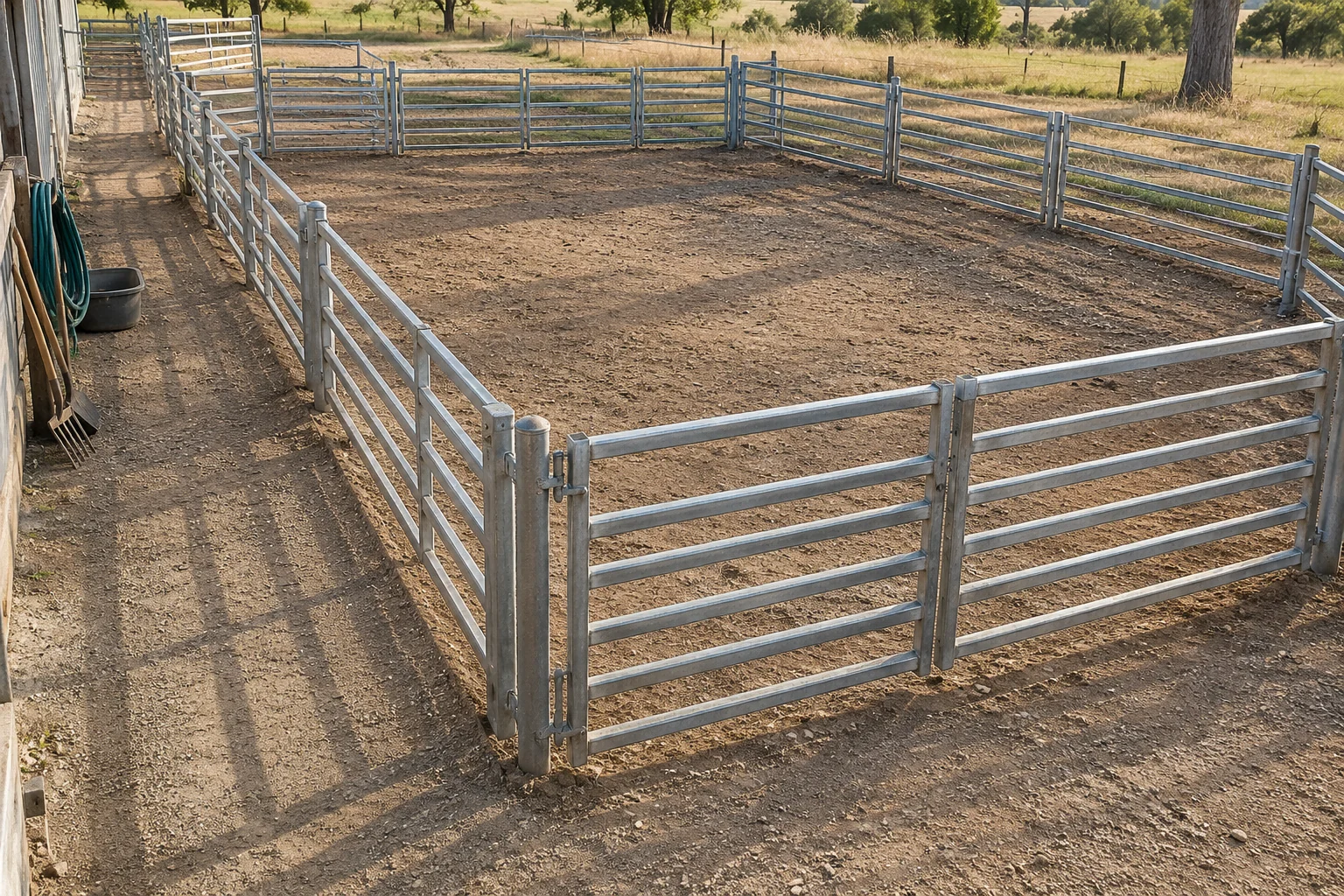
In practical ranch planning, quarantine generally separates newly arrived or returning animals whose health status is not yet aligned with the resident herd. Isolation separates animals that are sick, suspected to be sick or otherwise require controlled contact. The facility may use similar barriers, but the operating purpose and animal groups must remain clear.
The USDA APHIS Infection Control Practices guidance distinguishes quarantine for arriving or returning animals from isolation for animals already sick. It says these animals should be physically separated from healthy animals and that a veterinarian should determine the required period. The Canadian Food Inspection Agency farm-level biosecurity guide likewise recommends a separate facility without nose-to-nose contact or shared feed, water or equipment.
Do not place newly purchased animals and visibly sick resident animals in the same pen merely because both require separation. Ask the ranch veterinarian to define the health groups and operating protocol before finalizing the layout.
Where should the isolation pen be located?
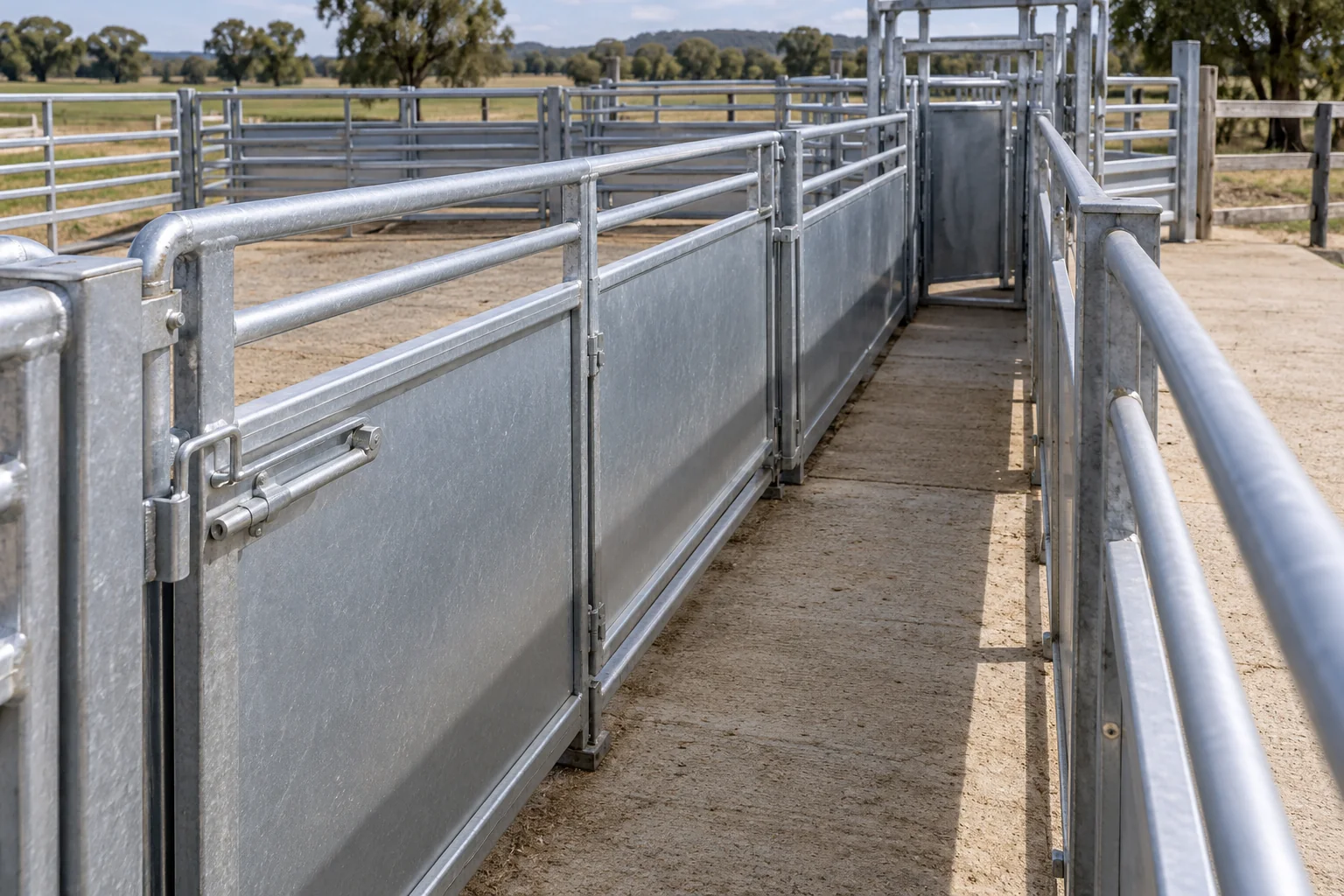
Choose the location by tracing contacts. Consider prevailing drainage, shared airspace, nose-to-nose contact, staff travel, vehicle movement, feed delivery, manure removal and the route from unloading to the pen. A pen that appears distant on a map can still be poorly separated if runoff crosses a healthy-animal lane or workers must pass through resident groups to reach it.
Prefer a route that allows new or sick animals to enter without moving through the main herd. Provide a controlled entrance where signs, handwashing or sanitation supplies, dedicated footwear and records can be maintained. Restrict unnecessary visitors. Position feed and water service so equipment does not travel from the isolation area directly into healthy pens without the prescribed cleaning and disinfection.
Local climate matters. Snow, frozen ground, heat, wind and seasonal mud affect access and cleaning. The site must also support animal welfare: shelter, footing, water, observation and safe handling remain necessary. Biosecurity does not justify placing livestock in an unsafe or unserviceable corner.
What physical separation should the layout provide?
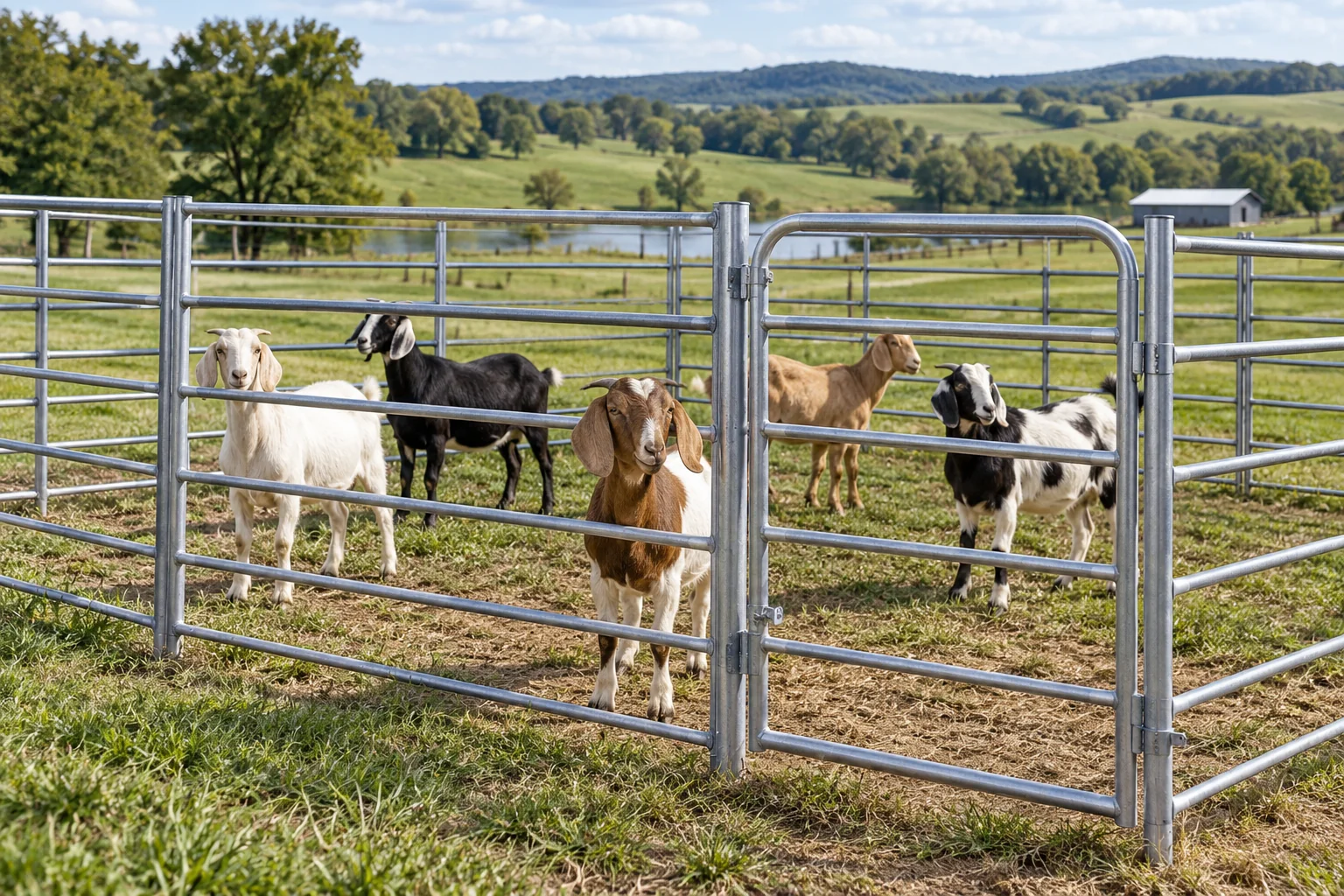
The answer depends on the diseases of concern and veterinary advice. At minimum, prevent direct contact and accidental mixing. Avoid a shared fence line where animals can touch noses. Do not assume that adding one more rail creates biosecurity separation; rail spacing and panel height control animals, while disease-control distance and airspace require a separate decision.
For dairy cattle, the CFIA Producer Planning Guide recommends preventing nose-to-nose contact, cites a minimum distance of three metres, and advises separate feeders, waterers and equipment. That is species- and program-specific guidance, not a universal dimension for every North American ranch. Use it as a question for the veterinarian rather than copying it blindly.
Include a secondary barrier or controlled gap if required by the health plan. Check bottom clearance, corners, gate gaps and latch security for the smallest animal in the group. If different species may use the pen, evaluate each separately.
How should people, equipment, feed and waste move?
Draw four routes: animals, people, clean supplies and dirty materials. They should cross as little as practicable. Assign dedicated tools, feeders, waterers and cleaning equipment where possible. If equipment must be shared, document where it is cleaned and disinfected and who verifies the process.
The CFIA national guide notes that cleaning and disinfection reduce pathogen load on people, equipment and vehicles and recommends minimizing movement between production areas. A sensible daily sequence is generally to service healthy animals before isolated animals, subject to the ranch veterinarian’s protocol. Staff should not carry boots, clothing, tools or manure back through healthy areas without the required controls.
Provide a clear waste route and temporary holding location. Runoff and manure should not drain toward resident animals, feed storage or water sources. Drainage and environmental requirements vary by jurisdiction, so the ranch should confirm local rules before earthwork or construction.
| Flow | Planning question | Drawing feature |
|---|---|---|
| Animals | Can arrivals enter without crossing the herd? | Separate unloading-to-pen route |
| People | Where does controlled access begin? | Signed entry and hygiene point |
| Feed/water | Can service avoid cross-contact? | Dedicated delivery side and equipment |
| Waste | Where do manure and wash water go? | Controlled removal route and drainage plan |
What panel and gate details should buyers specify?
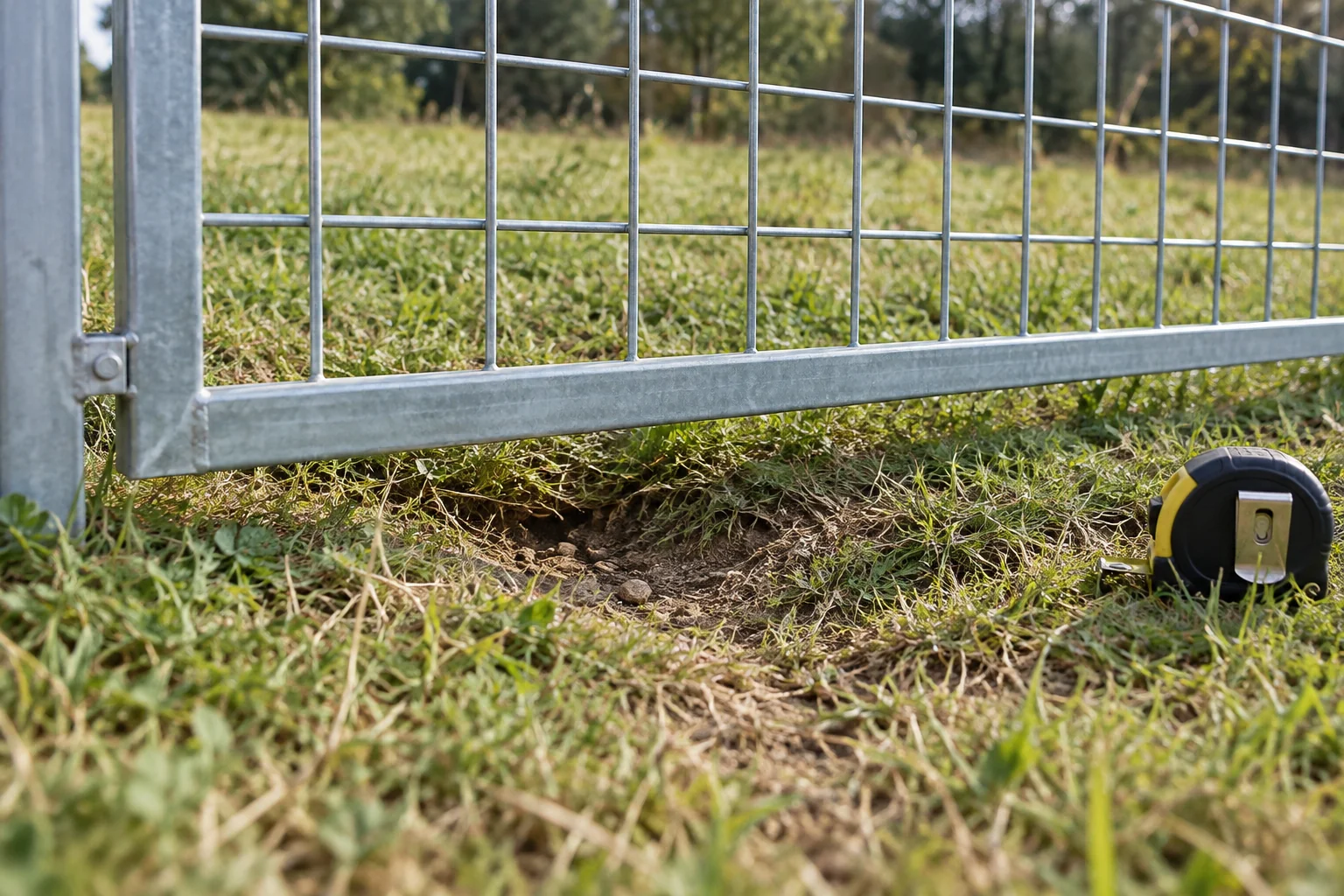
Specify the containment duty first: species, age, weight range, horn status, group size and behavioral pressure. Then request overall panel height and length, clear openings, tube dimensions, wall thickness, weld and connector details, gate clear opening, latch arrangement, finish and support requirements. Do not infer structural capacity or disease control from a photograph.
Choose gates that allow staff to feed, observe and remove an animal without uncontrolled release. A personnel pass gate may reduce how often a wide equipment gate is opened. Provide an emergency route that does not send the animal through the healthy herd. Latches should be operable under expected weather conditions and protected from animal manipulation.
Surfaces and components should fit the cleaning protocol. Ask how hollow sections are closed, whether joints trap organic material and whether the finish is compatible with the approved cleaning agents. The supplier can describe construction; the veterinarian or biosecurity adviser must approve the operating method.
How should observation, records and animal welfare be built into the plan?
Design for observation without unnecessary entry. Staff should be able to check appetite, water use, behavior and visible signs while maintaining the prescribed separation. Provide safe lighting, a secure place for records and a way to identify the animal or group and entry date.
The pen still needs suitable space, shelter, ventilation, footing, feed and water. Social separation can affect animal behavior, so welfare arrangements should be discussed with the veterinarian. Handling facilities must allow examination or treatment without exposing staff to avoidable risk.
Post operating rules at the controlled entrance: authorized personnel, servicing order, required clothing or footwear, equipment restrictions, cleaning steps and the contact for unusual illness. Record movements and cleaning. The physical pen is only one part of an effective biosecurity system.
What mistakes weaken an isolation-pen project?
- Using the isolation pen as overflow housing or storage
- Sharing a water source, feeder or tools without controls
- Allowing nose-to-nose contact across one fence line
- Routing manure, runoff or staff through healthy-animal areas
- Combining new arrivals with sick resident animals
- Choosing a remote location that cannot be observed or serviced safely
- Setting a fixed isolation period without veterinary direction
- Buying panels before the access, drainage and operating plan is approved
Do a tabletop walk-through with the owner, veterinarian and operating staff. Follow one animal from arrival to release and follow one worker through an entire service cycle. Mark every contact point. Revise the layout before ordering equipment.
How large should the isolation pen be?
There is no universal panel count or square-foot rule for every isolation pen. Size depends on species, animal number, body size, horn status, expected length of stay, feeding arrangement, shelter, handling needs and the veterinarian-approved operating plan. Start with the maximum group that could arrive together, not the average daily occupancy.
Separate usable animal space from service space. Gate swing, waterers, feeders, shelter posts and handling equipment reduce the clear area. Include a safe worker zone and enough access to remove bedding or manure without driving through healthy-animal areas. If one pen may need to hold two health groups, use fully separate compartments and service routes rather than a movable divider that encourages cross-contact.
Ask the ranch veterinarian and the applicable animal-welfare adviser to approve capacity and grouping. The equipment quotation should show physical dimensions and openings, but it should not claim that a panel count alone satisfies welfare or biosecurity requirements.
What should be included in the isolation-pen RFQ?
Provide a dimensioned site sketch, approved separation concept, animal information, gate openings, access routes, surface and drainage notes, cleaning requirements and delivery location. Ask for a complete panel-and-gate drawing, connection details, support method, material and finish description, packing plan and replacement parts.
Review HRC’s handling-system range, livestock panels and livestock gates as configuration references. Use the contact page to submit the veterinarian-reviewed layout. HRC can quote equipment to an approved drawing, but the ranch remains responsible for veterinary protocols, welfare, site design and regulatory compliance.