
Cattle may hesitate at shadows, reflections, abrupt floor changes or movement visible beyond a race. Inspect the route only when it is empty and isolated from animal traffic, then document where and when hesitation occurs. Visual distraction is one possible cause, not a diagnosis; review the whole handling arrangement before changing equipment.
What does the stopping pattern tell you?
Before replacing a section of race, find out whether cattle repeatedly hesitate at the same point. A problem limited to one doorway on sunny afternoons suggests a different investigation from slow movement throughout the entire system.
Record the location, time, weather, group and activity taking place nearby. Ask operators what they saw rather than what they think the animals intended. A description such as ‘the lead animal stopped at the bright floor patch’ is more useful for review than ‘the cattle were stubborn.’
This article is a purchasing and observation guide, not a set of instructions for moving difficult cattle. If behavior creates a dangerous situation, stop and obtain appropriate assistance. Equipment changes should be assessed by people competent in livestock handling and facility design.
How can you inspect what cattle see?
Arrange a separate inspection with the route empty and secured against animal entry. Do not enter an occupied race to photograph a suspected distraction. Coordinate access with the person responsible for operations and account for equipment that may move.
Once the area is appropriately isolated, look along the approach in the direction animals normally travel. Take an overall photograph before concentrating on a small detail. Include the entrance, the next visible space and nearby activity outside the rail line.
Temple Grandin’s distraction checklist identifies shadows, reflections and moving objects among possible reasons livestock balk. Use it to develop observation questions, not to conclude that every visible contrast must be removed. A photograph alone cannot establish the cause of a particular animal’s behavior.
Do shadows change during the working day?
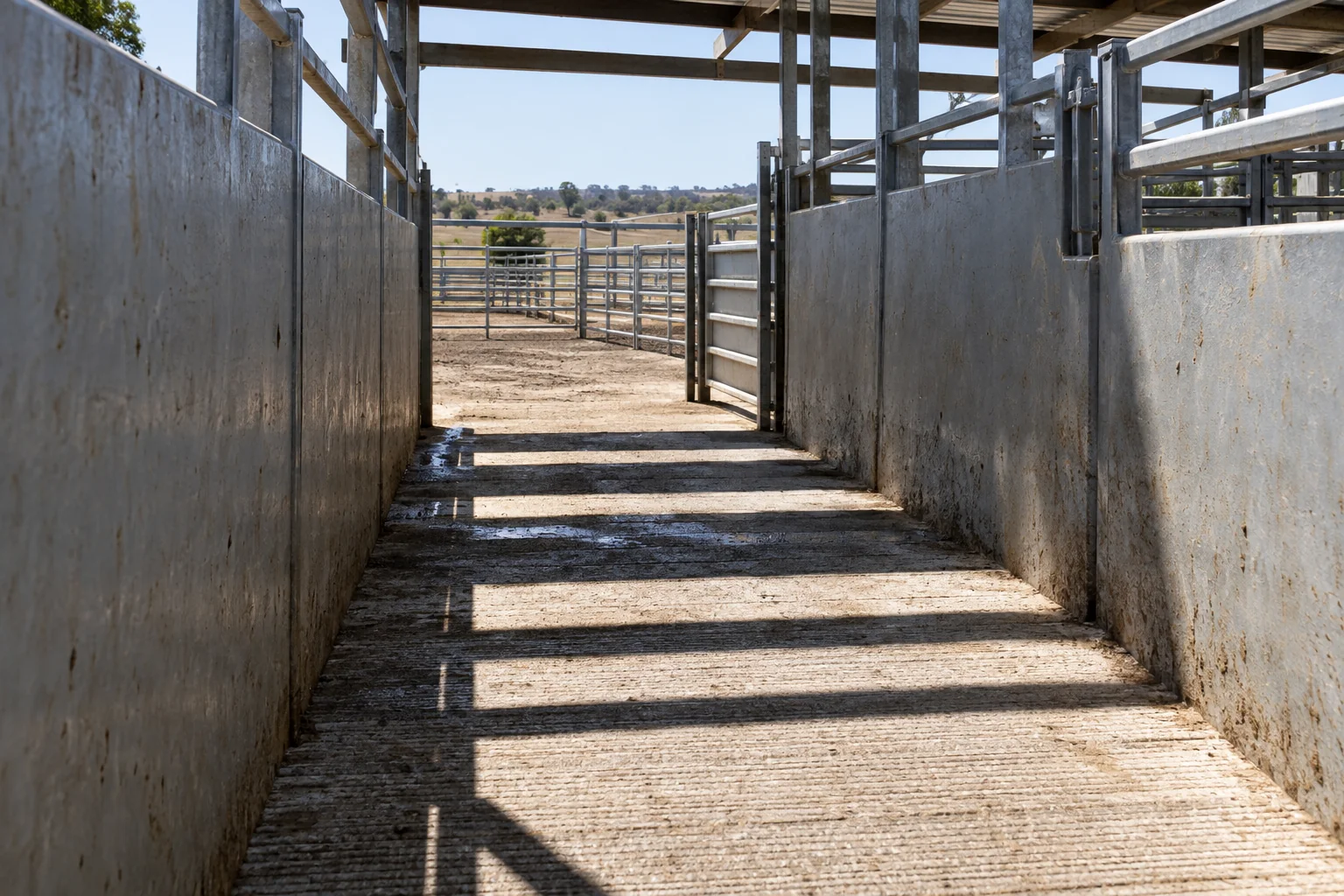
Compare the route at the times it is actually used. A morning inspection may miss a strong band of afternoon shade. Note the position of roof edges, posts and nearby structures in relation to the approach.
Capture photographs from a consistent location so the comparison is meaningful. Keep exposure reasonably representative; a phone can brighten a dark interior automatically and hide the contrast that interested you. Pair the picture with a written note rather than treating it as a precise measurement of animal perception.
If the pattern appears connected to lighting, ask a competent designer to review the transition. Do not assume that adding a brighter lamp is automatically the answer. The proposal should explain the intended light distribution and how it will avoid creating another conspicuous transition or glare point.
What should you note about reflections and floors?
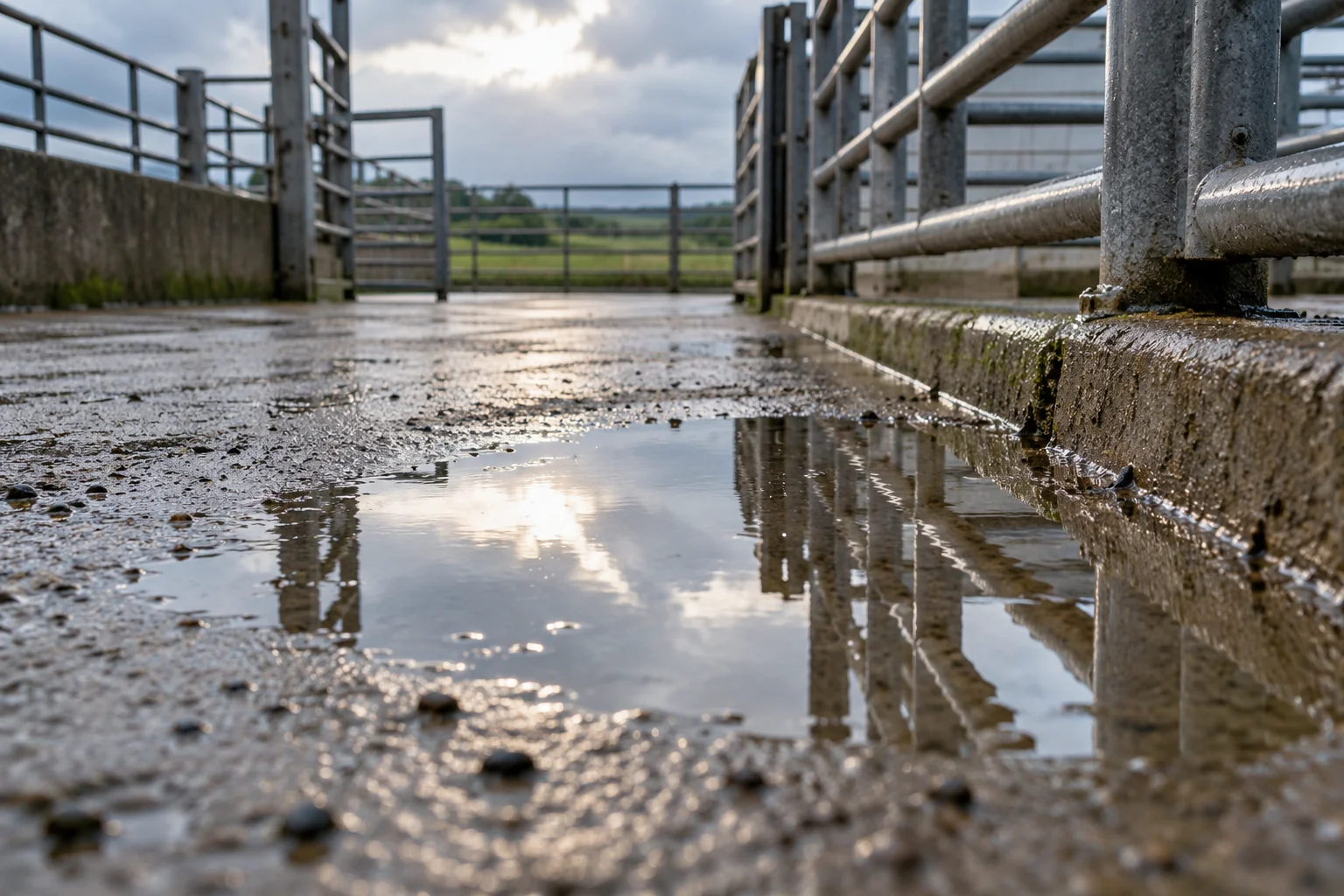
Look for conditions that change after rain, cleaning or a change in sunlight. Record where water remains and which surfaces appear reflective from the approach. Describe the observation without assuming that the reflection is the only issue.
Floor condition deserves its own review. A wet patch may raise questions about drainage or footing independently of its appearance. Do not cover an area with an improvised material solely to hide a visual contrast; any proposed floor treatment needs assessment for its intended use.
Photograph the wider surroundings as well as the close-up. This helps a reviewer distinguish a small temporary puddle from a recurring site condition. If a repair is proposed, define what it is intended to correct and how its completion will be checked before normal use resumes.
Could activity outside the race be visible?
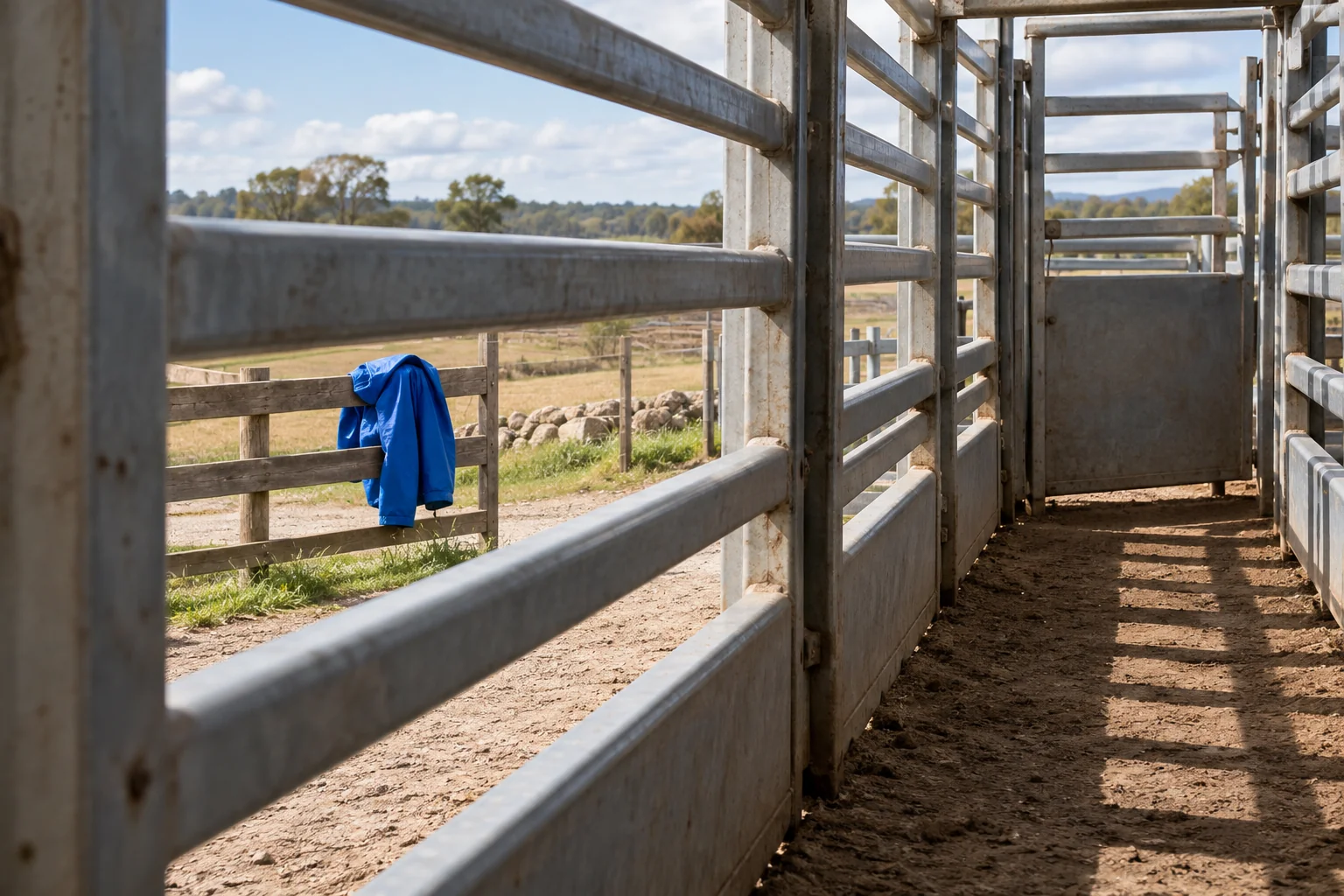
Observe the spaces beyond open rails. Staff walking across an opening, a parked vehicle or an item stored on a fence can change what is visible along the route. Note whether that activity occurs only during certain tasks.
Where an unnecessary object can be removed through normal housekeeping, record the change before considering a larger modification. Do not deliberately introduce distractions or use animals to test an improvised obstacle. Observation should fit within an established, competent handling routine.
Ask whether the proposed solution addresses a recurring requirement. Moving a stored coat is different from screening an essential service area. The first may be a housekeeping issue; the second may need design review. Keeping those categories separate prevents a small observation from turning immediately into an unnecessary equipment order.
Would solid sides solve the problem?
Sometimes screening is part of an appropriate design, but it is not a universal remedy. The HSE’s race guidance discusses reducing visual disturbances with sheeted sides while maintaining a clear onward view and suitable race configuration. These ideas need to be considered together.
Before adding sheets to existing rails, ask the equipment manufacturer or designer about the proposed attachment and the effects on the installed system. A modification may change visibility, access, cleaning or loading on components. A screen should not be treated as harmless simply because it is inexpensive.
Review the HRC handling-equipment range with a description of the actual problem. Request an application-specific discussion rather than buying solid panels on the assumption that all hesitation is caused by open rails.
What belongs in a useful observation log?
Keep the log short enough for operators to complete consistently. Its value comes from connecting an observation to conditions, not from assigning a speculative explanation to every pause.
| Observation | Context to record | Question for review |
|---|---|---|
| Hesitation near a doorway | Time, weather and an approach photograph | Does the light transition change? |
| Stopping beside a wet patch | Recent rain or cleaning and location | Are reflection, drainage or footing relevant? |
| Attention toward a service area | Activity visible beyond the rails | Can routine activity be relocated or appropriately screened? |
| Slow movement throughout | Group, staffing and full operating sequence | Is a wider handling-system review needed? |
These are illustrative questions, not diagnoses. Keep notes factual and allow the responsible adviser to assess alternative explanations.
How should you compare before and after a change?
Write down the intended change before it is made. If lighting, gate positions and staffing all change at once, it becomes difficult to understand which factor mattered. For routine observations, keep a record of those differences instead of presenting the result as a controlled experiment.
Use the same location names and a consistent definition of the event being recorded. For example, distinguish a brief pause from a stop requiring intervention. Do not promise a percentage improvement based on a few favorable movements.
Review the observations across representative normal operating periods with the responsible team. If a modification does not help, reconsider the explanation rather than escalating pressure on the animals. The purpose of the record is to support better decisions, not to prove that a purchased item must have worked.
What information helps an overseas supplier respond?
Send a short sequence showing the approach, the point of hesitation and the space beyond it. Include a simple layout and the location of the camera. Explain the animal group and the activity normally being performed.
Describe any proposed equipment change separately from the observation. ‘We see repeated hesitation here’ invites investigation; ‘we need taller panels’ assumes the answer. Ask the supplier which information is missing and whether a site-based professional should assess the issue.
For a quotation, identify the exact section involved, existing equipment references and who will review installation details. Avoid ordering an entire new system before the problem has been narrowed down. A well-documented issue can lead to a focused proposal, including the possibility that housekeeping or operating changes should be considered before new steelwork.
What should happen if visual changes do not help?
Broaden the review. Animal familiarity, group behavior, facility arrangement, equipment operation and staff practices may all need attention. Do not keep searching for a single visual explanation when the observations do not support one.
Keep the inspection process separate from live handling and arrange specialist advice where appropriate. A visual checklist complements a suitable facility and competent stockmanship; it does not replace either. It also does not certify an existing race as safe.
When you contact HRC about a handling-equipment change, bring the observation log and the specific question you need answered. The practical result should be a clearer decision: remove an unnecessary distraction, request a designed modification or investigate the wider system. Buying equipment is one possible outcome, not the starting assumption.