
Choose goat pen gates and panels by checking every potential escape or entrapment opening, not by the product name alone. Review mesh or rail gaps, the space beneath gates, horned animals, climbing behavior, latches and the installed ground profile. Ask for the actual drawing and inspect a representative sample; a catalog image cannot confirm safe fit for your herd.
Why do goat pens need a different purchasing brief?
Goats are not simply smaller cattle. The herd may include adults, kids, horned animals and breeds with very different body sizes. Some animals lean or climb on boundaries; others investigate gaps with their heads. A panel that contains one class of goats may leave openings for another. Before contacting a supplier, describe the smallest and largest animals expected in each pen, whether horns are present, and which areas are permanent, temporary or used for handling.
Penn State Extension’s meat-goat production guidance notes the challenge of keeping goats inside fencing and the tendency of goats to climb. That observation supports a more detailed site brief; it does not prove that any one panel type is suitable everywhere. Predator pressure, local rules and ground conditions can also change the boundary design.
Separate a perimeter fence from an internal pen gate. The former may have different security and installation demands. A supplier quote should identify which product serves which location rather than treating all boundaries as interchangeable.
Which openings should you measure?
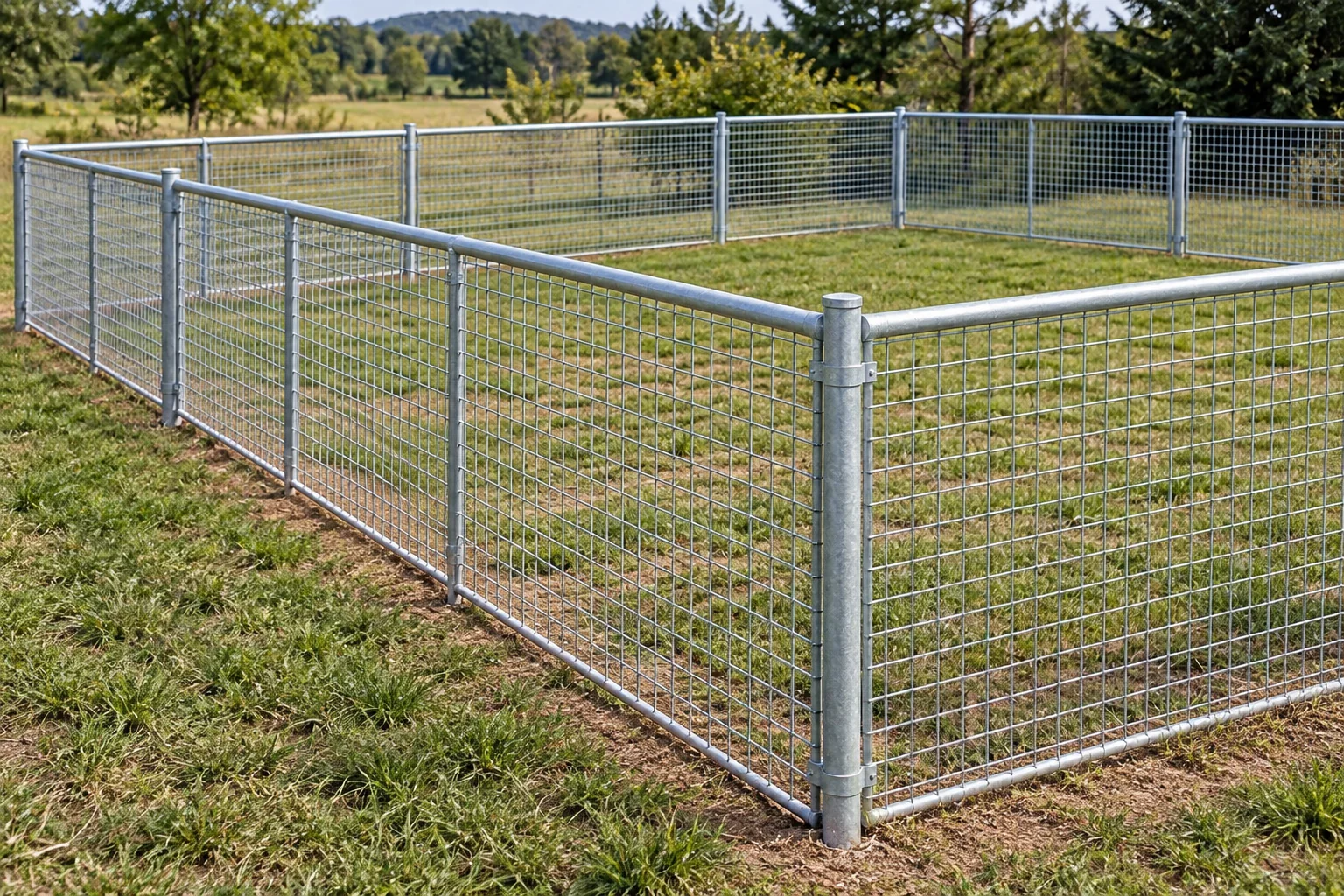
Do not evaluate only the central mesh or rail pattern. List the largest clear opening in the panel field, the gap beneath the bottom member, the space at adjacent panel connections, the opening beside the latch post and the clearance under the gate. Drawings often show overall width and height but omit these installed openings. Ask the supplier to mark them explicitly.
Measure openings as clear space between facing surfaces. A center-to-center dimension is not the same thing. Confirm whether the specified value is before or after installation and what tolerance applies. For a mixed-age herd, compare the pattern with the smallest goat or kid that can reach that pen. The HRC sheep-and-goat panel page is a starting point for a configuration conversation, not a substitute for an approved drawing.
Use a site sketch showing slope and low spots. An opening that looks small on a level sample can become larger over a hollow. Where the site changes level, document how the gate and adjacent panels will remain aligned.
How do horns change the risk assessment?
Horned goats can put their heads through openings and struggle to withdraw them. The relevant question is not only whether the body can escape, but whether a head or horn can enter and become caught. Ask Extension’s goat-fencing answer specifically highlights head entrapment for horned goats. Treat that as a prompt for herd-specific assessment, not a universal mesh-size prescription.
Describe horn shape and age groups in the buying brief. Review openings at the mesh, panel junction, gate hinge side and feeding barrier. Check the actual sample from both sides because a tapered space can admit a head in one direction while hindering withdrawal. Also check whether the animal can reach through to feed or vegetation outside the pen, which may encourage repeated contact with the boundary.
Where a proposed panel has uncertain openings, ask for a revised configuration or an approved infill detail. Do not bolt on loose material after installation without considering protrusions, cleaning, corrosion and connection loads.
Why does a gate need its own containment review?
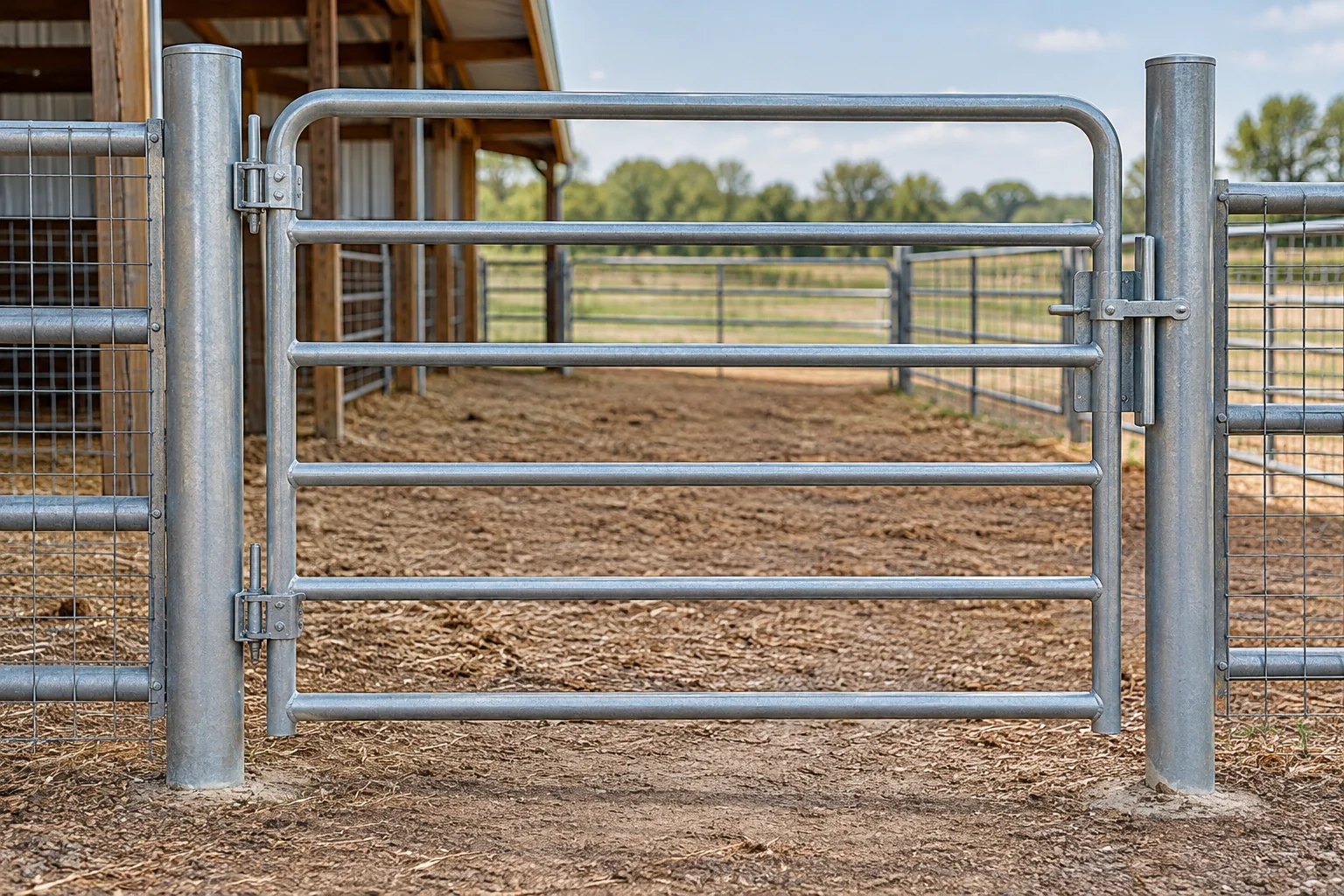
A gate is a moving boundary with hinge, latch and bottom clearances that differ from a fixed panel. Check the fully closed position and the partly open path. A strong-looking rail gate may still have openings too large for a particular kid or horned goat. Compare the gate’s rail or mesh pattern to the adjacent fence, then inspect the latch-post gap and hinge-side pinch points.
The illustration shows an open-rail gate, not a recommended goat design. It is useful precisely because it reminds buyers to question clear openings rather than assuming a generic livestock gate will contain their herd. Review HRC’s gate configurations with your herd description and require the chosen version to be documented. Do not claim a latch is escape-resistant merely because it appears secure in a picture.
Confirm which way the gate opens, where the handler stands, whether the latch can be operated from the intended side, and how the leaf is held open for cleaning or moving equipment. A poorly positioned gate can make otherwise suitable pen panels hard to use.
How should climbing and rubbing pressure affect selection?
Consider where goats are likely to put repeated pressure on the pen: near feed, at a preferred lookout point, beside a gate or along a shared fence. A smooth upper edge and correctly supported panel can reduce snagging opportunities, but a photograph cannot establish structural capacity. Ask for tube, mesh, weld and connection specifications appropriate to the proposed location. If a supplier states a load rating, request its test basis and installation conditions.
Make the pen environment part of the discussion. Objects placed close to the boundary may become steps that help goats reach the top. Vegetation beyond the fence may encourage leaning and climbing. Penn State Extension describes these behaviors in its production guidance. The buyer’s response should be an integrated layout and maintenance plan, not an unverified promise that a single heavier panel solves every problem.
Inspect connections after assembly. A rigid panel can still move if the post, clamp or ground fixing is unsuitable. Confirm the whole installed system rather than comparing isolated frame weights.
What happens at uneven ground and drainage points?
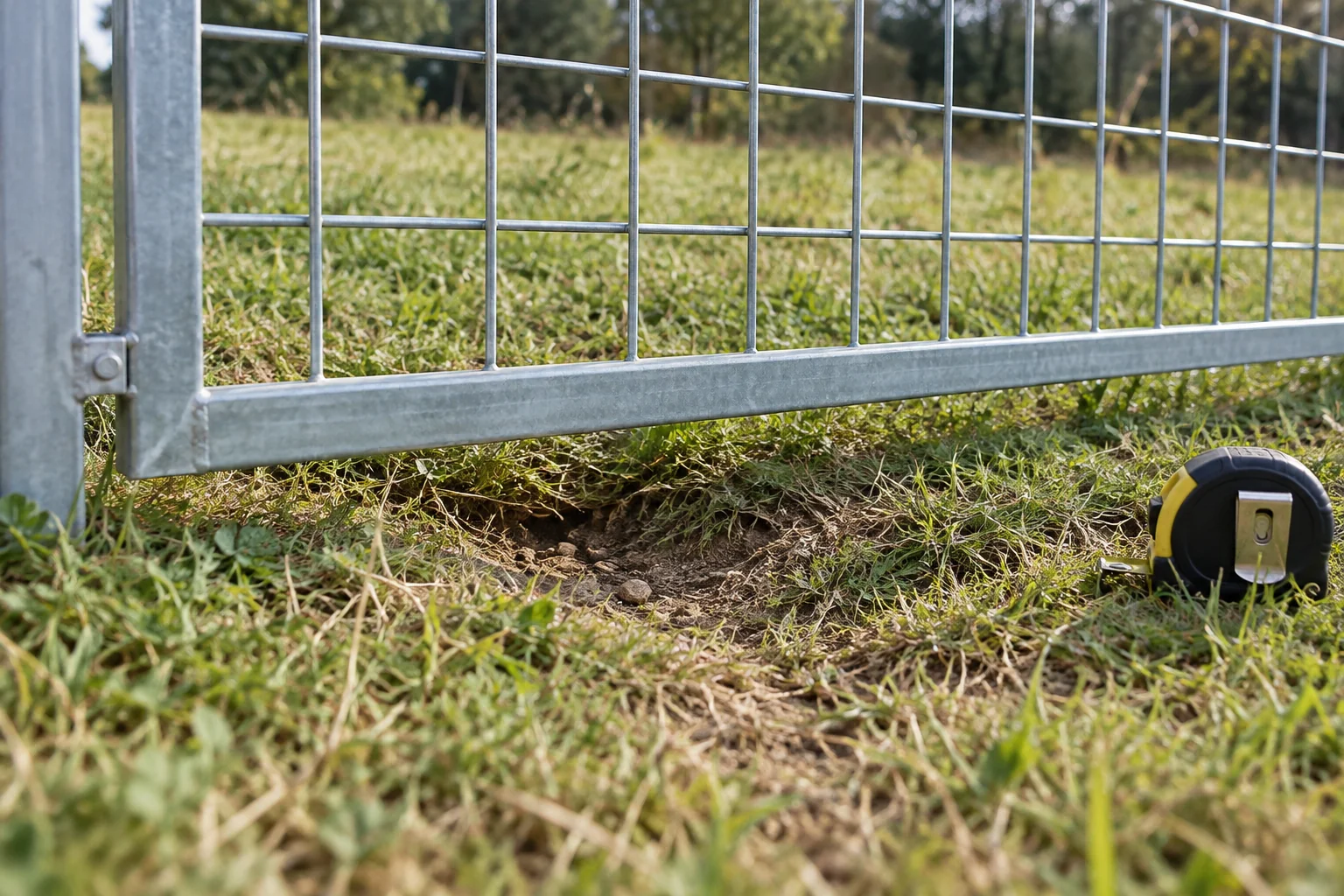
Ground clearance is a site measurement, not just a factory dimension. A level gate can leave a larger opening over a shallow depression. Conversely, a gate lowered to close one gap may scrape high ground and become difficult to latch. Identify the highest and lowest points along each swing and fence run before fixing hinges or ordering custom widths.
Photograph and measure low spots after rain as well as in dry conditions. Water movement can erode soil beneath a fixed panel, changing the gap later. Decide how the site will be graded or protected, and who will inspect it after storms. The illustration highlights a ground gap for inspection; it is not a safe-installation example or a numerical rule.
Keep drainage and cleaning access in the plan. Avoid a detail that closes one opening while trapping manure or blocking normal maintenance. A supplier should know whether panels sit on soil, concrete or another prepared surface because those interfaces alter installation details.
Which details belong in a buyer comparison table?
Ask competing suppliers the same questions. Mark each line confirmed, exception or unanswered; do not turn an unanswered line into an assumed pass.
| Item | Evidence to request | Site question |
|---|---|---|
| Openings | Clear-gap drawing and tolerance | Smallest and horned goats present? |
| Gate | Swing, hinge and latch detail | Can staff operate it safely? |
| Bottom edge | Installed clearance detail | Any slopes or erosion points? |
| Structure | Section, weld and connection details | Where will goats lean or climb? |
| Finish | Coating specification and repair method | Exposure and cleaning conditions? |
Do not equate a heavier product with a proven stronger installation. Connection and post details matter. If the quote mentions a coating standard, verify which product and process it covers, not just the word “galvanized.” Ask for sample inspection criteria and how differences will be resolved before shipment.
What should you send before placing an overseas order?
Send a marked-up pen plan, animal description and site photos. Identify every gate, expected animal group and interface with existing fencing. State whether horned goats or very young kids will use the area. Attach the clear-opening schedule and ask the supplier to highlight any proposed substitutions. Keep the final approved drawing with the quotation and packing list.
Before order approval, review a representative sample for burrs, projections, hinge alignment and latch operation. The sample is not a substitute for verifying the installation, but it can expose a misunderstanding early. Agree who measures the delivered components and how nonconforming openings will be recorded. Do not rely on a product photograph to settle a disputed dimension.
For product options, use the sheep-and-goat panel page and gate range as conversation starters. Send HRC your herd and site brief for a documented proposal rather than asking for a generic “goat-proof” gate.