
A creep feeding area should let lambs or goat kids reach feed while preventing adult ewes or does from entering or reaching through. Buyers should verify the entry opening against the actual youngstock and adults, allow adjustment as animals grow, place feed beyond adult reach, and keep the area dry and serviceable. A generic panel photo is not proof that an opening fits your flock.
What is the purpose of a creep feeding area?
Creep feeding gives nursing youngstock access to supplemental feed while adults are kept out. The equipment question is therefore not simply which trough to buy. It is how to create a youngstock-only zone, place the feed, maintain the boundary and still allow workers to inspect and clean the area. The layout should follow the farm’s feeding plan rather than pretending that a panel itself determines animal growth.
Penn State Extension’s guide to creep feeding lambs and kids discusses feeder access, entry design, dry bedding and the need to keep mothers away from feed. It also covers nutrition and animal-health issues that should be managed with the farm’s veterinarian or nutrition adviser. This article focuses on the panels and physical access, not a ration prescription.
Before purchasing, identify the age range of youngstock, adult size, horn status and whether lambs and kids use the same space at the same time. An entrance that works at the start of the season may need adjustment later. If groups differ greatly, separate creep areas may be more practical than one fixed opening.
How can youngstock enter while adults stay out?
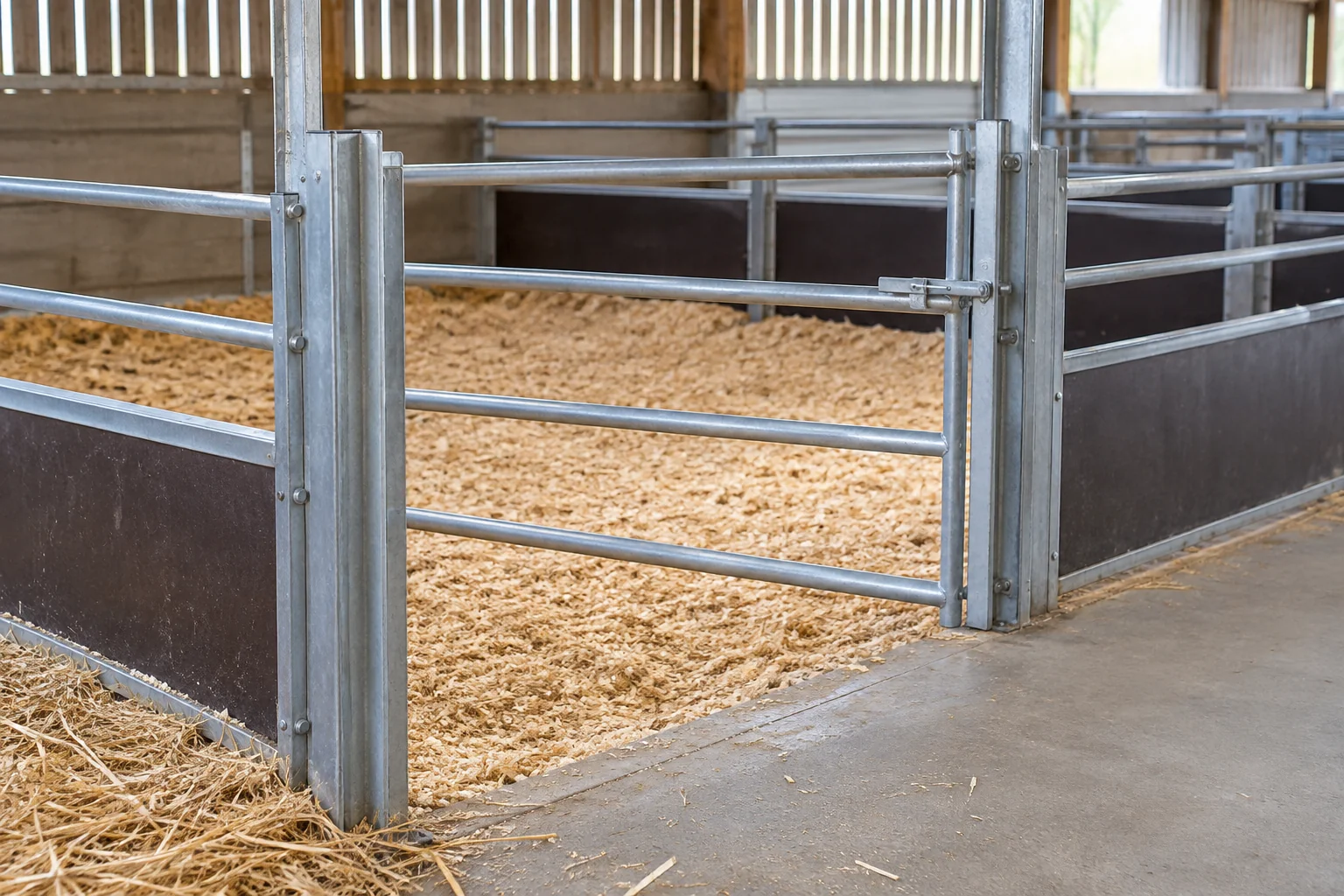
The entry is the controlling component. It must admit the intended lambs or kids comfortably yet exclude adult ewes or does. Check both width and height, not merely the number of bars. Observe the actual animals and verify the supplier’s clear-opening drawing before accepting a dimension. Wool, horns and body shape can affect how an animal passes through.
Penn State Extension provides example creep-panel opening dimensions for lambs and kids in its creep feeding guide. Those figures are published examples, not HRC product specifications or a universal acceptance rule. The guide also notes that adjustable openings can accommodate growth. If citing a number in a purchase brief, identify the source and still test the proposed opening against the animals that will use it.
Ask whether bars can be adjusted without leaving loose hardware or sharp edges. Specify how the adjustment is locked and who may change it. A narrow slot that excludes adults but causes youngstock to hesitate, rub or become trapped is not a successful design. The final trial should use real animals under supervision, not a photograph.
Where should the feeder sit relative to the entry?
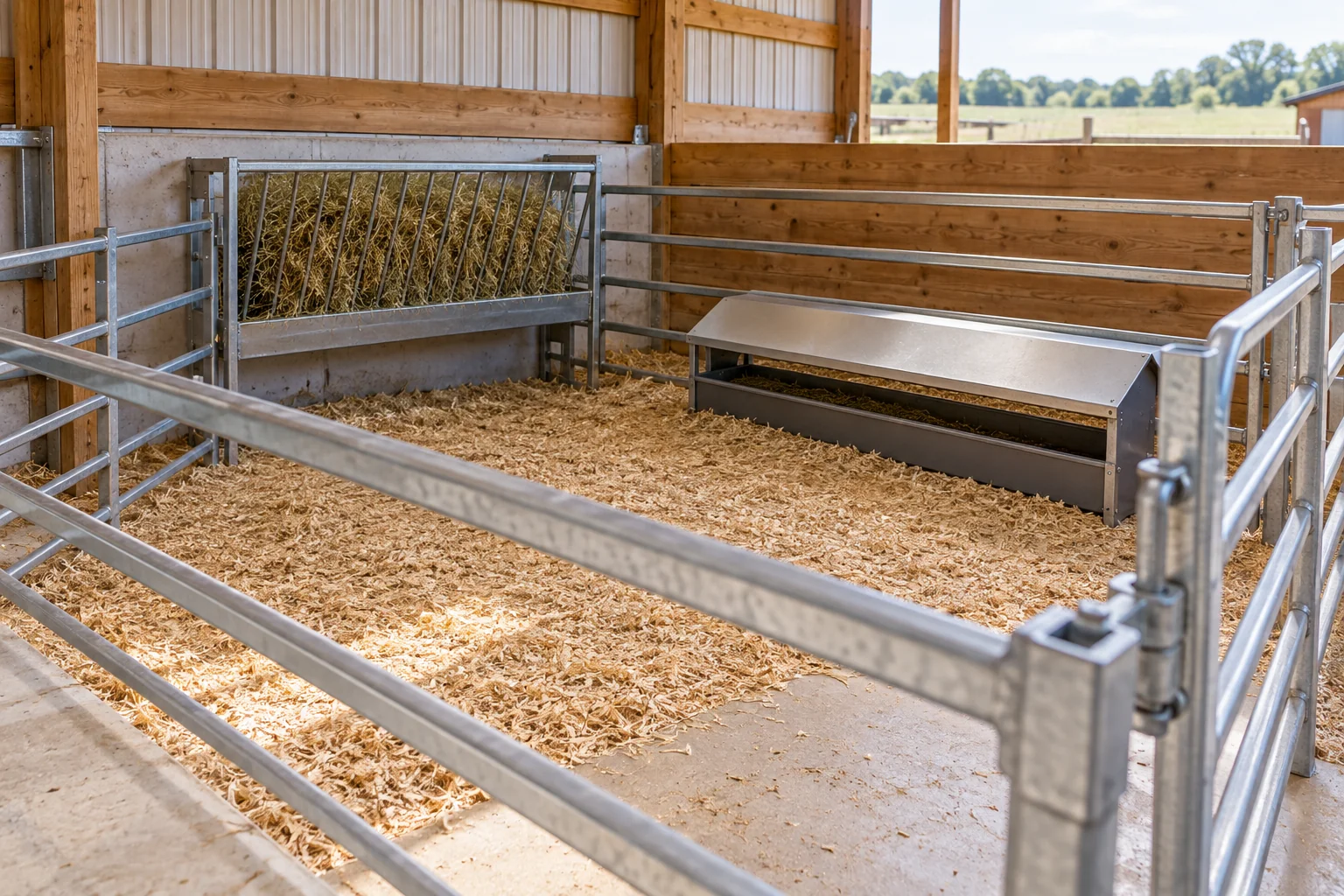
Place feed far enough inside the creep zone that adults cannot reach it through the access opening or over the side panel. Consider both a grain trough and a hay source if the farm’s feeding plan calls for them. The buyer should check how feed is added, whether spilled material can be removed and whether youngstock can reach it without crowding a single point.
The Penn State Extension guide specifically recommends locating feeders inside the protected area beyond mothers’ reach and keeping the area dry and accessible. This supports a layout decision; it does not establish a universal feeder model or ration. Ask the supplier for the actual trough and rack drawings rather than assuming the conceptual illustration represents an HRC item.
Walk the service route with a feed container. Staff should be able to refill and inspect the feeder without opening the animal boundary into the adult pen. If the only access requires a worker to step into a crowded ewe or doe group, the layout deserves revision. The HRC feeding-equipment page can help identify equipment families to discuss.
What floor, bedding and weather conditions matter?
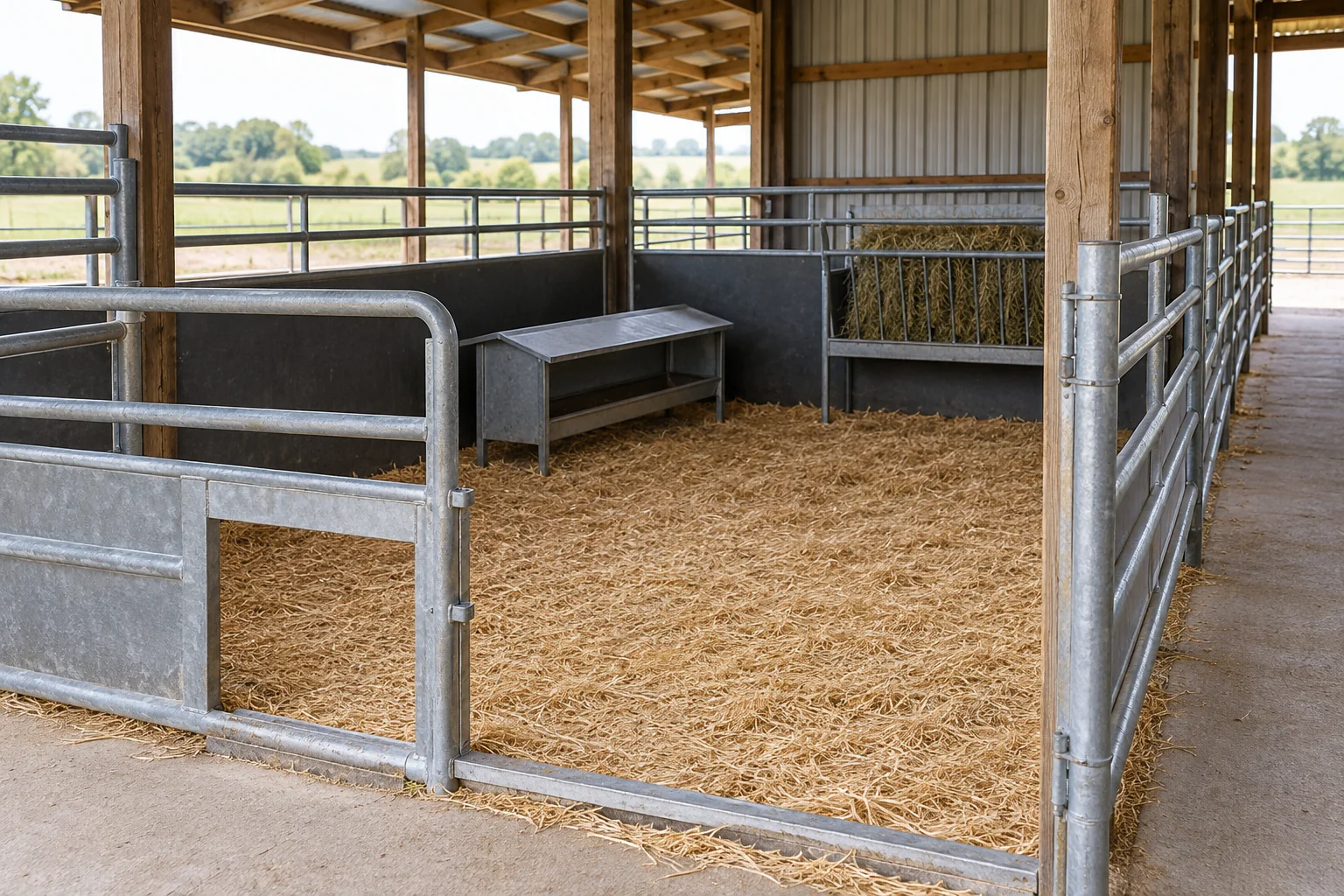
A youngstock-only entry is of limited value if the protected zone stays wet or drafty. Locate it where animals can rest and feed on a dry surface. Note roof drainage, splash from adjacent passages and whether bedding can be replaced without dismantling the pen. A level, cleanable service approach makes daily checks more realistic.
Penn State Extension’s creep-area guidance recommends a dry, well-bedded space protected from cold drafts. Its discussion is a management reference, not a construction approval for any depicted barn. The actual climate and housing system determine how much shelter is needed.
Review a plan in wet-season conditions, not only on a sunny day. Where runoff crosses the animal area, solve that drainage problem rather than raising a panel until a new escape gap appears. Make sure the gate still operates when bedding depth changes. If a trough is mounted near the ground, check whether its cleaning access remains practical after bedding is added.
How can the boundary stay useful as lambs and kids grow?
A fixed opening may not suit every stage of growth. Record the intended age and size range for each setting, then agree how changes will be made. If the farm produces several cohorts, label the setting and keep the approved adjustment procedure with the equipment. An adjustable design is only helpful if the hardware remains secure after repeated changes.
Check all parts that move or are removed: pins, clamps, bars and stops. Where will a removed piece be stored so it cannot be lost in bedding? Can a worker adjust the gate without creating an unguarded route into the adult pen? Ask the supplier whether replacement components are available and how the opening is measured after reassembly.
Observe the animals after any adjustment. If youngstock stop using the entry, rub against it or adults begin reaching the feeder, reconsider the setting. Do not regard a recommendation copied from another farm as final evidence of fit. A recorded trial with the actual flock is a stronger basis for a routine operating procedure.
Which purchasing questions belong in the comparison table?
Evaluate the access panel and feeder as a working system. The table separates a supplier’s evidence from the checks the farm must perform.
| Component | Request from supplier | Verify at farm |
|---|---|---|
| Youngstock entry | Clear-opening drawing and adjustment method | Fit for lambs or kids and adult exclusion |
| Boundary panels | Connections and edge details | Gaps, projections and stability |
| Feeder | Mounting and cleaning access | Adult reach and youngstock crowding |
| Service gate | Swing, latch and lock position | Safe refill and bedding access |
| Finish | Material and coating specification | Cleaning regime and local exposure |
Do not accept “lamb-proof” or “kid-safe” as a substitute for a drawing and supervised fit test. Ask how dimensional tolerances are checked and what the supplier considers an exception. Keep the final approved configuration with the purchase order, not only in an email thread.
How should cleaning and feed checks be arranged?
Daily work often determines whether a good-looking creep area functions well. Decide who checks feed freshness, water access, bedding condition and entry operation. Make those inspections possible from a service position without opening the entire adult boundary. A gate that is awkward to latch will eventually be left open; avoid making good practice dependent on an inconvenient routine.
Separate feed handling from waste removal. A worker should be able to remove stale or contaminated material without carrying it across clean stored feed. Penn State Extension discusses keeping feed fresh and discarding feed contaminated with feces. The farm’s animal-health adviser should guide feeding and disease-control decisions; the equipment layout should make those decisions feasible.
Inspect corners and under-trough spaces where waste can accumulate. Ask whether the feeder can be moved or opened for cleaning and whether its mounting hardware remains accessible. If cleaning requires special disassembly, include that labor in the purchasing comparison rather than looking only at equipment price.
What should an overseas buyer send with a creep-area request?
Provide the supplier with the livestock classes, estimated number of youngstock in the protected group, adult sizes, whether animals are horned, housing sketch and service-side access. Mark existing posts and feeding points. Ask for a drawing that identifies the entry opening, adjustment positions, panel connections, feeder location and cleaning gate. Treat every AI image in this article as a conceptual visual, not a copy of the proposed product.
For an overseas order, align the drawing, bill of materials and packing list. Label adjustable bars, hinges and latches so the installation team can find the right components. Request a sample or detailed photographs of critical connections, then verify the delivered hardware against the agreed drawing. No article can confirm performance for a flock it has not examined.
Start with the HRC feeding range and sheep-and-goat panel information, then send the farm brief to HRC for a documented proposal. The feeding program itself belongs with the farm’s veterinary and nutrition advisers.