
1. Define the Job Before Choosing a Panel
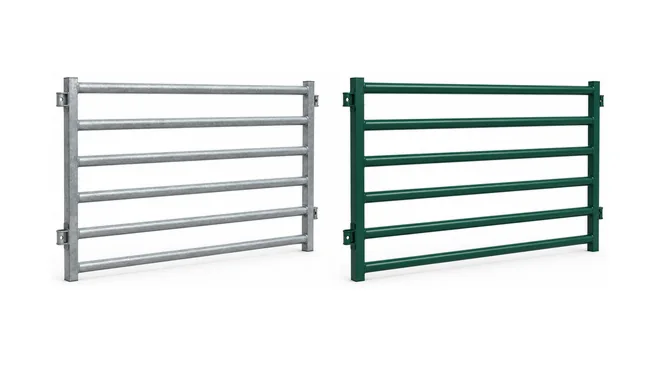
Buying cattle panels for an overseas ranch involves more than comparing photographs and unit prices. A panel must suit the animals, the layout, the handling routine, and the conditions in which it will work. An inexpensive order can become costly if gates do not fit, replacement pins are unavailable, or the panels require unexpected site modifications.
This guide focuses on tubular steel panels for corrals, holding pens, and related ranch applications. Start by distinguishing these from pasture perimeter fencing and purpose-built handling equipment. A portable pen panel should not automatically be specified for a crowding area or used as a substitute for a restraint system.
Prepare a short application brief: cattle type and size, horned or polled stock, expected group sizes, frequency of handling, permanent or temporary installation, ground conditions, and available unloading equipment. Share a layout sketch with every supplier so quotations address the same job.
2. Match Panel Strength to the Working Area
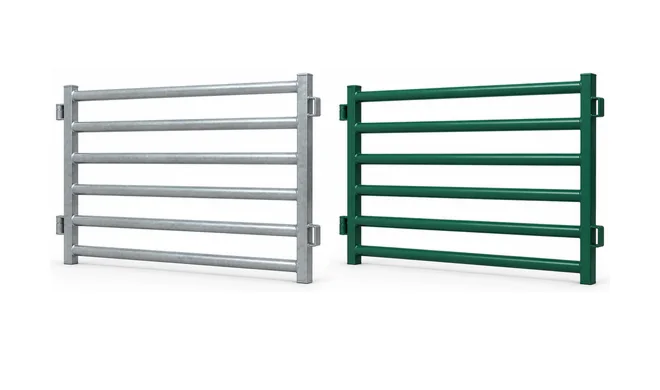
Different parts of a facility place different demands on fencing. Quiet holding areas and locations where animals bunch, turn, or move toward a handling system should not be treated as identical purchasing requirements. Ask the supplier to identify the intended application and limitations of each proposed model.
Terms such as “heavy duty” are useful product labels, but they are not a complete technical specification. Request the steel grade, tube profile, outside dimensions, nominal wall thickness, manufacturing tolerances, and finished panel weight. Ask what evidence supports any stated load rating and whether it applies to an individual panel or an installed assembly.
Compare like-for-like designs. Weight alone does not establish suitability: rail arrangement, joints, connectors, supports, and installation also matter. If your application involves particularly demanding animals or operating conditions, obtain a project-specific recommendation before selecting the panel.
3. Specify Dimensions, Rail Spacing, and Clearances
Specify overall height and width, then confirm exactly where the supplier measures them. Panel width, installed bay width, and clear gate opening may be different dimensions. A small misunderstanding repeated across many bays can affect the entire layout.
Choose rail spacing and bottom clearance for the cattle actually using the pen, including younger animals where relevant. Discuss potential head, leg, and horn entrapment points rather than choosing solely by rail count. There is no single dimension that suits every herd and application.
Request a dimensioned drawing showing rail positions, end posts, connector locations, feet, and gate openings. Include uneven terrain and drainage in the review. For overseas purchasing, place metric dimensions and any required imperial equivalents on the same approved document, and state which units govern acceptance.
4. Compare Fixed and Portable Installations
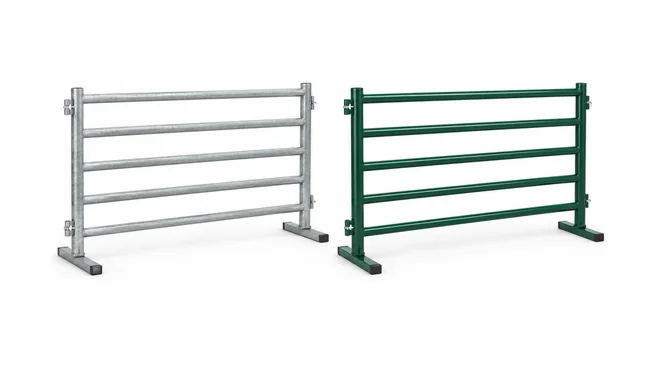
Portable panels can be useful when a ranch changes pen arrangements or moves equipment between locations. However, portability should be evaluated as a working routine: how many people move each panel, how frequently, and with what lifting or transport equipment?
Ask about panel weight, connection method, feet, stacking arrangement, and the recommended method of securing the assembled pen. Feet visible in a product image do not demonstrate that an assembly is suitable without additional support. Follow the supplier’s installation instructions for the actual application.
For permanent installations, discuss posts, foundations, attachment details, and compatibility with existing structures. Include the cost of ground preparation and installation labor in your comparison. A mixed layout may make sense, with fixed infrastructure and removable sections where operational flexibility is needed.
5. Inspect Welding and the Surface Finish
Ask for close photographs of rail-to-post joints, brackets, weld transitions, and exposed edges. Product images are useful for screening, but purchase acceptance should rely on agreed inspection criteria. Specify what counts as unacceptable distortion, sharp edges, incomplete joints, or coating damage, and how defects will be resolved.
Clarify the actual corrosion-protection process. “Galvanized” can describe different manufacturing sequences, so ask whether the assembly is coated after fabrication or made from pre-coated material, and how welded areas are treated. For painted or powder-coated products, request the preparation method and coating specification.
Explain the operating environment, including exposure to moisture, manure, washdown, or coastal conditions. Request maintenance and repair guidance suited to that environment. Do not infer coating thickness, durability, or a guaranteed service life from a silver-colored or green finish in a photograph.
6. Treat Gates and Connectors as Part of the System
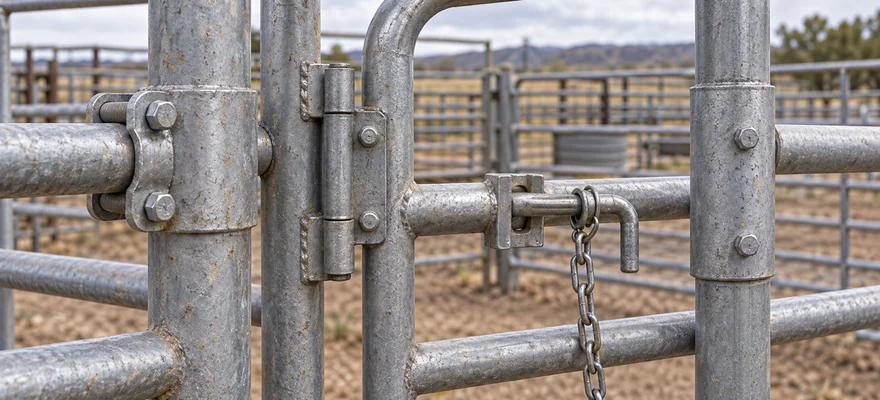
A panel order is incomplete without compatible gates, pins, hinges, latches, and other connection hardware. Check connector position, pin diameter, mating clearances, and the connection between old and new equipment. Similar-looking brackets may not interchange.
Review gate operation on the layout drawing, including swing direction, clear opening, latch access, and obstructions. The UK Health and Safety Executive advises properly hanging gates so they can open fully against a pen wall and minimizing projections that could injure people or animals. Apply these principles within a facility design appropriate to your operation.
Request a hardware schedule showing what is included with every panel and gate. Add a clearly identified spare-parts package and retain the component drawings. The accessory photo illustrates why details at the connection point deserve as much attention as the panel itself.
7. Review the Layout Before Confirming Quantities
Count panels only after reviewing the complete facility arrangement. Mark holding areas, sorting routes, handling equipment, loading access, and the routes used by people. Mississippi State University Extension treats cattle-handling facilities as an integrated system that includes pens, alleys, chutes, flooring, and safety features.
A supplier’s panel drawing is not the same as a complete handling-facility design. Have the proposed layout reviewed by someone familiar with your cattle and working practices. Identify operator access and escape provisions, and check that gates can be operated from appropriate positions.
Number each panel run and gate on the drawing. Use those references in the bill of materials so everyone can reconcile quantities, accessories, and installation positions before fabrication begins.
8. Compare Delivered Cost and Packing Details
Request quotations against one specification and quantity schedule. Separate panel and gate prices, included hardware, packing, inland transport, and the agreed delivery scope. Ask your freight provider to quote the remaining transport and destination services for that same scope.
For practical budgeting, compare the estimated cost delivered to your ranch rather than the panel price alone. Include unloading, onward transport, installation, and spare parts. Confirm destination charges and any applicable import requirements with your own logistics advisers before committing.
Request bundle dimensions, gross weights, quantities per bundle, and a loading plan. Tell the supplier what equipment will unload the shipment. Ask how finishes and projecting connectors will be protected, and how each bundle will be labeled to match the packing list and site drawing.
9. Agree on Inspection and Acceptance
Before paying for a large production run, agree on a sample or first-article review where practical. Approve the drawings, material specification, finish, hardware, and packing requirements in writing. Record revisions so the factory and buyer work from the same version.
Define a pre-shipment inspection plan covering quantities, selected dimensional checks, workmanship, coating condition, and assembly of representative connections. If material or coating test records are required, specify them at the quotation stage rather than after production.
Also agree on defect reporting, replacement arrangements, and responsibility for associated freight. These details are especially important when replacement parts must travel internationally. Keep dated photographs and inspection records with the purchase documents.
10. Send a Clear Request for Quotation
A useful request for quotation should include the following:
- Destination, cattle type, intended use, and layout drawing.
- Panel and gate quantities, dimensions, and connection requirements.
- Requested material, finish, inspection, and packing details.
- Installation conditions, unloading equipment, and spare parts.
- Required delivery timing and the requested quotation scope.
Ask suppliers to identify exceptions explicitly instead of assuming every requirement is included. Select the offer that best matches the agreed application, documented specification, and delivered cost.
For a HRC quotation, share your layout, destination, and preferred panel configuration. Request a documented proposal and confirm the final specification before placing an order.
Further reading: HSE: Cattle handling facilities; Mississippi State University Extension: Beef Cattle Handling Facilities.