
Plan a temporary cattle pen as a complete movable system, not a pile of panels. Define its purpose and cattle group, review the site and gate positions, obtain a suitable support and connection design, and plan how the equipment will be moved and stored. Portable does not mean suitable without securing or supervision.
What job will the temporary pen perform?
A pen used briefly while cattle move between paddocks has a different operating brief from an enclosure expected to support a full handling day. Before counting panels, state the purpose, the cattle group, how long animals will remain there and what work will occur around it.
Separate holding from restraint. A temporary perimeter does not turn into a suitable veterinary handling facility simply because a gate is closed. The HSE livestock guidance stresses appropriate facilities and competent workers, and warns about makeshift equipment. Use purpose-designed handling equipment where the task requires it.
Describe whether the same panel set will move between several sites. List the differences between those sites, including access, ground conditions and available equipment. The most convenient layout at one location may not be practical at the next.
Write this brief before requesting prices. It gives the supplier a meaningful basis for recommending a configuration and prevents temporary from being interpreted as permission to leave essential design questions unresolved.
Which site conditions should you review first?
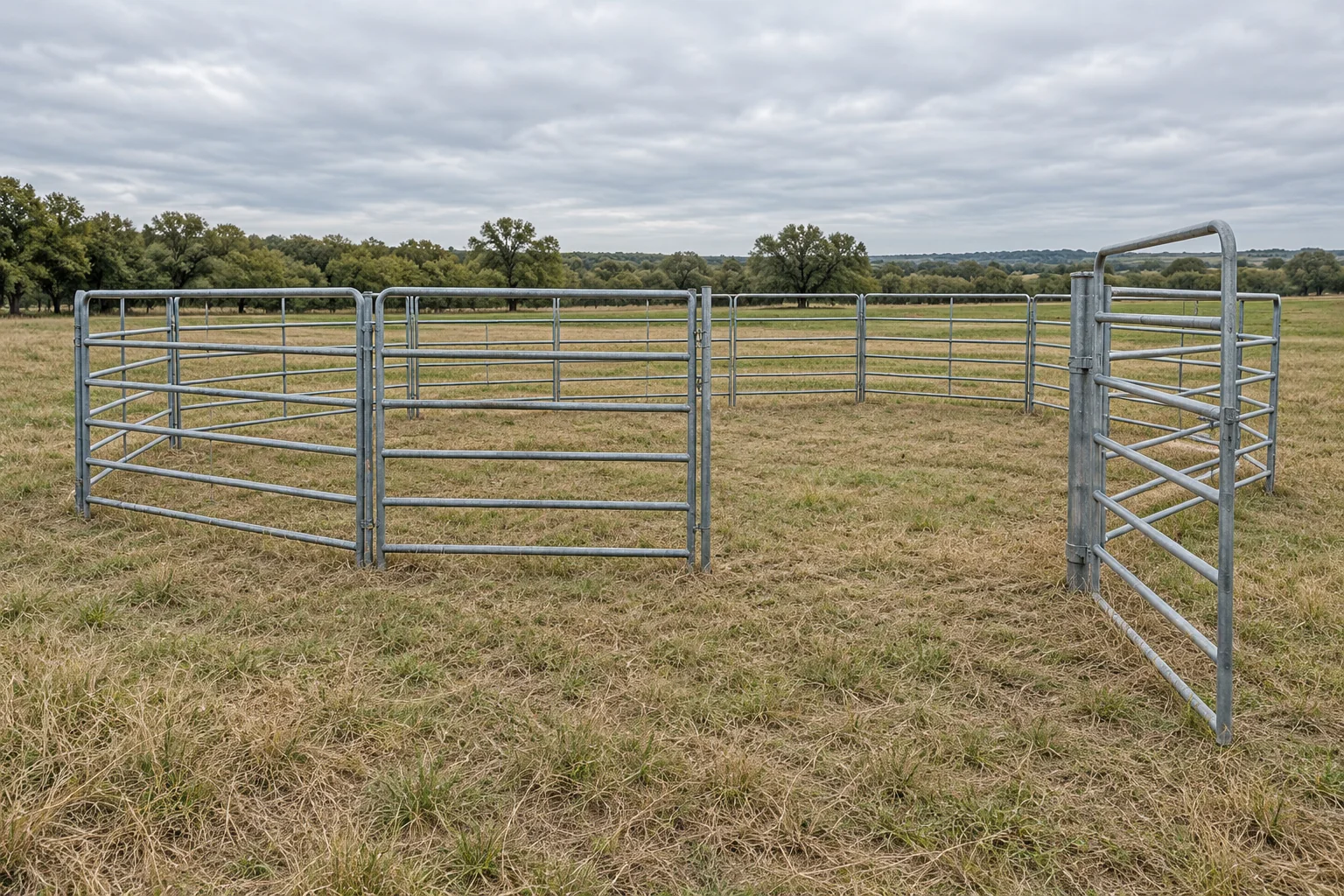
Walk the proposed footprint before choosing its shape. Note uneven ground, soft areas, drainage paths and obstructions. Check access for the equipment that will deliver and remove the panels, not only the route cattle will use. A location that is accessible in dry weather may need a different plan after rain.
Identify where people will work and how they will remain separated from animal movement where necessary. Keep vehicle positioning, gate movement and equipment staging visible on the same sketch. Do not use a convenient vehicle or nearby fence as an improvised support without an approved arrangement.
Mississippi State University Extension’s Beef Cattle Handling Facilities guide treats pens, movement routes and safety features as parts of a complete facility. For a temporary setup, apply the same whole-system thinking rather than reviewing each panel in isolation.
Have the site-specific arrangement reviewed before animals arrive. This article provides planning questions, not a substitute for a suitable design.
How do you turn a layout into a reliable panel count?
Draw the intended perimeter and label every gate, shared boundary and special connection. Use the supplier’s installed bay dimensions, which may differ from a panel’s catalog length. Count full bays on each run instead of dividing a rough perimeter by a nominal length and rounding once.
For example, an illustrative 24 m run would use ten bays only if each installed bay contributes exactly 2.4 m and no gate replaces part of that run. Real connector spacing, corners and gate assemblies can change the answer. This arithmetic is a counting example, not a recommended pen size or stocking capacity.
| Line item | What to record |
|---|---|
| Panel run | Drawing reference, installed bay length and quantity |
| Gate assembly | Opening, swing and required supporting components |
| Corner or junction | Specified connection and support details |
| Hardware kit | Included parts and separately identified spares |
Confirm capacity separately for the cattle, holding duration and operating conditions. Perimeter length alone does not answer that question.
What makes a panel practical to relocate?
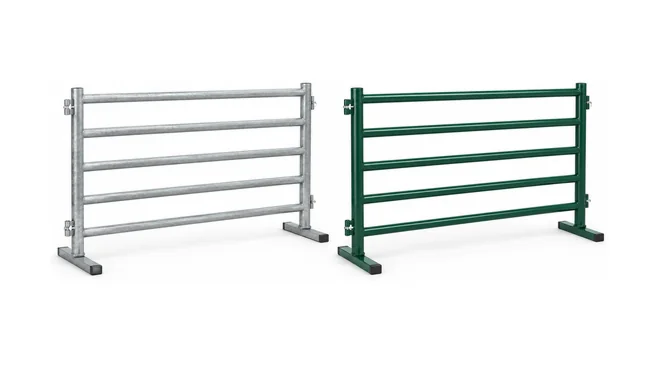
Ask for the finished weight and dimensions of the quoted build, then assess the whole movement routine. Who disconnects it? What equipment is available? How far must it travel? Where will it be set down? A manageable panel on a smooth yard can be awkward on uneven ground or through a narrow doorway.
Review projections as well as overall dimensions. Feet, connector lugs and retained hardware influence stacking, carrying clearance and the space needed in a rack. Request a handling and storage method for the selected configuration instead of improvising one after delivery.
The HRC portable-panel page can be used to discuss these requirements. Its example dimensions are starting points; final weight and construction should be confirmed for the order.
Portability is an operational requirement, not simply the absence of a permanent foundation. If the planned crew and equipment cannot move the system as intended, revise the purchasing brief before committing.
How should you plan gates and setup responsibilities?
Place gates where they support the intended movement, then check their full sweep and the position from which they will be operated. Include equipment access and any separate personnel access required by the design. Do not assume a removable panel is an appropriate substitute for an operating gate.
Ask the supplier to define the support and connection arrangement for the complete enclosure. Ground conditions and intended use matter; generic photographs cannot establish the correct securing method. Obtain clear instructions for corners, ends, gates and any interface with existing structures.
- Assign one person to hold the current layout and component schedule.
- Identify the crew and equipment required for setup.
- Follow the approved assembly and securing instructions.
- Check connections, gate operation and unintended openings before use.
- Keep animals out while the enclosure is incomplete.
Agree who can approve a layout change. If a gate arrives in a different configuration or the site is not as expected, resolve that discrepancy before improvising an alternative in the field.
What should happen before every new use?
A portable set changes location and may change configuration, so a previous successful setup is not proof that the next one is ready. Review the current site, the intended cattle group and any changes to the operating plan. Confirm that the assembled arrangement still matches the instructions.
Check for missing or damaged components and remove questionable equipment from service pending assessment. Confirm that pins and retainers are correctly fitted, gates operate as intended and routes remain usable. Keep spare parts identifiable so a similar-looking component is not substituted without checking compatibility.
Plan what happens if the ground deteriorates or the operation cannot proceed as expected. Identify a suitable alternative before the pen is occupied. Water, shelter and other animal-care needs depend on duration and conditions and should be reviewed with competent local advice.
Record practical observations after each use: difficult connections, inaccessible gate positions or an awkward unloading route. Use those observations to improve the next setup, not to normalize a recurring problem.
How should you dismantle and store the system?
Plan dismantling as deliberately as assembly. First ensure the enclosure is empty and the working area is controlled. Follow the supplier’s sequence and handling instructions, maintaining necessary support until each component can be moved safely. Do not assume the last remaining section will stand by itself.
Count hardware into identified kits and separate damaged items from serviceable ones. Clean and care for the equipment according to its finish and manufacturer instructions. Record missing parts immediately, while the team still remembers where each assembly was used.
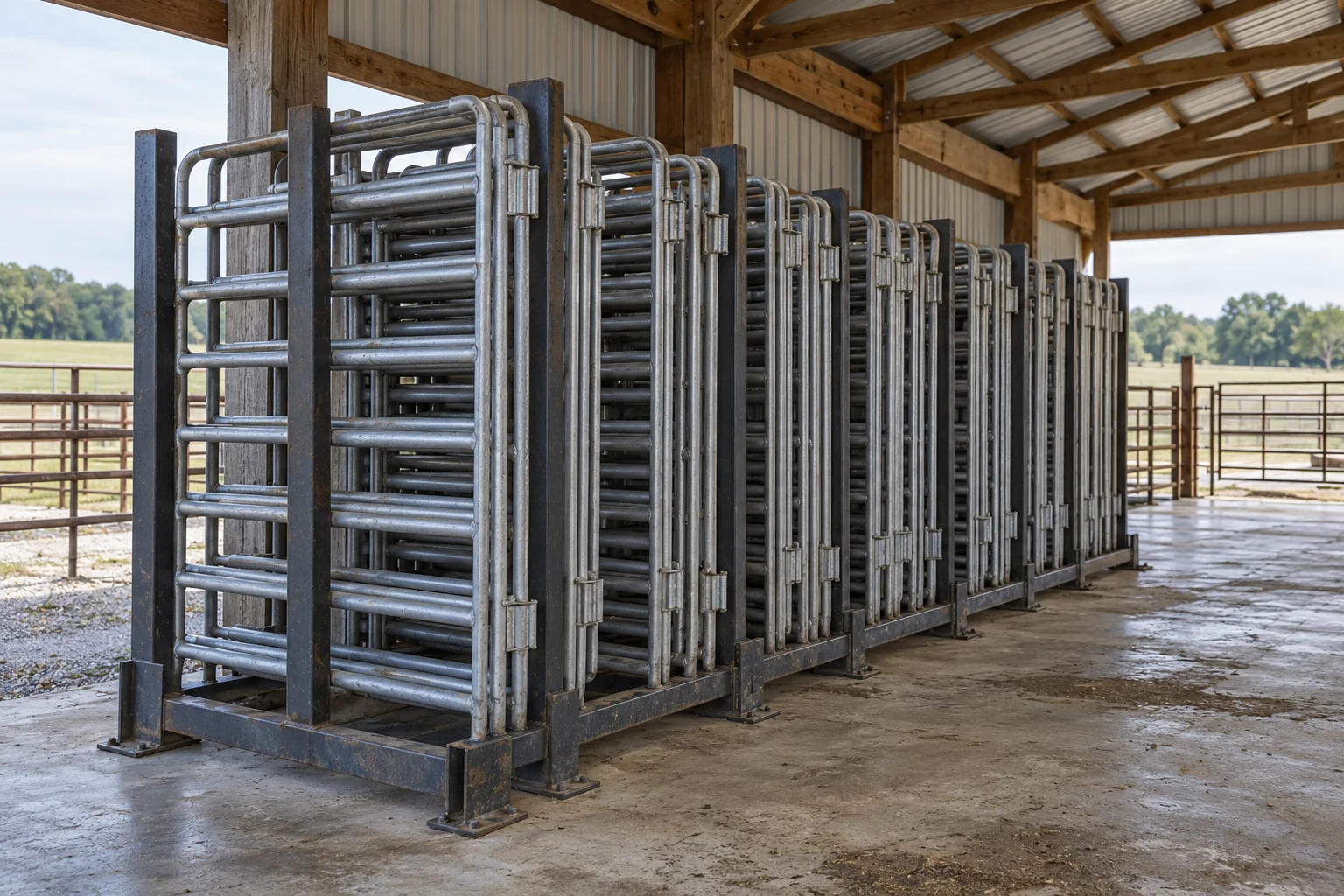
Choose storage that accommodates the panel shape and prevents uncontrolled movement. Rack suitability, restraints and lifting arrangements should be assessed for the actual equipment; an illustration is not a storage design. Keep access clear so retrieving one panel does not require disturbing an unstable stack.
Store the current layout and component schedule with the equipment records. The next crew should be able to identify the set and understand its intended configuration without relying on verbal recollection.
Can one portable panel set serve several sites?
Possibly, but prepare a separate approved layout for each location. Record the components shared by every configuration and the additional gates, connections or supports specific to one site. Color coding or durable identification can help the crew distinguish kits, provided it does not replace the component schedule.
Check the transport and staging route at every destination. A panel set that fits the main yard may still be awkward to move through another site’s access point. Compare the actual movement sequence before calling the system interchangeable.
Keep a site checklist with the layout so changes are noticed before use. If ground conditions, adjoining structures or the intended cattle group have changed, review that location again. Reusing equipment should save unnecessary purchasing, not eliminate the need to assess a new installation.
What should an overseas buyer include in the enquiry?
Send a deployment brief that describes the full cycle: the purpose of the pen, expected cattle groups, number of locations, relocation frequency, transport method and storage space. Add site sketches and explain which details are still provisional.
Request a complete proposal including panels, gates, specified connections, support requirements, finished component weights and handling instructions. Ask the supplier to distinguish included hardware from spares and to identify any site work that remains the buyer’s responsibility.
Compare proposals on their ability to support that routine. A lower purchase price may be less useful if it creates an impractical handling task each time the equipment moves. Conversely, do not purchase extra complexity that the operation does not need.
To develop the configuration, share your temporary-pen brief with HRC. A good portable system should arrive with more than a panel count: it should have a clear, repeatable plan for setup, use, relocation and storage.