
Receive cattle panels in three stages: prepare documents and unloading arrangements before arrival, reconcile bundle and hardware counts while recording condition, then hand installers the current drawings and an exception list. Keep unidentified or disputed components separate until clarified. A signed delivery receipt alone is not an installation handover.
What should happen when cattle panels arrive?
A shipment of ranch panels is not ready for installation simply because the truck has reached the property. Someone still needs to identify the bundles, check quantities, record their condition, locate the hardware, and pass accurate information to the installation crew.
For an overseas purchase, this handover is particularly important. The people who negotiated the order may not be present at delivery, and the installers may never have seen the packing list. A clear receiving process connects the purchase documents with the physical equipment.
This guide starts after the order has been placed. It focuses on practical organization at the ranch, not choosing panel specifications or calculating import charges. The aim is to make delivery day manageable and preserve the information needed to resolve discrepancies without confusing the installation team.
Which documents should be ready?
Before arrival, collect the approved order, final drawing, packing list, bundle schedule, supplier contact details, and delivery arrangements in one place. Make sure the documents describe the shipment actually dispatched, including agreed changes made during production.
Check that the naming is consistent. A product may be called a “yard panel” on one document and a “corral panel” on another. Match both descriptions to a product code or drawing reference before the truck arrives. Give the receiving team a simple cross-reference rather than asking them to interpret commercial paperwork under time pressure.
Include a contact list for questions on delivery day. Identify who can confirm quantities, who can answer technical questions, and who is authorized to agree changes. Keep a copy accessible offline in case mobile reception at the unloading area is unreliable.
How do you prepare the receiving area?
Confirm vehicle access with the carrier and tell them about restrictions that may affect arrival. Consider the approach, available turning space, overhead obstacles, gates, and where the truck can stand. Arrange the timing so delivery does not conflict with cattle movement or another large vehicle operation.
Agree unloading responsibilities and equipment requirements beforehand. Obtain package weights and dimensions from the shipment documents. Lifting and unloading should be planned and carried out by competent people using suitable equipment; photographs of a bundle are not a lifting plan.
Keep livestock and unnecessary people away from the operation. Decide where each bundle will be placed without blocking emergency access, essential routes, or the next delivery. If the ground or weather makes the agreed operation unsuitable, pause and coordinate a revised arrangement instead of improvising under pressure.
How do you identify each bundle?
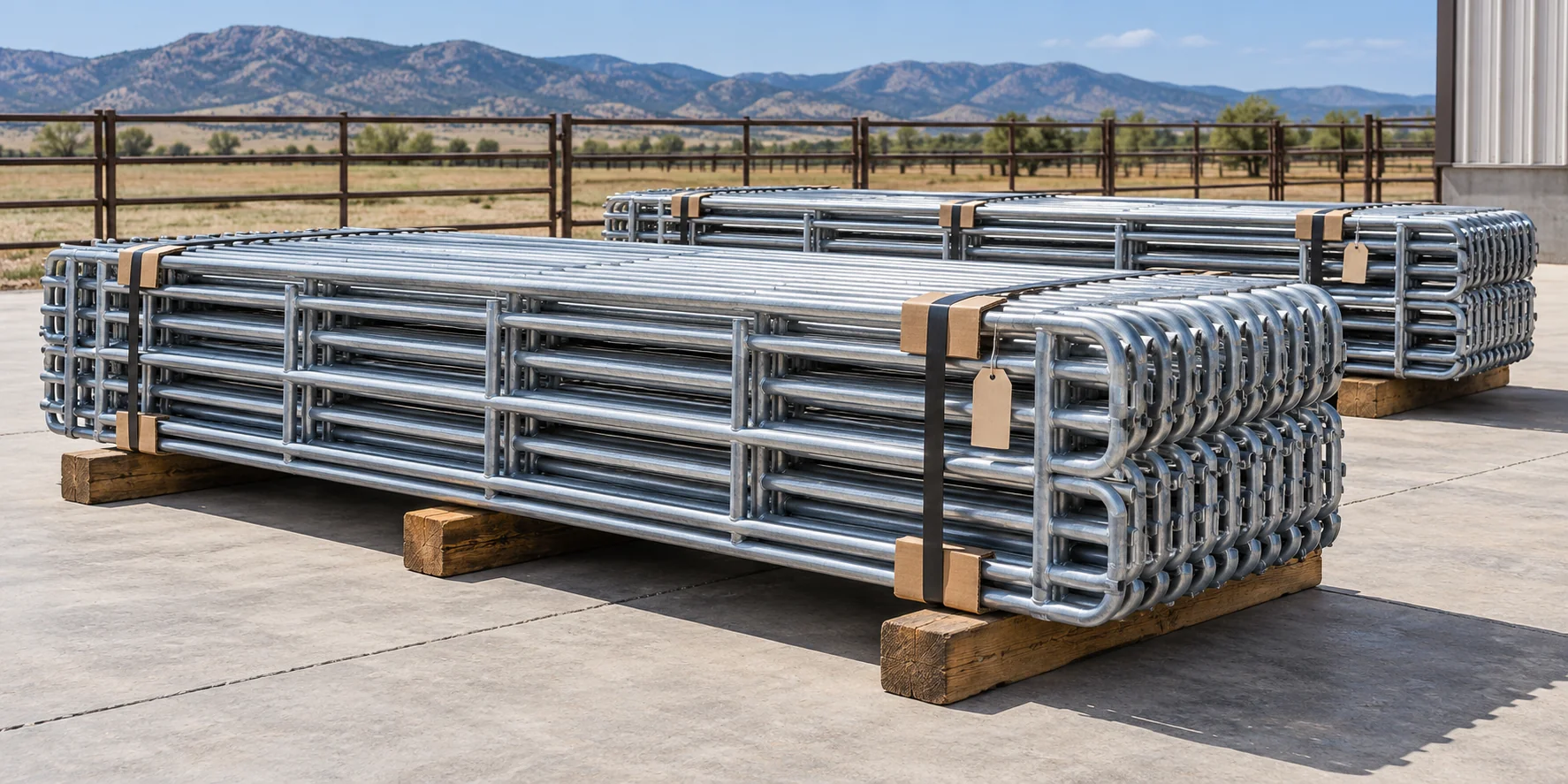
Use the supplier’s bundle identifiers to establish what has arrived. Record the number of packages and compare the visible labels with the packing list. Take clear photographs that show the labels and the overall condition without putting anyone near suspended or unstable loads.
When a label is missing or unreadable, assign a temporary receiving reference and record its position or distinguishing features. Ask the supplier to help identify it before distributing its contents across the ranch. An unidentified bundle becomes much harder to trace once individual panels have been moved.
Do not remove packaging or restraints until the load is safely placed and the responsible person has established the appropriate method. Receiving staff should understand the boundary between counting and documenting equipment and physically releasing a packed assembly.
How do you reconcile panels and hardware?
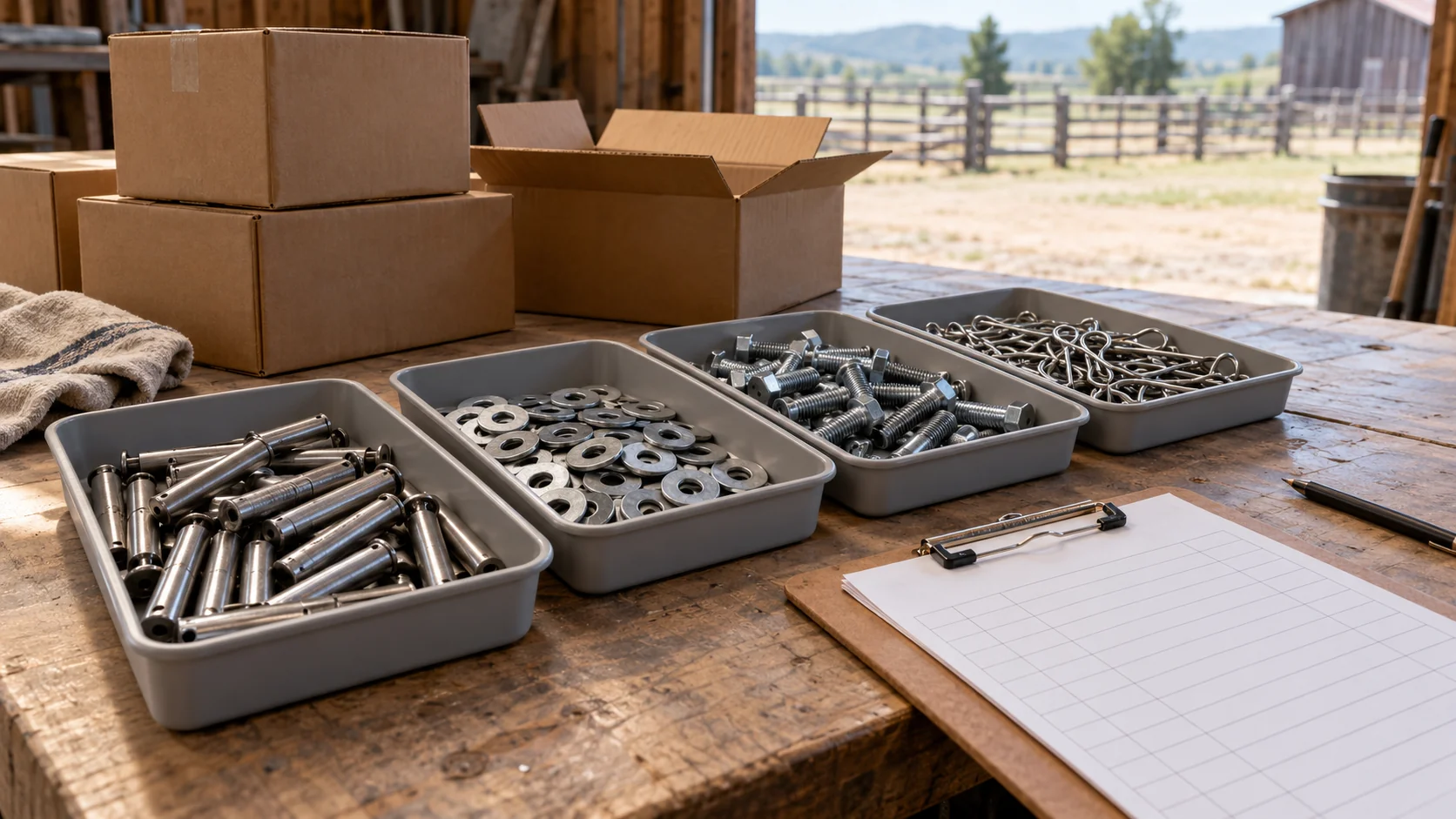
Reconcile the panels and gates against the packing list, using a method appropriate to the packaging. Some counts can be confirmed from accessible markings; others need a controlled unpacking sequence. Record what has actually been verified and what remains subject to unpacking.
Hardware deserves its own count. Locate boxes or bags of connectors, pins, latches, retainers, and other supplied parts. Confirm whether a quantity represents individual pieces, pairs, or complete sets. A packing list showing twenty hinge sets should not be read as twenty individual hinge components.
Keep related parts together and label them with the relevant product reference. Avoid distributing hardware informally to several installers before reconciliation is complete. If the shipment serves multiple ranch locations, allocate quantities on paper first so one site does not unintentionally consume another site’s accessories.
How should damage be recorded?
Describe visible damage precisely. “Bent connector on bundle B03, photographed before unpacking” is more useful than “poor quality shipment.” Record the location, number of affected pieces when known, and whether the observation concerns packaging, finish, hardware, or a structural member.
Take both context photographs and close-ups. A close photograph alone may show a defect but not identify the item. Keep the original image files and connect them to a receiving note. Where access is limited, explain what could not yet be inspected.
Do not assume where or when damage occurred solely from appearance. Send factual records to the relevant supplier or carrier contact and follow the agreed reporting process. If there is uncertainty about suitability for use, separate the affected equipment from installation stock until the responsible parties have clarified the next step.
What if quantities or components do not match?
Create one list for shortages, unidentified items, visible damage, and discrepancies between equipment and documents. Give every issue a reference and an owner. Include the ordered quantity, received quantity where verified, photographs, and the question that needs an answer.
For example, a missing hardware box and an unexpected connector type are different issues. The first may require checking another bundle; the second may require comparing the approved drawing. Keeping them separate prevents a broad “delivery problem” message from becoming a confusing exchange of partial replies.
Record the agreed outcome beside each item: located elsewhere, replacement arranged, technical clarification received, or still unresolved. Do not silently close an exception because installation has started. The receiving record should show which issues were settled and which remain open.
| Stage | Record | Owner |
|---|---|---|
| Before delivery | Current packing list and unloading plan | Receiving lead |
| At delivery | Bundle B03: quantity pending controlled unpacking | Receiving team |
| Before installation | Open issues, approved drawings and released stock | Installation lead |
How should equipment be stored before installation?
Arrange the equipment so the installation team can identify and access the next required items. Use the layout drawing to group panels, gates, and associated hardware by work area when practical. Keep labels visible and maintain a simple location record.
Follow the supplier’s storage and stacking instructions. Do not invent stacking limits or assume that every projecting connector can carry the same contact loads. Keep packages stable, protect components from avoidable machinery contact, and maintain clear movement routes around the storage area.
Preserve packaging information until the shipment is reconciled. If unpacking spans several days, maintain the link between each bundle and its contents. A clean, labeled hardware area can save repeated searches and makes it easier to identify what remains for the final installation stage.
What should installers receive at handover?
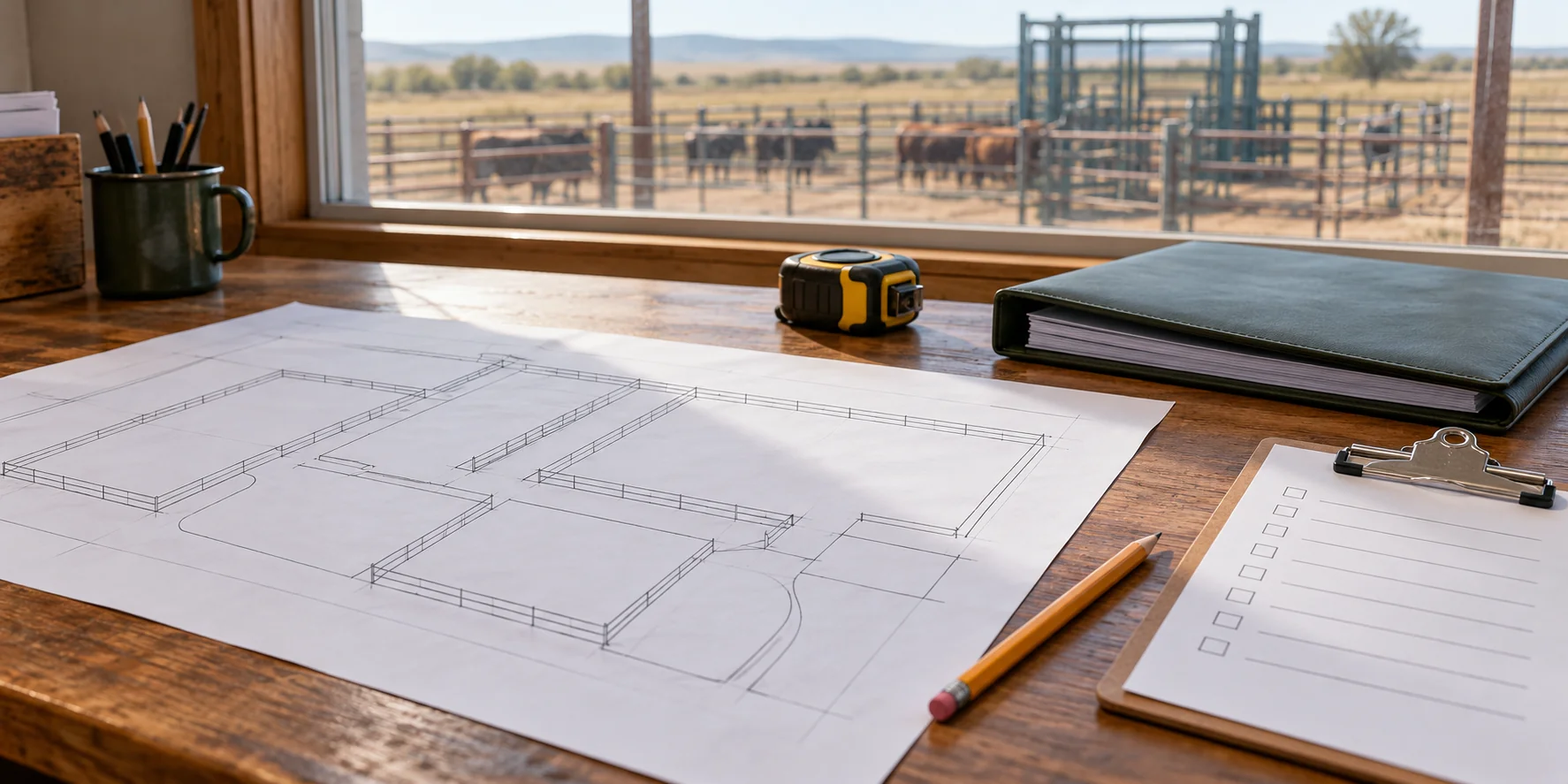
The handover should include the current layout drawing, installation instructions, equipment quantities, hardware schedule, and outstanding exceptions. Make clear which items are released for installation and which are held pending clarification. A disputed component should not disappear into an assembly before its status is resolved.
Ask installers to report any mismatch using the same product and location references. If a connector does not mate as expected, record the two components involved and compare the drawings before modifying either. Unrecorded cutting, drilling, or substitution can make later troubleshooting difficult.
Keep a record of agreed changes and identify who approved them. The objective is not to prevent sensible site decisions; it is to ensure that changes are deliberate and traceable. Update the final layout where installation differs from the original plan.
For a multi-area project, a receiving map can be especially useful. Mark where each bundle has been placed and which part of the installation it serves. If the supplier labels packages by shipment sequence rather than installation area, add a separate site reference without covering the original label. Both identities remain available for questions later. When a crew transfers equipment to another location, record the transfer before changing the map. This simple discipline keeps a genuine shortage separate from stock that has merely moved, and helps the final reconciliation reflect what is actually on the property.
When is receiving complete?
At the end of receiving, prepare a short summary: quantities accepted, items awaiting clarification, spare parts placed in storage, and documents passed to the installer. Identify the person responsible for following up any replacement shipment.
After installation, retain the packing list, relevant photographs, drawings, and supplier correspondence with the equipment records. These documents are useful when ordering spares, expanding a pen, or comparing a later shipment. The next buyer or ranch manager should not have to reconstruct the original order from email fragments.
A practical delivery-day checklist is simple: documents ready, access confirmed, unloading arranged, bundles identified, quantities reconciled, condition recorded, exceptions assigned, and handover completed. Each step answers a different question.
When arranging a HRC equipment shipment, request clear bundle labels, a hardware schedule, and the documents needed by your receiving crew. Good communication before arrival helps turn a collection of steel panels into an organized installation project.
Related resources: livestock panel range; contact HRC about shipment documents.