
Plan a cattle feeding area around herd groups, the actual feed-delivery vehicle, cleaning routes, and safe staff access. Map a complete working day before choosing barriers. Confirm animal suitability and installation requirements with the supplier, and coordinate feeding-space and nutrition decisions with the ranch’s advisers.
What should a cattle feeding-area plan cover?
A feeding area must work for the people delivering feed as well as the cattle using it. An attractive barrier arrangement can still create awkward daily work if the delivery route is cramped, cleaning requires repeated gate changes, or a new group has nowhere suitable to go.
Before discussing equipment, write down a normal feeding day. Note where feed comes from, which machine moves it, who opens each gate, how leftovers are handled, and where cattle stand during the work. Repeat the exercise for wet weather and for periods when the herd is divided differently.
This article focuses on layout and work organization. It does not prescribe rations, stocking rates, or universal feeding-space dimensions. Those decisions depend on the animals and feeding system and should be developed with the people responsible for herd nutrition, welfare, and facility design.
Which cattle groups will use the area?
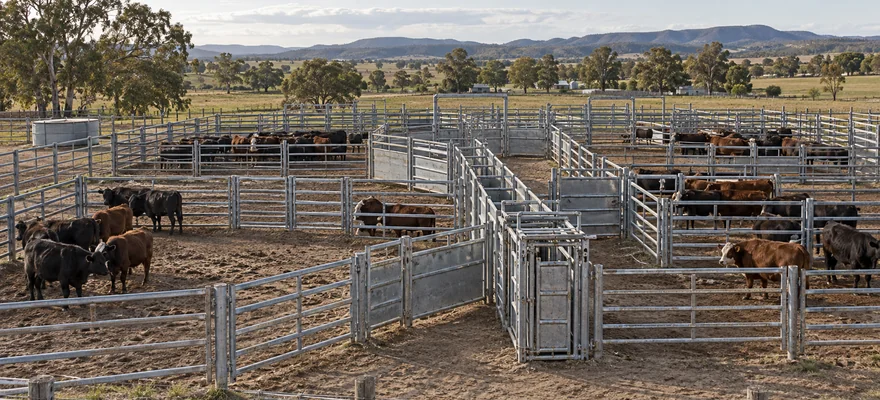
A total head count is a starting point, not a complete design brief. Describe the groups expected to use the area, including differences in animal size, management needs, and whether groups will change through the year. Identify which cattle should not share the same space.
Explain the feeding routine to the equipment supplier. Continuous access, timed delivery, and different feed presentation methods create different operating questions. Do not choose a barrier simply because it looks similar to one used by a neighboring operation.
Include future changes that are reasonably foreseeable. A layout designed around one uniform group may be inconvenient when the ranch later separates animals. Planning potential division points and access routes at the drawing stage is easier than discovering that a new gate blocks the feed delivery path.
How will feed reach the barrier?
Draw the route taken by the actual tractor, loader, or feeding vehicle, including entry, turning, delivery, and exit. Use the machine’s relevant dimensions and operating requirements rather than estimating clearance from a photograph.
Mark doors, gate swings, posts, roof edges, and places where another vehicle might be parked. Consider where a driver needs to stop and whether that stop blocks another task. A route that only works when every nearby space is empty may be difficult to maintain during busy periods.
Discuss separation between machinery operations, pedestrian access, and cattle with the facility designer. Avoid creating a routine that depends on someone standing in a narrow space between moving equipment and a barrier. Establish the intended work method before using the drawing to obtain equipment quotations.
Which barrier functions need confirmation?
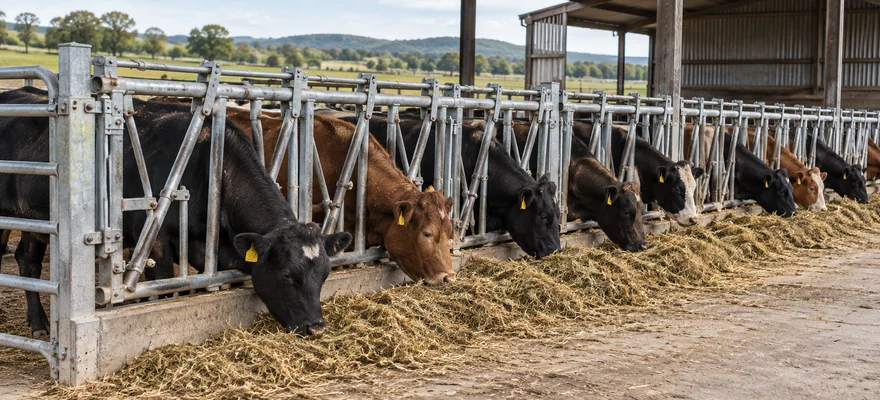
The feed barrier is the point where animal access, feed presentation, and the working side of the facility meet. Its configuration needs to fit that relationship. A photograph can illustrate an arrangement, but it cannot confirm suitability for a particular herd.
Ask the supplier about the intended animal category, opening arrangement, adjustment options where applicable, and installation requirements. If a design includes moving or locking elements, obtain its operating instructions and discuss how those functions will actually be used.
Do not assume that a feeding barrier is suitable for every handling or restraint task. Equipment with superficially similar openings can have different intended purposes. Confirm those purposes explicitly and make sure staff understand them. When comparing proposals, use dimensioned drawings and an agreed application brief rather than rail count or appearance alone.
How can you simplify access and gate work?
Count how many gates must be opened and closed during feeding, cleaning, and moving a group. This is a useful way to expose a layout that looks orderly on paper but generates repetitive work. A few extra actions each day can become a persistent operational inconvenience.
Identify where staff enter and leave, how they reach equipment, and which routes remain available when animals are present. The UK Health and Safety Executive’s livestock guidance emphasizes appropriate handling arrangements; feeding-area access should be considered within the wider livestock-management system.
Review gate swings in both their open and closed positions. Check whether a gate obstructs a cleaning route, narrows a passage, or prevents another gate from operating. Give each gate a role in the written work routine so it is clear why it belongs in that position.
How will the area be cleaned?
Ask how the area will be cleaned before fixing the equipment arrangement. Identify the tools or machines used, the direction of travel, and the space needed to work around posts and corners. Consider where removed material goes after it leaves the feeding line.
Discuss floor condition, drainage, and manure management with the people designing the site. Equipment alone cannot resolve a location that repeatedly becomes difficult to access or clean. Avoid treating ground work as an unrelated detail to be decided after the steelwork arrives.
Include a plan for cleaning when cattle are elsewhere and explain how the area returns to use. Removable components may be helpful in some arrangements, but they also need handling, storage, and secure reinstallation. Evaluate the complete routine rather than assuming removability always saves labor.
How should feed waste be assessed?
Feed on the ground does not tell the whole story of a feeding system. Storage losses, delivery practices, weather, feed presentation, and animal access can all affect what happens between storage and consumption. Start by describing where losses are observed rather than assigning them immediately to the barrier.
University of Minnesota Extension discusses several approaches to improving hay-feeding efficiency, including storage and feeding management. University of Maryland Extension likewise notes that feeder design can influence hay waste. These resources are useful reminders that equipment and management should be reviewed together.
Avoid promising a universal percentage reduction from one barrier design. Instead, establish a consistent observation method for the ranch, record the conditions, and review changes with the herd’s advisers. Any management adjustment that affects feed access should remain compatible with the animals’ nutritional requirements.
| Planning question | Information needed |
|---|---|
| Which groups use the area? | Animal categories and planned separation |
| How is feed delivered? | Vehicle dimensions, route and work sequence |
| How is it cleaned? | Equipment access and material-removal route |
| What happens during maintenance? | Alternative access and temporary animal arrangements |
How will servicing and replacement work?
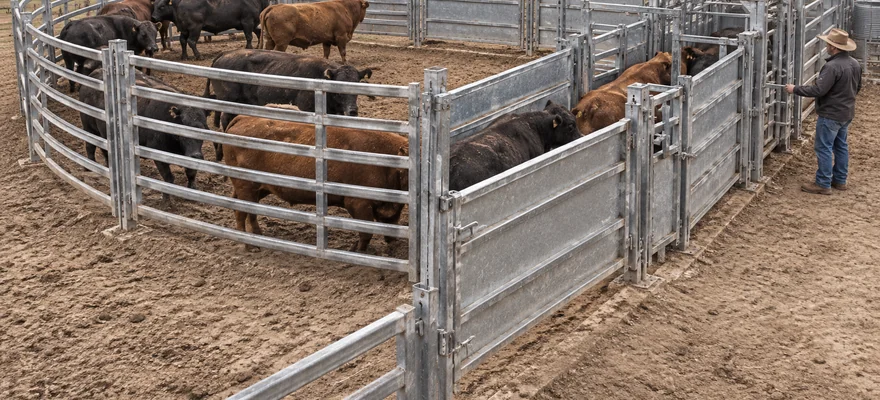
A feeding area should remain serviceable after installation. Ask how individual components are inspected, adjusted, or replaced, and what access is required to do that work. A part that is straightforward to replace in an empty workshop may be awkward when installed against another structure.
Request component references for pins, fasteners, moving parts, and other service items. Keep the supplier’s instructions with the installation drawing. Where imported equipment is involved, discuss replacement availability and identify which spares are sensible to hold locally.
Think about the effect of taking one section out of use. Can the ranch manage animals and feed delivery appropriately while work is carried out? A maintenance plan does not need to be elaborate, but it should not depend on performing repairs in the middle of normal animal and vehicle activity.
How should competing layouts be compared?
Give competing suppliers the same description of the ranch’s workday. Include herd grouping, feed type and delivery method, machine access, site constraints, cleaning method, and the intended installation. Ask them to identify assumptions and exceptions in their proposals.
Then walk through a practical scenario for each drawing. Feed arrives, a worker gains access, the vehicle delivers, cattle use the area, and the space is cleaned. Repeat with an alternative herd group or a machine unavailable. This exercise often reveals questions that a product list misses.
Separate equipment supply from other responsibilities. Clarify who designs foundations, drainage, structural supports, and connections to existing buildings. Record which dimensions must be verified on site. An equipment quotation should not be mistaken for a complete facility design unless that scope is explicitly included.
A useful final discussion involves the people who will do the work, not just the buyer and supplier. Ask the regular operator to follow the proposed feed route on the plan and the cleaning team to describe how they will reach the corners. Ask the herd manager what changes when animals are regrouped. Record any assumptions they disagree with and resolve those points before approving the arrangement. Their practical observations can reveal an inconvenient sequence that no individual product drawing shows. The resulting brief becomes a shared description of how the area is intended to operate.
What should you send with an enquiry?
A strong enquiry describes the operation before listing preferred products. Send a site sketch, photographs, group information, delivery equipment details, and an explanation of what is difficult in the current routine. Highlight the result you want, such as simpler cleaning access or clearer separation of groups.
Ask for drawings that show the equipment in context, not only isolated components. Confirm how gates, barriers, supports, and access routes relate to one another. Keep a record of the assumptions behind the selected arrangement so later changes can be assessed intelligently.
For a HRC feeding-equipment discussion, start with your daily workflow and the livestock category involved. A clear brief helps identify which equipment details need confirmation before an order is placed.
Further reading: University of Minnesota Extension: Efficiently feeding hay to cattle; University of Maryland Extension: Winter hay feeding strategies; HSE: Livestock.
Related resources: feeding equipment; purpose-built handling equipment.