
Do not assume horse panels and cattle panels are interchangeable. Start with the species, animal group and purpose of each enclosure, then obtain confirmation that the proposed system suits that use. Shared finishes or selected hardware may simplify purchasing, but one universal panel can create compromises that separate configurations avoid.
Why does one catalog category not answer the question?
A purchasing manager may reasonably want fewer product codes, a simpler spare-parts inventory and one coordinated shipment. Those advantages do not establish that the same enclosure design is appropriate for every animal on the property.
Labels such as livestock panel, horse panel and cattle panel describe a product’s market, but the details still need examination. Two models may share a finish and overall outline while differing in openings, end connections, supports or intended installation. Conversely, different labels may hide some genuinely common components.
Make the comparison at application level. A horse paddock, a quiet cattle holding pen and a cattle handling race are different requirements. This guide concerns how to brief suppliers and separate those requirements; it is not a recommendation to house horses and cattle together or a universal fencing specification.
Which animal groups should appear in the brief?
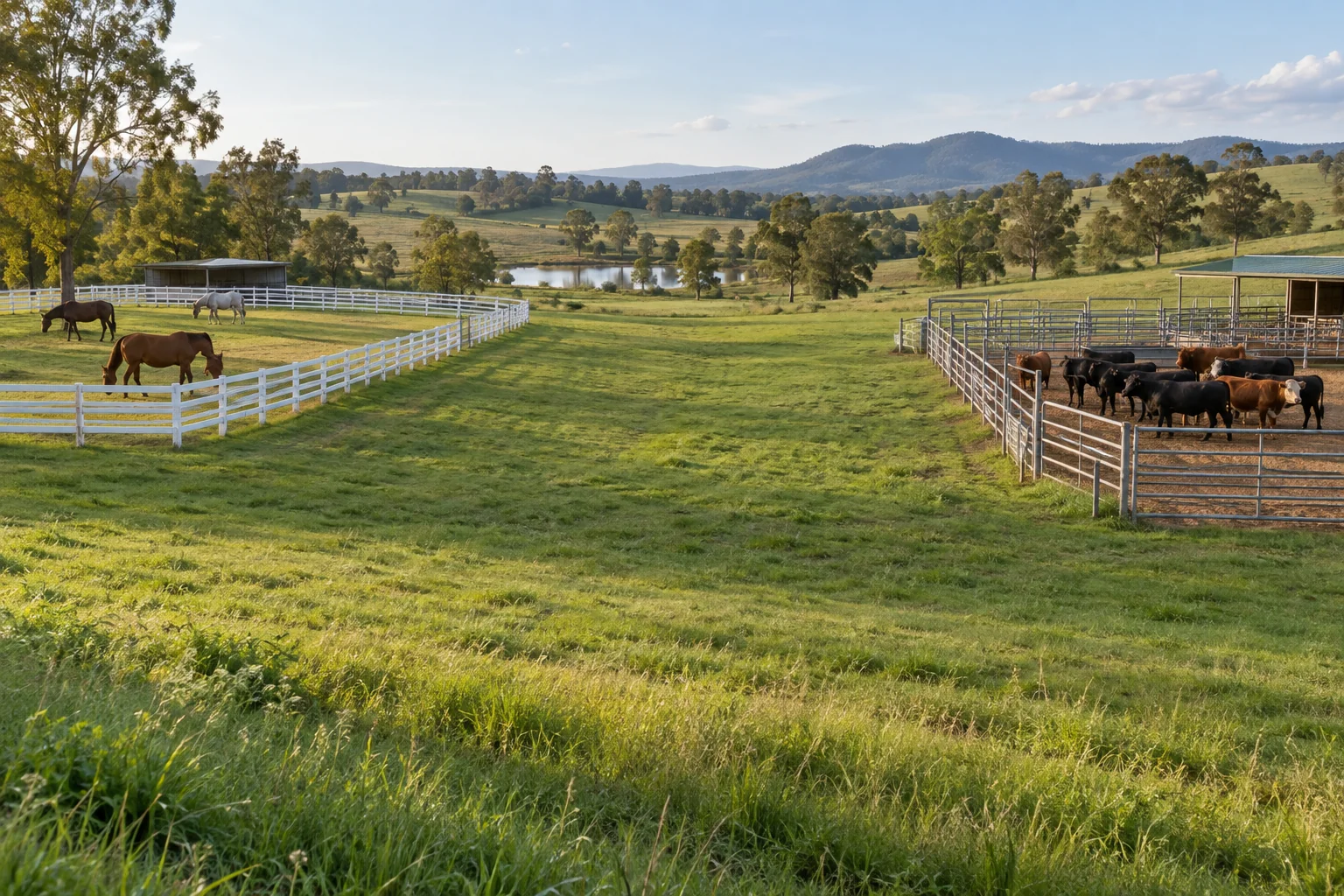
List the animals that will actually use each area, including differences in size, age and management. State whether an enclosure serves resident animals, visiting stock or changing groups. Note when a space may be reassigned to a different group later.
Do not design the whole purchase around an average adult animal. A group that includes smaller animals, different body proportions or horns may need a separate assessment. A supplier should know those details before recommending openings or a panel arrangement.
Write the brief as a location schedule: enclosure name, intended group, activity and operating restrictions. If a supplier proposes one model across several locations, ask for a response against each row. A general statement that the panel is suitable for livestock is not a substitute for that application review.
What matters when considering fencing for horses?
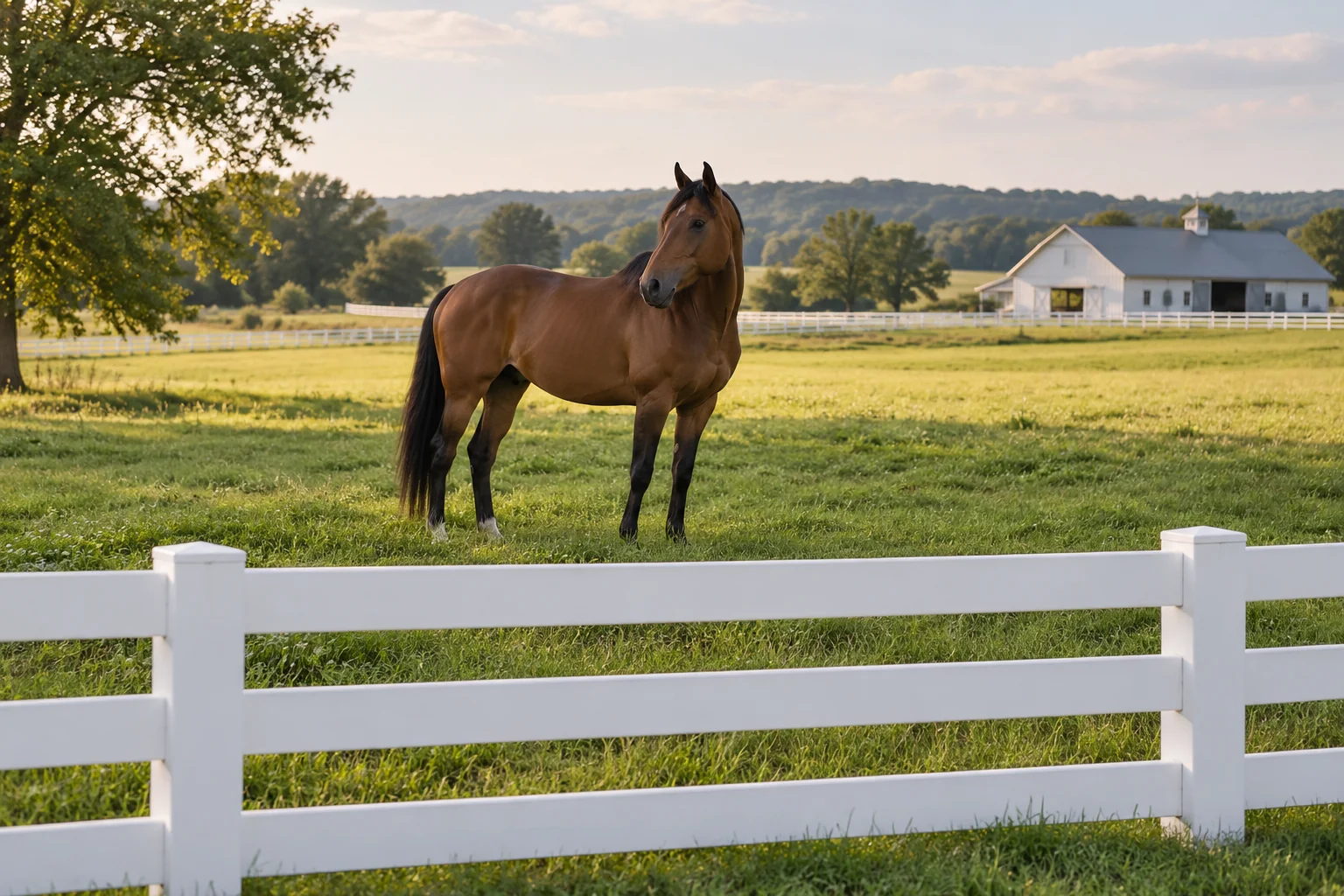
University of Minnesota Extension’s horse fencing guidance emphasizes visibility, the absence of sharp edges and projections, and selection based on function rather than appearance. It also advises against barbed wire for horses. These are useful considerations when reviewing the entire boundary, not only the central rails.
For a proposed tubular panel, examine the ends, attachments and gate junctions as well as the main frame. Ask how the installation addresses the intended horse group and how that conclusion is supported. Rounded upper corners in a product image are a visible feature, not proof that every opening or attachment is suitable.
Keep pasture boundaries and smaller enclosed working areas separate in the discussion. A portable product offered for one purpose should not automatically replace a permanent perimeter fence. Ask the supplier to state the intended role and any limitations explicitly.
How is the cattle application different?
First identify what the cattle will be doing. Holding, sorting and approaching restraint equipment are not interchangeable duties. Group size, animal category and the way the facility is operated affect the proposal that needs review.
The HSE’s cattle-handling guidance calls for facilities and restraint equipment suited to the animals, together with trained workers. A general pen panel should therefore not be treated as a substitute for a purpose-designed race or crush simply because it appears substantial.
Ask the manufacturer to distinguish ordinary enclosure use from more demanding operating areas. Request the recommended installed arrangement, not only an isolated panel specification. If the quote includes different models for different cattle areas, preserve that distinction in the final order and in the site’s equipment identification.
Which details should you compare side by side?
Use a written comparison sheet so attractive photography does not dominate the decision. The same questions can be asked for both species without assuming the answers should be identical.
| Detail | Ask the supplier | Do not infer from a photograph |
|---|---|---|
| Intended use | Which animal group and enclosure role is covered? | Suitability for every species |
| Openings and transitions | How are rail gaps, bottom clearance and junctions assessed? | That rail count alone establishes suitability |
| Installed system | Which supports, connectors and securing details are required? | That a freestanding display is an installation method |
| Gates | What operating and closure arrangements are specified? | That matching paint means matching hardware |
| Evidence | Which drawings, instructions and relevant test information are available? | A certified rating from a product name |
Record unanswered items as open questions. Do not silently convert a missing response into an assumption that the less expensive option meets the requirement.
Can selected components still be standardized?
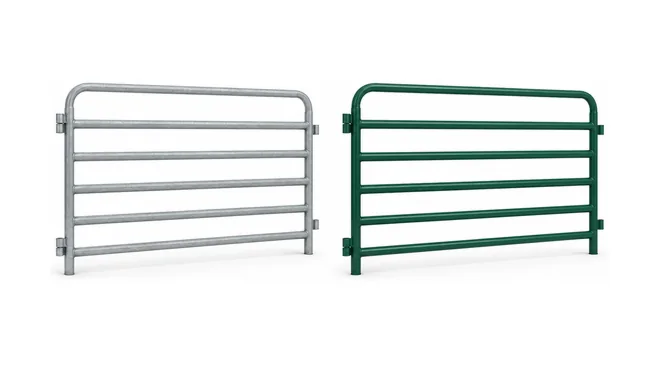
Yes, where compatibility and suitability have been confirmed. Standardization does not have to mean using one complete panel everywhere. It might mean a shared finish, consistent identification labels or selected approved fasteners while retaining different panel configurations.
Ask for a component matrix showing which parts are genuinely interchangeable. Include the exact part reference and any restrictions. Similar-looking pins or brackets should remain separate inventory items until the supplier confirms their use.
The HRC horse-panel page can be reviewed alongside the broader livestock-panel range. Use the comparison to prepare questions, not to assume that the products can be swapped between enclosures. Request a documented proposal for each planned application.
How should gates and shared service routes be handled?
A mixed ranch may share machinery access while keeping animal areas separate. Show those relationships on the site sketch. Explain which gate is used for equipment, which controls animal movement and which provides staff access.
Review each gate as part of its own enclosure. Its closure method, connections and operating space need to match the intended use. A gate supplied with one panel family should not be moved to another location merely because the opening appears similar.
Consider how workers identify the correct route during a busy day. Consistent names and clear operating instructions can simplify the system without forcing all physical components to be identical. If an area changes species or purpose, require a fresh suitability review rather than treating reassignment as a routine administrative change.
What should sample approval actually cover?
A sample is most useful when there is a specific question to answer. Request the proposed end connection, gate junction or full representative assembly where that resolves uncertainty. A loose rail sample cannot demonstrate how the complete installation will function.
Record what has been checked and what remains outside the review. Appearance, measured dimensions and assembly fit are different from proof of performance or suitability. Where specialist assessment is required, arrange it through the relevant competent adviser rather than relying on the buyer’s visual impression.
Keep the approved drawing reference with the sample record. For an international order, also confirm how changes are communicated before production. A manufacturer should not substitute a visually similar model without the agreed approval process, particularly when the two configurations were selected for different animal groups.
How do you compare the cost of one system against two?
Request two clearly scoped proposals if standardization is still being considered. One can use separate configurations; the other can identify the components the supplier believes can be shared. Both should address the same enclosure schedule.
Compare more than the initial product price. Include required supports, gates, compatible spares and any changes to the planned layout. Avoid assigning a financial value to presumed safety or service-life improvements that have not been demonstrated.
Also consider the cost of confusion. Two well-labeled equipment families may be easier to manage than one nominal system with numerous undocumented exceptions. Conversely, a verified common spare can be useful when it genuinely reduces inventory without creating uncertainty. The purchasing goal is controlled complexity, not the smallest possible number of line items.
What is a sensible final purchasing decision?
Choose the configuration supported for each enclosure, then standardize only the elements that remain compatible. The decision may be one supplier with several product families rather than one universal model. That still allows coordinated communication and ordering.
- Confirm the species and operating purpose for every location.
- Review the supplier’s proposed installed arrangement and limitations.
- Resolve opening, connection and gate questions before approval.
- Identify shared parts explicitly and label non-interchangeable items.
- Retain the application schedule for future replacements or changes.
Finally, tell staff why the differences exist. A horse enclosure and a cattle-handling area should not exchange equipment based only on convenience. The strongest mixed-ranch specification is one that makes appropriate use obvious to the buyer, installer and daily operator, while keeping unsupported assumptions out of the purchase.