
Maintain cattle gates by recording changes in alignment, checking hinges and latches, inspecting supports, and following the manufacturer’s cleaning and replacement instructions. Identify each gate, assign repair responsibility, and keep compatible spare parts. Inspect with cattle excluded from the work area; a damaged assembly needs assessment before returning to service.
What should a cattle gate maintenance routine cover?
A gate that needs a shove in the morning can become part of the routine so gradually that nobody reports it. One person lifts the latch, another drags the bottom rail across the ground, and a third adds a temporary chain. Each workaround hides information that would be useful to the person responsible for maintenance.
For a ranch manager, a practical maintenance system begins with noticing those changes. The goal is not to make every gate look new. It is to keep gates operating as intended, identify defects before they interrupt work, and make replacement decisions using records rather than memory.
This article concerns manually operated livestock gates. Powered gates and specialized restraint equipment require their own manufacturer instructions and competent servicing. For ordinary ranch gates, a short, repeatable routine is easier to sustain than a complicated inspection sheet that stays in the office.
How do you identify each gate?
Number the gates on a simple yard plan and put the same identifier in your maintenance notes. Use descriptions that a relief worker can understand: “G04, north holding pen entrance” is more useful than “the difficult gate near the shed.” Record the opening direction and the area it serves.
Keep the supplier name, product reference, installation date if known, and a photograph of the complete assembly. Add close pictures of the hinge and latch. For imported equipment, retain the drawing revision and hardware references supplied with the order.
This small collection of information becomes valuable when a replacement part is needed. A supplier may sell several visually similar hinges or pins. An accurate reference reduces the chance of ordering a part that arrives after a long journey but does not fit.
How should observations become repair work?
During normal rounds, workers can report an unusual noise, a latch that no longer engages cleanly, visible movement at a support, or a gate that has changed position. They should not have to diagnose the cause to raise a useful report.
A maintenance inspection is a separate task. Arrange it with cattle excluded from the work area, the gate properly supported where necessary, and the work coordinated with other staff. Do not remove a hinge pin or loosen supporting hardware while relying on someone simply holding the gate.
The UK Health and Safety Executive emphasizes suitable cattle-handling facilities and separation between people and livestock. Its guidance is a useful starting point for reviewing the wider system, not a substitute for the gate manufacturer’s repair procedure. Plan the work so an open or dismantled gate does not create an unexpected animal route.
What causes a gate to drag or misalign?
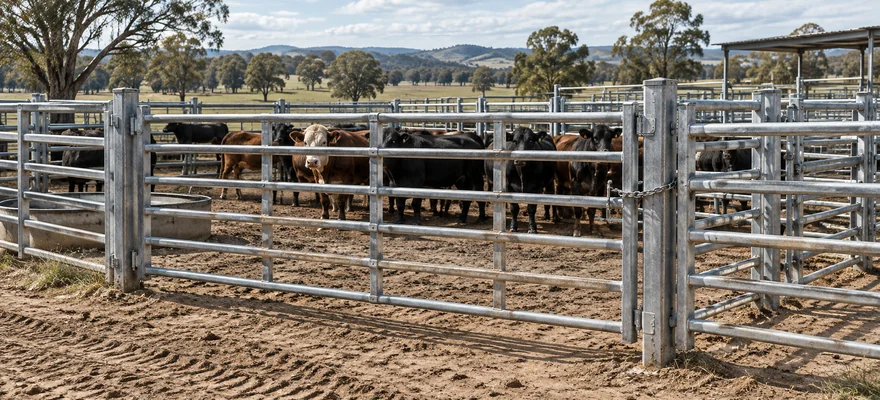
Begin with the gate closed, then observe its intended operating movement from a safe position. Check whether it reaches the latch without lifting, twisting, or forcing. Look for contact with the ground, adjacent rails, a post, or another gate.
Next consider the supports. A latch problem can originate in movement elsewhere in the assembly. Photograph the relative positions of the gate, hinge post, and receiving post before requesting advice. Note whether the issue started after vehicle contact, heavy rain, ground work, or a change in use.
Avoid correcting an apparent misalignment by immediately cutting or welding the gate. First establish whether the problem involves the gate, its mounting, the ground, or an incompatible replacement component. An adjustment that hides the symptom can leave the underlying fault unresolved.
What should you check on hinges and latches?
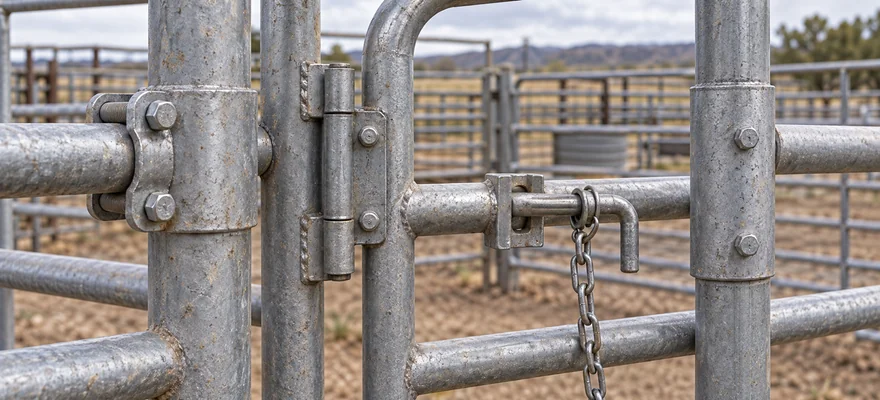
Hinges and latches deserve close attention because they are repeatedly operated and can be overlooked when the main rails still appear straight. Observe missing retainers, damaged fasteners, obvious wear, distortion, and unusual movement. Compare the arrangement with the original drawing or supplier instructions.
Use the specified replacement components. A pin that fits through a hole is not necessarily equivalent to the original part. Material, retention, dimensions, and the way the assembly carries load all matter. Ask the supplier to confirm compatibility rather than improvising a permanent substitution.
Where lubrication is specified, follow the manufacturer’s product and interval recommendations. Do not assume every fitting needs the same lubricant or treatment. After work is completed, check operation and retention before returning the gate to service, and record which parts were changed.
How should you clean and assess the finish?
Accumulated dirt can make defects harder to see. Include an appropriate cleaning method in the maintenance instructions, paying attention to the coating, moving parts, and any limitations identified by the supplier. Keep cleaning work separate from animal movement and feed handling.
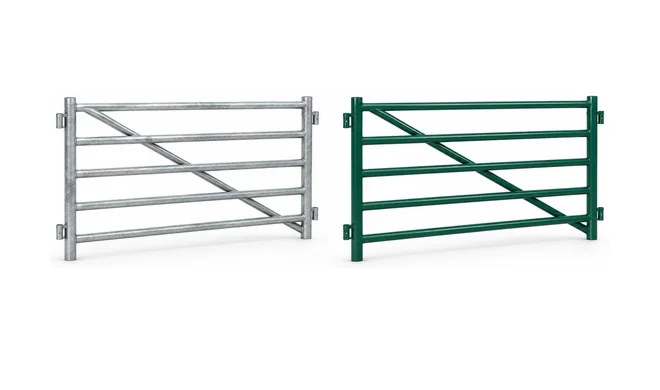
A silver-colored finish in a photograph does not tell you the complete coating system. Likewise, a green surface does not establish whether the gate is painted, powder coated, or finished using another process. Use the purchase specification to identify the treatment before choosing repair materials.
Ask how scratches, exposed areas, and damaged joints should be assessed and repaired. Avoid promising a fixed service life based on appearance alone. The operating environment, previous damage, installation, and maintenance history can differ substantially between locations, even within the same ranch.
How often should gates be checked?
There is no useful universal interval for every ranch gate. A frequently operated entrance and a gate rarely used for seasonal access do not have identical histories. Start with manufacturer guidance, then set the ranch routine around use, exposure, and previous problems.
Keep routine observations brief, and schedule more detailed checks when the area can be taken out of service. Add an inspection after an incident or when staff report a change. Severe weather, machinery contact, and alterations to nearby ground are reasons to reassess an assembly rather than simply continue the calendar.
Assign an owner to each report. Without a named person and a follow-up date, “gate needs attention” can remain in a notebook indefinitely. A completed entry should say what was found, what was done, and who confirmed the gate was ready to use again.
| Observation | Check | Next action |
|---|---|---|
| Gate drags | Alignment, supports and ground changes | Record the change and arrange inspection before adjustment |
| Latch will not engage | Mating position and damage | Do not force it; identify the cause |
| Missing retainer | Original component reference | Obtain the specified replacement |
Which replacement parts should you keep?
A small, organized spare-parts supply can be more useful than a large box of miscellaneous pins. Base the stock on the gates actually installed and the supplier’s recommended replacement components. Label packages with both the supplier reference and the ranch gate family.
Keep compatible retainers and fasteners together where appropriate. Store drawings or photographs beside the inventory record so a staff member can identify the correct assembly. If two components look alike but are not interchangeable, make that distinction obvious.
Review lead times when replenishing imported parts. Order based on actual consumption and foreseeable work rather than a fixed guess. Record which gate received each replacement; repeated demand for the same component may indicate a recurring installation or operating issue that deserves investigation.
When should repeated repairs trigger a review?
Repeated repairs should trigger a review of suitability, not an endless search for stronger temporary fixes. A gate may be exposed to a different duty than originally intended, or an altered layout may cause repeated machinery contact. A maintenance log helps make that pattern visible.
When asking for repair or replacement advice, send the gate reference, overall and close-up photographs, a description of the change, and any relevant incident history. State whether the gate still operates and whether the area has been taken out of use.
Do not present a remote photograph as proof that a damaged structural component is safe. Where integrity is uncertain, arrange assessment by a competent person and use an appropriate alternative arrangement. Replacement can also require review of the posts and surrounding connections; a new gate alone does not resolve every problem.
Consider a simple example: several workers report that the same gate needs lifting to latch. Instead of recording three unrelated complaints, the gate identifier brings them together. The maintenance lead can review the installation and recent events, arrange an inspection, and record the outcome. If the difficulty returns, the previous repair and photographs are immediately available. This is the practical value of a routine: it makes a recurring issue visible without asking every worker to become a gate technician. Use the same approach across the yard, and review the unresolved entries at an agreed team meeting.
What belongs in the maintenance record?
At the end of a maintenance session, update the record while the details are still fresh. Capture the part numbers used, the supplier’s advice, and any remaining work. A photograph after repair makes later comparisons easier, especially when different people perform subsequent checks.
A straightforward record can contain the date, gate identifier, observed issue, action, responsible person, and next review. Keep it accessible to both the staff who use the gates and the person who orders parts. The purpose is continuity, not paperwork for its own sake.
For overseas ranch operators, reliable maintenance also depends on communication with the equipment supplier. When contacting HRC about an existing gate, include the original order reference and clear connection details. Precise information helps the discussion move from “something is wrong with the gate” to the particular assembly that needs attention.
Further reading: HSE livestock-handling guidance.
Related resources: livestock gates; gate and panel accessories.