
Divide a cattle yard extension into stages that each leave a complete, usable operating arrangement. Survey the existing yard, protect essential routes, verify old-to-new connections and agree a changeover window before removing any boundary. Some tasks may require a planned shutdown; buying more panels does not eliminate that need.
What must the yard keep doing during the extension?
An expansion drawing usually shows an attractive finished arrangement. The difficult question is what happens between the first delivery and that final layout. If a contractor removes the only working exit on Monday, two additional pens available on Friday do not solve Tuesday’s cattle movement.
Start with a minimum operating brief. List the tasks that must continue, the tasks that can move elsewhere and those that can be postponed. Include routine movements, loading access, staff access and the availability of an appropriate handling facility. Name the person who can authorize a temporary change.
For an overseas buyer, this brief also shapes purchasing. A shipment that completes one usable stage can be more valuable than an equal quantity of components spread across several unfinished areas. The objective is a workable sequence, not simply the earliest possible arrival of steel.
How should you survey the existing yard?
Prepare a measured existing-condition plan before drawing the extension. Distinguish verified dimensions from old drawing information. Identify gates, posts, established access routes, slopes, nearby structures and services that could affect construction. Have the relevant professionals locate buried services and assess civil or structural work; an equipment sketch is not a clearance to excavate.
Photograph every proposed connection point from several directions. Include a scale where appropriate, and record which face or centerline a dimension refers to. Old installed equipment may not match its original catalog size after repairs or alterations.
Separate components into three groups: retain unchanged, assess before reuse and replace. Do not treat an old boundary as suitable merely because it is still standing. The condition and proposed duty need review, particularly where an extension changes the way gates, posts or junctions will be loaded.
What makes a construction stage operationally complete?
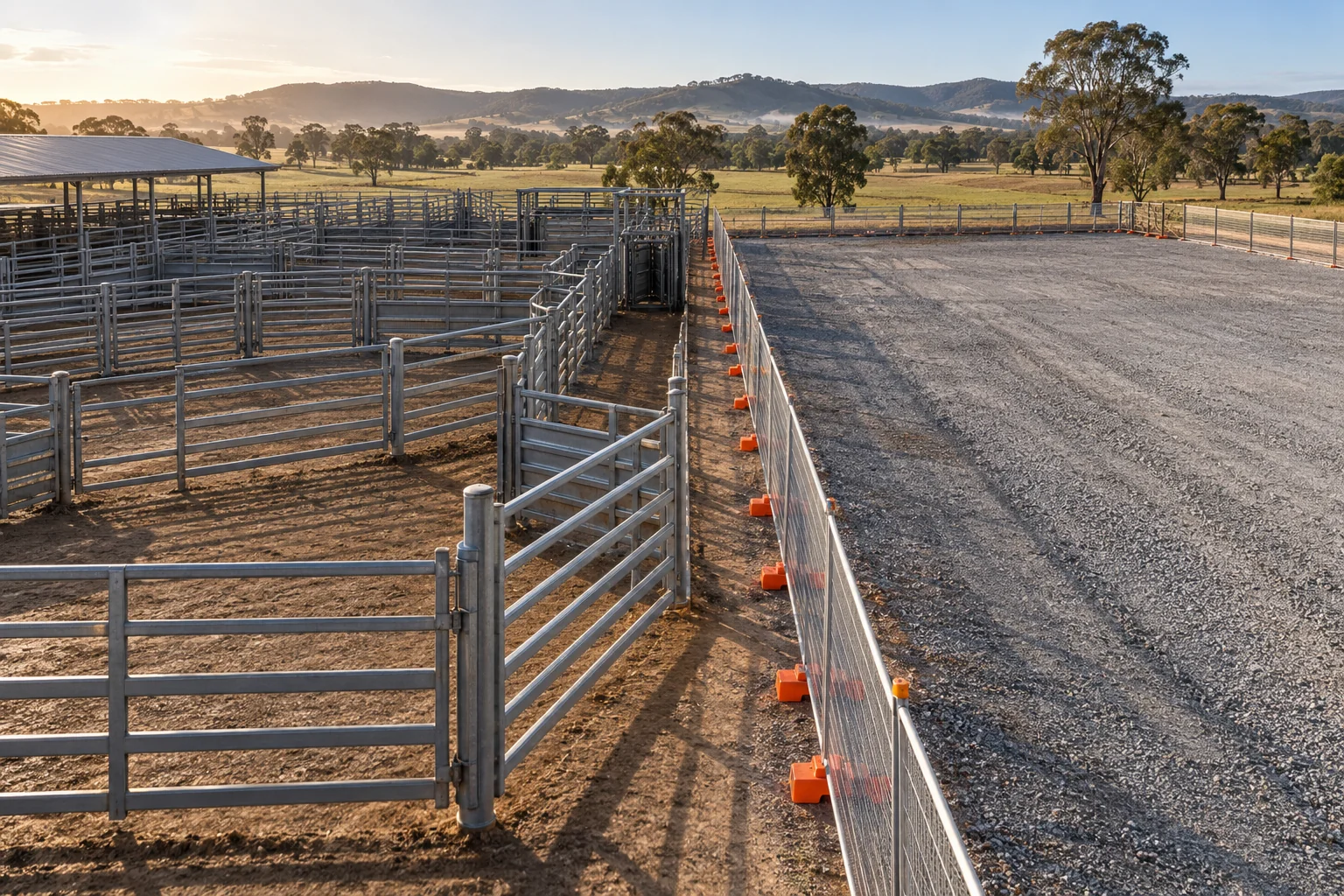
A stage needs more than a finished row of panels. It needs the boundaries, connections and access arrangements required for its defined use. Consider how animals enter and leave, how staff reach the working positions and what happens when the next stage begins.
Use separate drawings for the existing arrangement, each temporary arrangement and the final configuration. Mark closed areas clearly. A line that represents a future gate must not be mistaken for an available route today. Keep construction access distinct from the routes still used by the ranch.
The UK Health and Safety Executive’s livestock guidance stresses suitable facilities, competent workers and equipment appropriate to the animals. Those principles still matter during alterations. Calling a configuration temporary does not justify makeshift containment or unsuitable handling equipment.
Which old-to-new connections need confirmation?
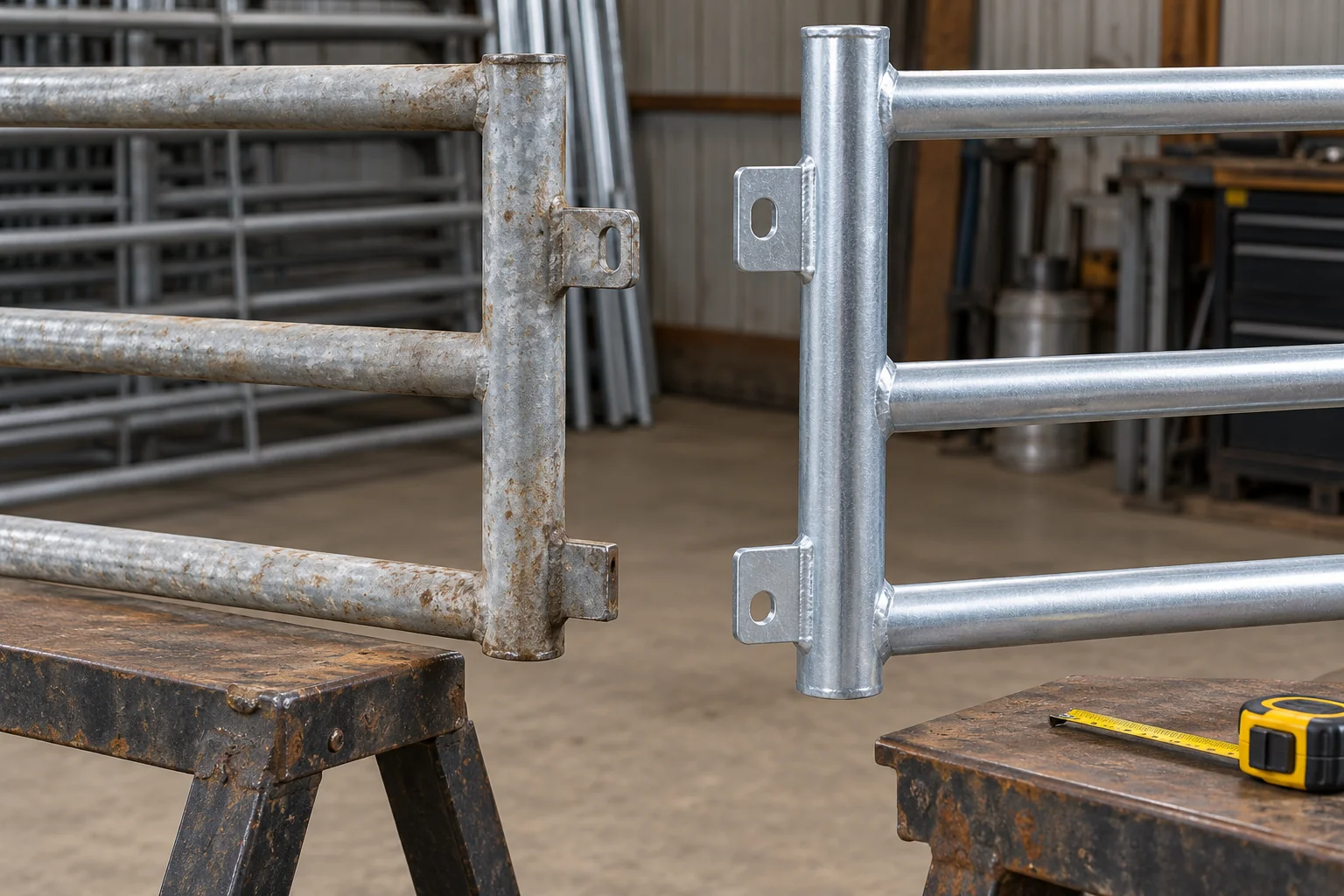
Identify each interface individually rather than ordering a general bag of adapters. Record connector spacing, orientation, mating parts and the proposed relationship between panel, post and gate. A connector that physically accepts a pin may still be unsuitable for the intended assembly.
Ask who is responsible for confirming the interface: the equipment supplier, the installation contractor or the project’s designer. Send the same measured information to everyone involved. If a custom transition is proposed, request a drawing and approval before manufacture rather than leaving a field modification to delivery day.
Where feasible, arrange a representative fit check early. The purpose is to resolve uncertainty while there is still time to revise the order. Keep any sample approval tied to its drawing revision; a successful trial of one connection does not approve every other junction in the yard.
How should the equipment order be divided?
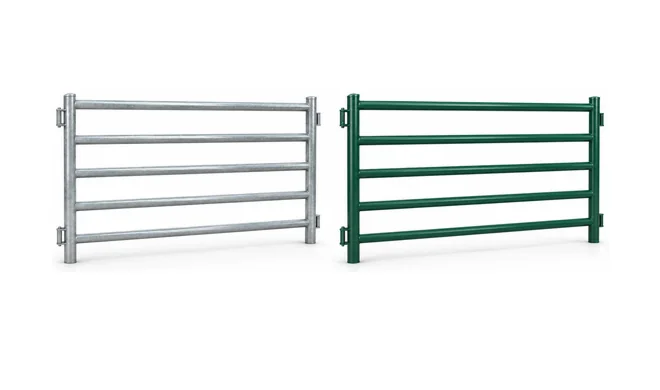
Organize the bill of materials by stage and location. Each package should identify the panels, gates, supports and specified connection components needed for that section. Distinguish parts used once from temporary components that will be relocated later.
Ask the supplier to flag dependencies. One custom junction, for example, may determine whether several standard panels can be installed. Its importance is greater than its purchase price. Put such items on the project’s decision list and resolve their details before treating the stage as ready.
Review the HRC corral equipment range in the context of the staged drawing. Product options are a starting point for discussion, not confirmation that an existing structure or proposed extension is compatible. Request a proposal that identifies the components assigned to each stage.
What should a simple stage schedule contain?
Use completion conditions rather than dates alone. A calendar target is helpful, but the decision to open a new area should depend on the work actually completed and accepted. Identify who checks each condition and who tells the ranch team that a route has changed.
| Stage | Required outcome | Decision before moving on |
|---|---|---|
| Prepare the extension area | Approved site work completed with the existing yard isolated from construction | Is the next work area available and properly separated? |
| Install the new section | Its specified boundaries and components are complete | Have the responsible parties accepted it for the intended use? |
| Change over | Animals excluded while the agreed connection work takes place | Are routes, gates and operating instructions ready? |
| Close the project | Temporary arrangements removed or formally retained | Do records match the installed configuration? |
A delayed condition should trigger a revised plan, not an improvised shortcut. Make the fallback arrangement explicit before the work begins.
When is a planned shutdown the better option?
Some connections cannot be completed while the same area remains in normal use. Recognize this early. A short, coordinated shutdown can be preferable to a long period in which workers continually negotiate construction barriers and changing cattle routes.
Specify which activities stop, where affected animals will be managed and who controls access during the changeover. Confirm the arrangements with the people doing the work. Avoid promising that a gate replacement or boundary change will take only a few minutes without an agreed method and contingency.
Also define the cancellation point. If weather, missing components or unfinished work make the planned changeover unsuitable, retain the existing approved arrangement where possible. Do not dismantle the only functioning route simply because the installation team has arrived.
How can the budget reveal hidden duplication?
Compare the complete staged approach with a single shutdown approach. Include temporary equipment, repeated contractor mobilization, extra handling and any work that must later be removed. These are planning allowances, not universal price estimates.
Check whether an early purchase will still serve the final layout. A temporary gate might become a useful permanent access point, but only if its dimensions and intended use fit both arrangements. Otherwise, count its temporary role honestly rather than assuming every component will be reused.
Keep a separate allowance for unresolved interfaces. The buyer can then see which costs are confirmed and which depend on measurement or design decisions. This makes supplier comparisons clearer than concealing uncertainty inside one total panel price.
How do you release a new section for use?
Before animals enter, walk through the completed stage with the installation lead and the ranch’s responsible operator. Review the agreed operating arrangement, gate movements, access and any remaining restrictions. Resolve unfinished work through the appropriate competent people.
Update the working drawing immediately. Remove superseded copies from routine use and brief relief staff as well as regular operators. A new route understood by one contractor is not yet a route understood by the whole ranch.
After the first normal operating periods, collect observations without assuming the project is finished simply because installation is complete. Record unexpected detours or conflicting tasks. If changes are needed, evaluate them against the overall arrangement rather than adding another isolated workaround.
What should an expansion enquiry include?
Send the existing-condition plan, the intended final arrangement and the proposed stages together. Explain which activities cannot stop and where a planned shutdown is possible. Include interface photographs and clearly identify dimensions that still need verification.
- State the purpose and intended users of each new area.
- Identify retained, replaced and temporary components separately.
- Assign responsibility for foundations, structural review and installation.
- List decisions that must be resolved before manufacture.
- Define the condition that makes each stage ready for use.
When you contact HRC about a yard extension, request a stage-based equipment schedule rather than only a final quantity total. The most useful proposal explains how the supplied components fit the project’s sequence. That keeps expansion focused on usable capacity, instead of leaving the ranch with more steel but fewer workable routes.